UAE Civil Defence Fire Ratings: BS 5852, Crib 5, NFPA 260
How UAE Civil Defence (DCD) and Saudi Civil Defence (GDCD) regulate fire-rated upholstery, foam, and curtains in hotels — with a procurement compliance map.
Fire-rating compliance is the lowest-discussed and highest-consequence element of GCC hotel FF&E procurement. Brand standards, design vision, and budget all get debated for months. Fire ratings are mentioned in the spec, ticked off in the tender, and then forgotten — until UAE Civil Defence walks through the property six weeks before opening and refuses to sign off.
This post explains the relevant standards, where each applies, and how to verify your supplier is genuinely compliant rather than just claiming to be.
Why this matters: the project-halt scenario
UAE Civil Defence (DCD) and the corresponding regulators in other GCC markets — Abu Dhabi Civil Defence, Saudi General Directorate of Civil Defence (GDCD), Qatar Civil Defence — conduct mandatory pre-opening inspections of every hotel. They examine:
- Fire detection and suppression systems
- Emergency egress and signage
- Fire-rated construction (walls, doors)
- Upholstery, mattresses, curtains, and decorative fabrics
The last item is where FF&E intersects with regulation. Civil Defence inspectors carry a checklist and verify documentation, sometimes with field tests on a sample. A failed inspection means no opening certificate. No opening certificate means the hotel cannot legally accept guests.
We have seen owner’s reps lose 4–8 weeks of opening because curtain certificates were issued for the fabric only, not the fabric-and-lining assembly actually installed. The recovery cost — emergency replacement, expedited certification, schedule slip — invariably exceeds whatever was saved on the original specification.
The four standards you need to know
Hospitality FF&E specifications in the GCC reference one of four test methodologies, sometimes more than one for the same item.
BS 5852 (and Crib 5)
What it is: British Standard for ignitability of upholstered seating. The test exposes a fabric-and-foam composite to defined ignition sources and measures whether ignition occurs and how it propagates.
Sources: Source 0 (smouldering cigarette) through Source 7 (large wood crib equivalent). For contract hospitality, Source 5 (Crib 5) is the GCC default.
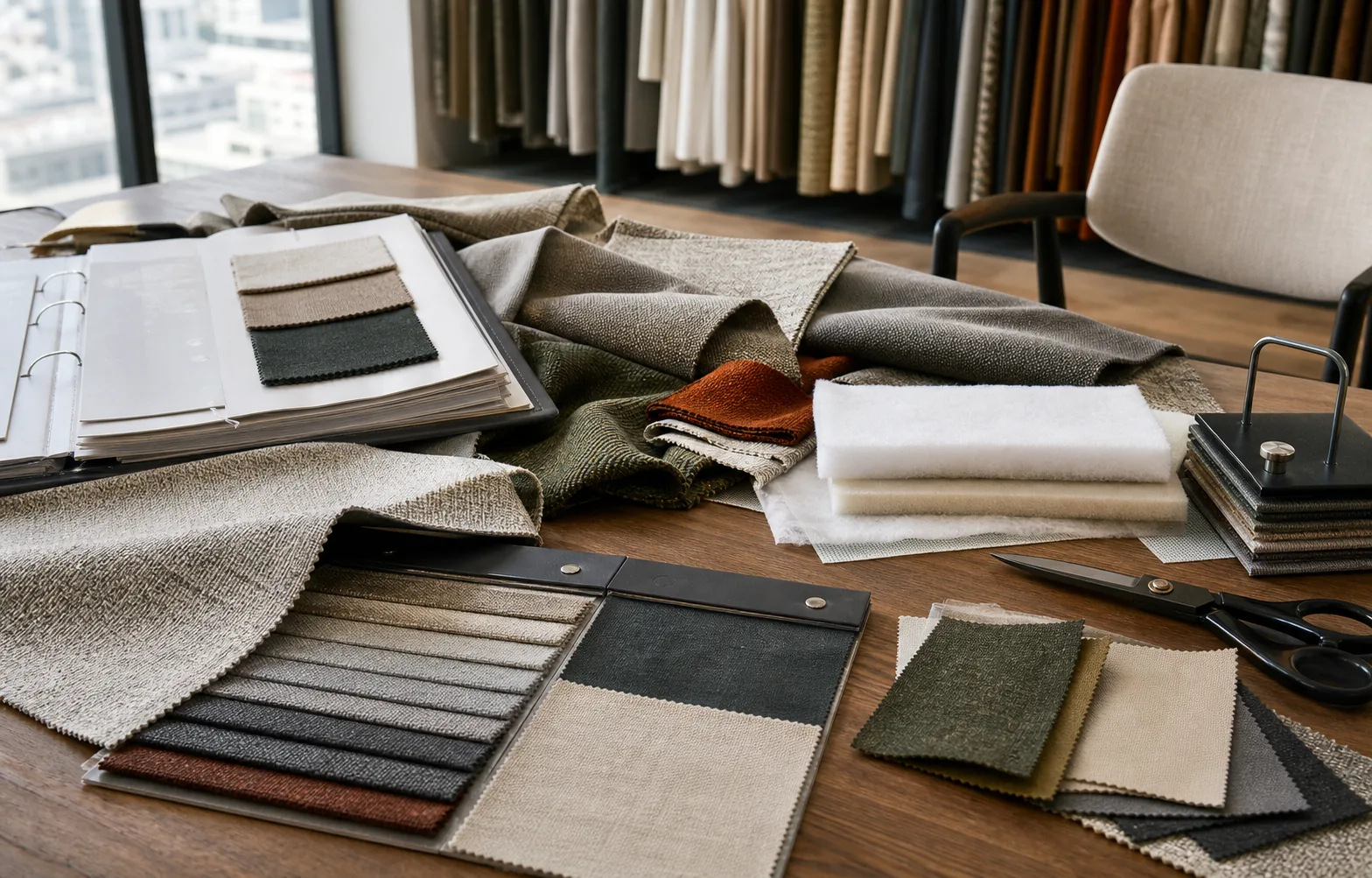
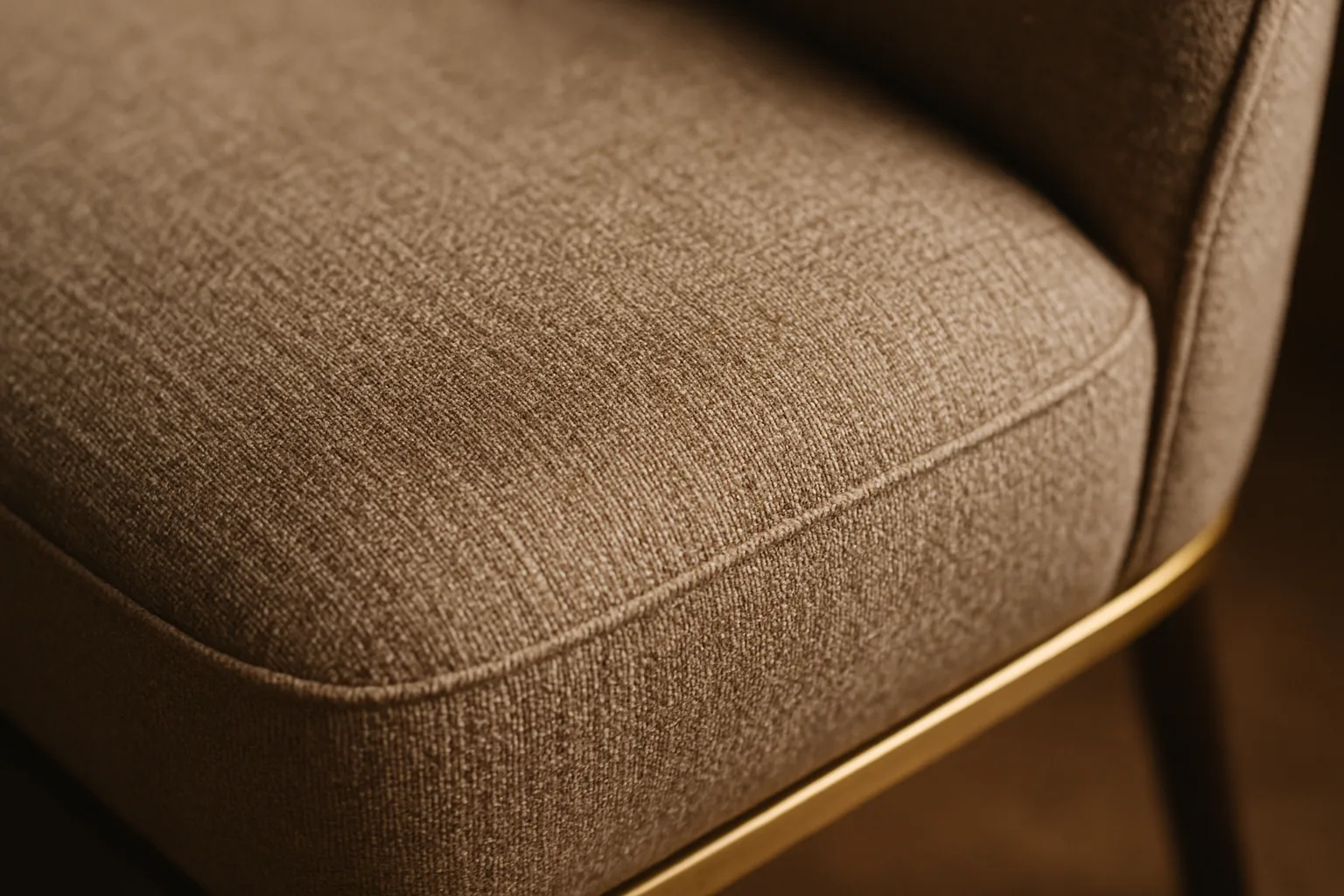
What it tests: The combination of fabric, fire-retardant interliner (if used), and foam — not the fabric alone. This is the most common compliance failure: a fabric is certified for use over fire-retardant foam, but the supplier ships standard foam.
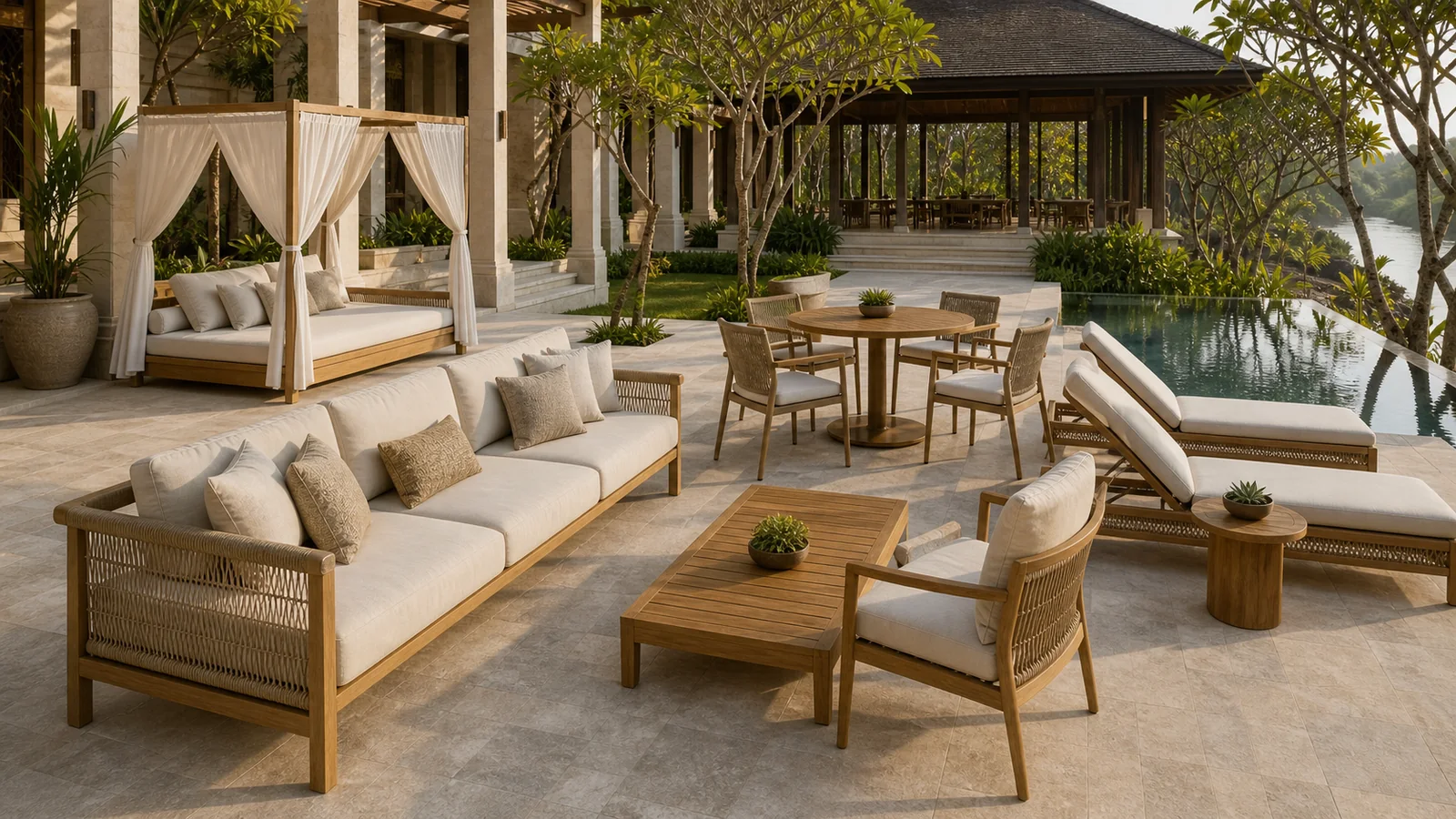
Where used: Guest-room sofas, lobby seating, restaurant banquettes, pool-deck loungers (where indoor-outdoor crossover applies), all upholstered headboards.
BS 7176
What it is: A composite British Standard that classifies the hazard level of the application and prescribes the appropriate BS 5852 test source. Hospitality is typically classified as “Medium Hazard” — equivalent to Crib 5.
Where used: Operator brand standards often reference BS 7176 directly because it embeds the BS 5852 source in an application-specific framework. If your brand spec says “BS 7176 Medium Hazard,” your supplier needs Crib 5 certification.
NFPA 260 and NFPA 261
What they test: NFPA 260 is the US standard for cigarette ignition resistance of components (foam alone, fabric alone). NFPA 261 tests the assembly. American-origin operator standards (Marriott family, Hilton family) often reference these.
Critical gotcha: NFPA 260 component-level certification is not equivalent to BS 5852 composite testing. A piece can pass NFPA 260 on the foam, NFPA 260 on the fabric, and still fail BS 5852 on the assembly. UAE Civil Defence accepts both standards but the certificates must reference the actual product as supplied.
NFPA 701
What it tests: Flame propagation of textiles in vertical orientation — curtains, drapes, decorative fabric wall panels, decorative netting.
Two protocols: Test 1 (small scale, single textile layer) and Test 2 (larger scale, multi-layer or heavy fabrics). Hotel curtains typically need Test 1 for sheers and Test 2 for blackout linings.
Common failure: A blackout curtain assembly is sheers + lining + blackout fabric. NFPA 701 must be tested on the assembled curtain, not the three layers separately.
EN 1021 (parts 1 and 2)
What it tests: European Standard for ignitability of upholstered furniture, equivalent to BS 5852 Sources 0 and 1. Often referenced for residential-grade items being repurposed for hospitality.
GCC implication: EN 1021 alone is not sufficient for hotel public-area or guest-room upholstered seating. UAE DCD requires Crib 5 or NFPA equivalent for those applications.
Compliance map by FF&E item
A simplified version of what UAE Civil Defence will ask for at inspection:
| FF&E item | Standard required | Verification document |
|---|---|---|
| Guest-room upholstered headboard | BS 5852 Crib 5 (or NFPA 260 equivalent) | Composite test cert, fabric + foam combination |
| Guest-room desk chair (upholstered) | BS 5852 Crib 5 | Composite test cert |
| Lobby and lounge soft seating | BS 5852 Crib 5 / BS 7176 Medium Hazard | Composite test cert |
| Restaurant banquette seating | BS 5852 Crib 5 | Composite test cert |
| Mattresses | BS 7177 Medium Hazard | Mattress assembly cert |
| Guest-room curtains | NFPA 701 Test 1 (sheers) and Test 2 (blackout) | Per-fabric and per-assembly cert |
| Decorative fabric wall panels | NFPA 701 Test 2 | Per-fabric cert |
| Carpet / area rugs (guest room) | EN 13501 Class Cfl-s1 (Bfl-s1 in public areas) | Reaction-to-fire cert |
| Outdoor pool / deck cushions | BS 5852 Crib 5 (where moved indoors) | Composite test cert |
How to verify supplier compliance
Three audits before you award the contract, not after:
1. Request the actual certificates, not a summary. A genuine certificate names the laboratory (BSI, Intertek, SGS, TÜV, Bureau Veritas), the test date, the specific fabric reference, the specific foam reference, and the test result. Generic “compliant with BS 5852” letters are worthless.
2. Match the certificate to the spec. If your specification calls for Fabric A over Foam B, the certificate must show Fabric A tested with Foam B. Substitutions are silent killers — a supplier may switch foam late in production for cost reasons, voiding the certification.
3. Reserve the right to lab re-test. Your contract should permit you to send a randomly selected production unit to an accredited UAE lab for confirmation testing. Suppliers that refuse this clause are signalling something. The cost is typically AED 3,000–6,000 per item — trivial against project risk.
For curtains specifically, treat the entire assembly as the unit of testing. A blackout curtain is a system, and the cert must reflect that.
Common documentation gaps we encounter
These are the failure modes we see at pre-opening inspection on projects that change suppliers late or buy through unfamiliar channels:
- Foam substitution. Certified foam was specified, standard foam was supplied. Detected by smell and weight on inspection.
- Fabric over-dyeing. A certified fabric was custom-dyed to match a designer’s palette. The dyeing process can void fire-retardant treatment. Re-certification required.
- Mattress label tampering. Old certificates retained on new mattress production runs. Cert dates pre-date manufacture.
- Curtain lining mismatch. Sheers certified, blackout lining not certified, decorative valance not certified.
- Outdoor cushion crossover. Outdoor-rated upholstery brought into indoor public areas without indoor-spec recertification.
Each of these is preventable with disciplined procurement. None of them is recoverable cheaply once the FF&E is on site.
Next step
If you’re early in your scheme and want to confirm your operator brand standard is correctly mapped to UAE compliance, send us the FF&E specification. We’ll return a line-by-line compliance map within 7 working days, flagging any items that need standard substitution or assembly-level testing. Request a compliance review or read our hotel FF&E procurement guide for broader scope context.