Hotel FF&E Cost per Key in the UAE: 2026 Benchmarks
Real per-key FF&E costs for 3, 4, and 5-star hotels across the UAE in 2026 — based on actual project data from Dubai, Abu Dhabi, and Sharjah deliveries.
A hotel developer asking “what does FF&E cost?” gets a different answer from every consultant — usually delivered with a wide range and a handful of caveats. The reason isn’t evasion. It’s that the question has at least eight subordinate questions buried inside it, and the right answer changes if you swap any one of them.
This guide gives the per-key benchmarks we see on actual UAE projects in 2026, broken down by star rating, with the variance drivers explained so you can sharpen the number for your specific scheme.
The 2026 UAE FF&E benchmark range
These ranges reflect full-scope FF&E (guest rooms, corridors, public areas, F&B, back-of-house) delivered, installed, and signed-off — including freight, customs, and installation. They are based on projects executed across Dubai, Abu Dhabi, Sharjah, and Ras Al Khaimah in the last 18 months.
| Property type | Cost per key (AED) | Cost per key (USD) | Typical project size |
|---|---|---|---|
| 3-star focused service | 35,000 – 55,000 | 9,500 – 15,000 | 80–200 keys |
| 4-star upper midscale | 65,000 – 95,000 | 17,500 – 26,000 | 150–300 keys |
| 4-star upscale (lifestyle / boutique) | 90,000 – 130,000 | 24,500 – 35,500 | 100–250 keys |
| 5-star luxury | 130,000 – 220,000 | 35,500 – 60,000 | 150–400 keys |
| Ultra-luxury / resort flagship | 220,000 – 350,000+ | 60,000 – 95,000+ | 100–250 keys |
For a 200-key 4-star upper midscale hotel, the FF&E budget therefore lands in a realistic band of AED 13M to AED 19M total — a number that should never be a surprise this far into your business plan, but very often is.
What actually drives the variance
Three factors explain roughly 80% of why two superficially identical hotels end up with different per-key numbers.
1. Brand standard
A Marriott Autograph Collection room costs more to furnish than a Courtyard by Marriott room — same group, same approval process, but radically different specification. International operator brand standards mandate specific materials, dimensions, and certifications. A typical Autograph spec might require:
- Solid hardwood (not engineered) headboard
- Stone or quartz vanity tops, not engineered surfaces
- Specific lighting brands or equivalents
- Higher Martindale rub-cycle ratings on upholstery
- Brand-approved minibar / safe / luggage rack suppliers
Each requirement narrows the supplier pool and lifts the unit cost. We cover this in detail in our brand standard cheat sheet for Marriott, Hilton, IHG, and Accor.
2. Bespoke vs stock content mix
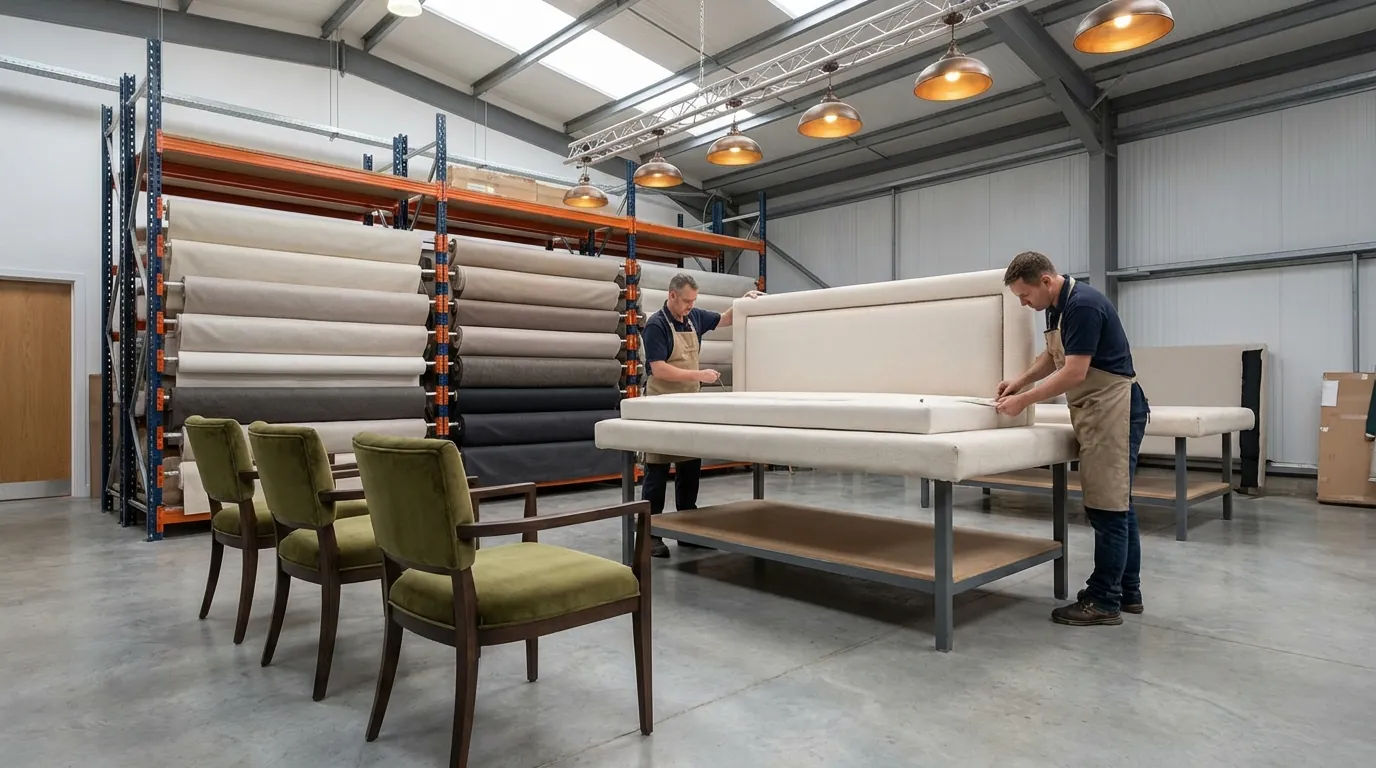
A pure-stock specification (catalog ranges with fabric/finish customization only) sits at the lower end of every range above. A heavily bespoke specification — custom headboards, custom casegoods, signature lobby pieces, bespoke lighting — pushes toward the upper end. Most projects mix the two; the mix is usually negotiated during the value-engineering phase after the operator signs off the design intent.
3. Freight terms and incoterms
DDP UAE (delivered duty paid into your warehouse) versus FOB origin (free on board at the factory port) can shift 8–15% of total cost depending on origin country, container fill rate, and customs valuation. Owner’s reps frequently compare quotes across different incoterms without normalizing — which is the single most common reason a “cheap” supplier turns out to be the most expensive after landed cost is calculated.
What’s included in a full-scope number
For benchmarking against a quote you’ve received, the per-key ranges above include:
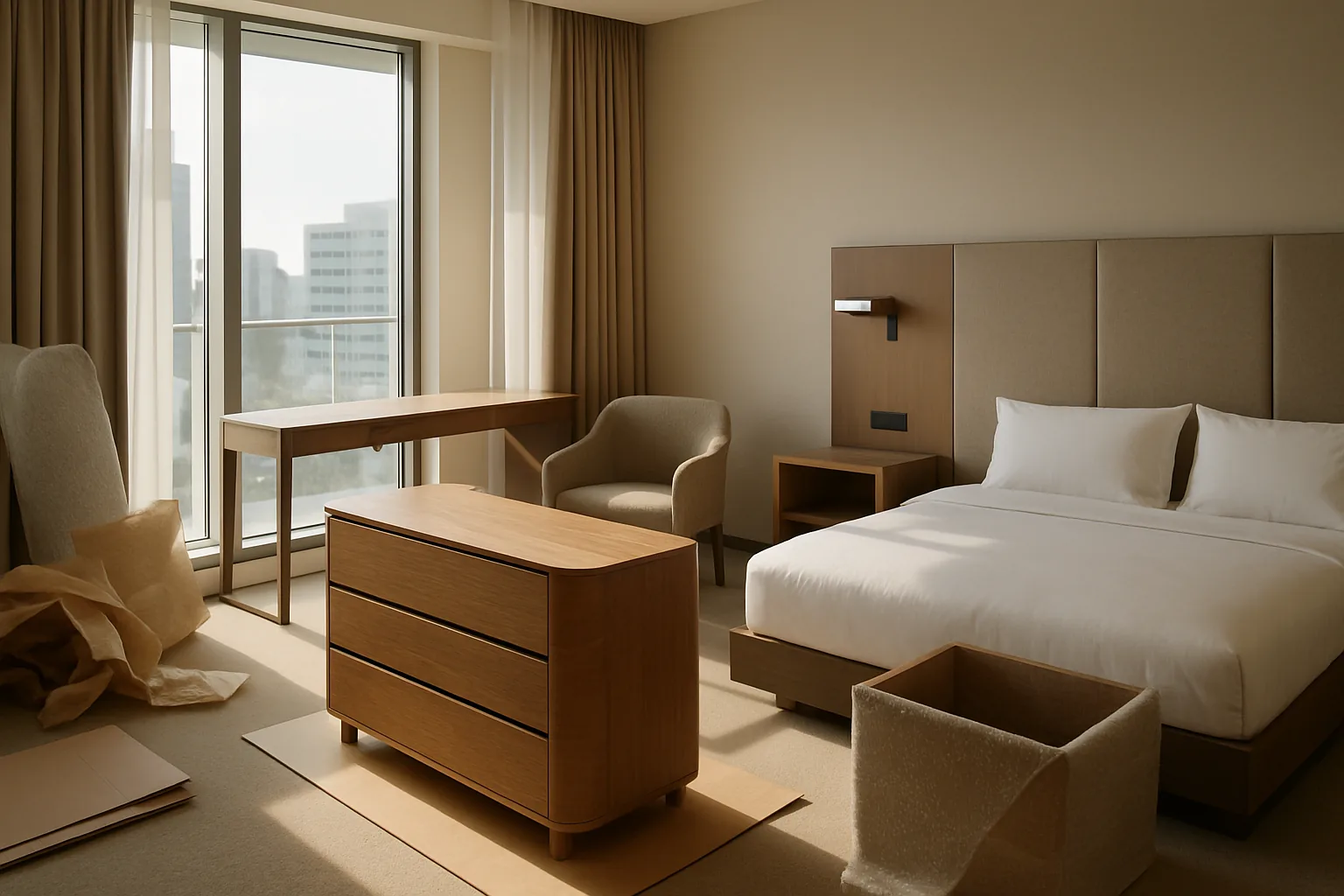
- Guest rooms: bed, mattress, headboard, bedside tables, desk, desk chair, lounge chair, ottoman, wardrobe / open hanging, luggage rack, mirrors, lighting (bedside, desk, floor), curtains and sheers, decorative cushions, throws, rugs, artwork, minibar cabinet, safe enclosure, bin, signage.
- Bathroom: vanity (if loose), mirror, accessories, lighting (if loose), bathmat, towel ring/bar (if loose).
- Corridors: console tables, decorative lighting, mirrors, artwork, runner rugs, signage.
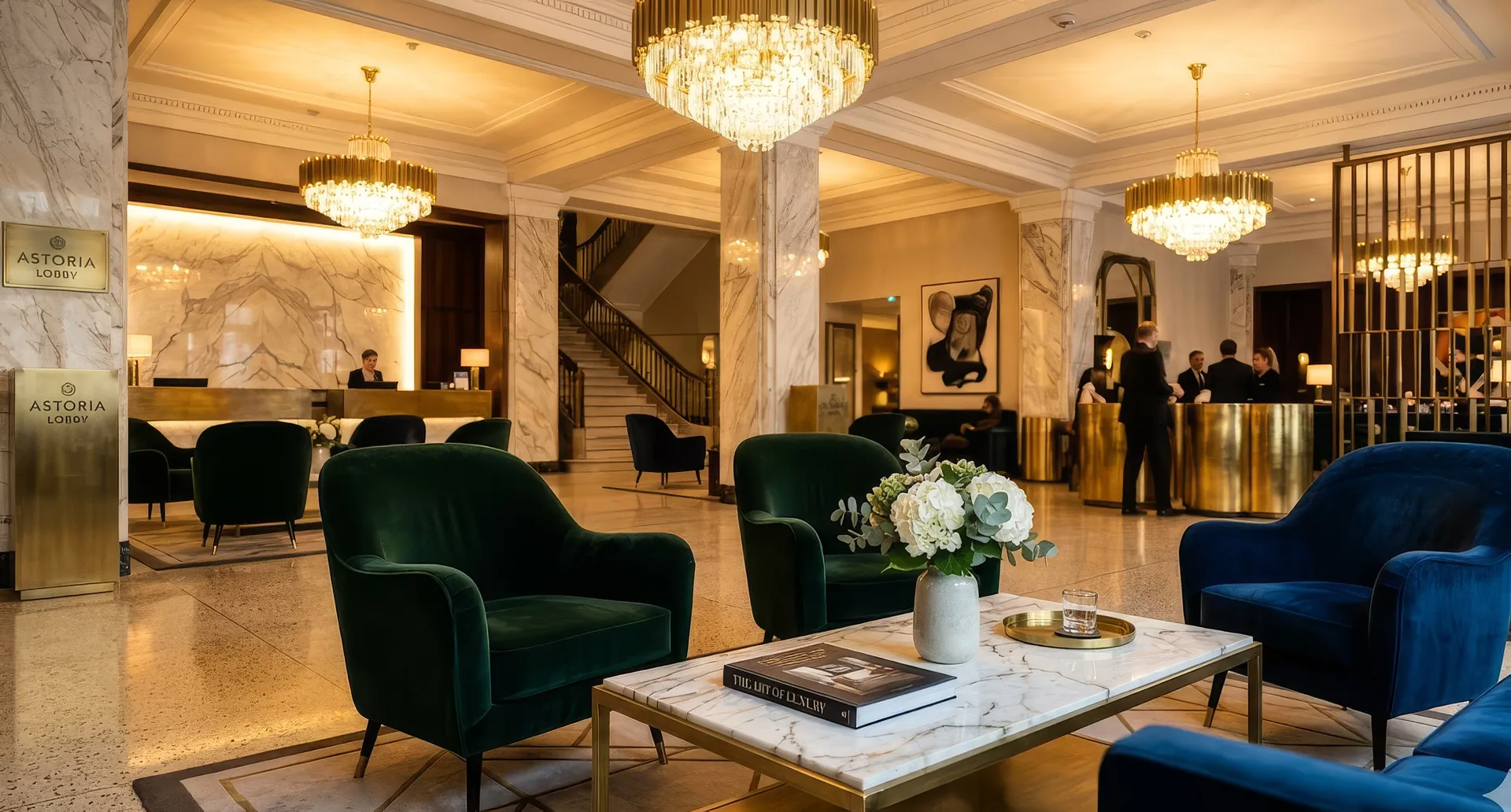
- Lobby and public areas: reception desk, seating clusters, decorative lighting, console tables, decorative accessories, plants and planters (often value-engineered out and procured by operator OS&E).
- F&B outlets: dining tables, dining chairs, banquettes, bar furniture, bar back, decorative lighting, soft furnishings.
- Pool deck / outdoor: loungers, parasols, side tables, day beds, bar seating.
- Back-of-house: staff dining, locker areas, admin offices, executive suites.
It excludes operating supplies (linens, crockery, glassware, uniforms, kitchen equipment) — that’s OS&E, which we cover separately.
Where projects typically over- and underspend
Underspend (silent risks):
- Outdoor furniture — owners assume teak loungers are commodity; the difference between FSC-certified marine-grade teak and “teak-look” hardwood shows up in 18 months when finishes peel.
- Lighting — decorative lighting commissions can run 3–5% of total FF&E. Cutting them late forces operator-grade hotels to retrofit at 3× the original cost.
- Mattresses — cheap mattresses generate guest complaints that destroy review scores; the AED 800 saved per key is recovered by the operator in margin within the first quarter.
Overspend (avoidable):
- Casegoods finish complexity — multiple veneer matches and inlay details add 15–25% with little guest-perceived value if the design isn’t already strong.
- Bespoke lighting where stock works — there are excellent contract-grade stock ranges from Italian and Spanish manufacturers that cost 40–60% less than bespoke for guest-room ambient lighting.
- Premium hardware specs in standard rooms — solid brass on every drawer pull is a luxury-segment choice, not a 4-star choice.
How to budget when you have only a concept
If your project is at concept stage and you need a number for the business plan, use the midpoint of the relevant range, then add 8–12% contingency. Lock the per-key number into the operator approval process before architectural design develops too far — design intent has a strong upward gravitational pull on FF&E budgets, and pulling it back later costs schedule.
A safer approach: get a real quote from a turnkey supplier on your closest comparable scheme. We provide concept-stage quotes for any GCC hotel project in 5–7 working days, with line-level detail on every guest-room item, and a per-key total calibrated to the brand standard you’re targeting.
Next step
If you’re early in your scheme and want a real number on your specific project — not a range — we can work from your room programme, brand approach, and target opening date and give you a per-key budget within a week. Request a quote or read our companion post on FF&E lead times from Turkey and China to Dubai to understand how the budget interacts with your delivery schedule.