
FF&E Trends Shaping Gulf Hospitality in 2026
A practical look at the hotel furniture and FF&E trends shaping Gulf hospitality in 2026, from warm minimalism and outdoor resort living to local narrative, tech integration, and sustainability documentation.
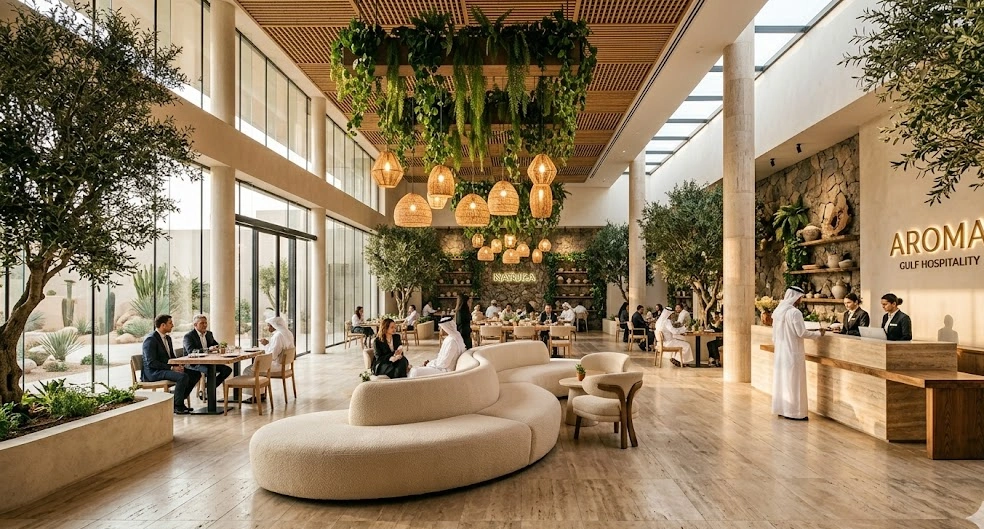
The Gulf hospitality market is not following global hotel furniture trends passively. It is changing them. Dubai, Abu Dhabi, Saudi Arabia, Qatar, Oman, and Bahrain are building hotels for a guest mix that expects resort comfort, strong design identity, technology convenience, and operational durability in harsh climate conditions.
For hotel owners and designers, the useful question is not “what looks fashionable?” The useful question is: which trends are strong enough to affect procurement, specification, budget, and long-term maintenance?
Professional rule: a trend is worth following only when it improves guest experience, supports the brand story, or reduces operational friction. Otherwise it is styling, not strategy.
1. Warm minimalism replaces cold luxury
The high-gloss, marble-heavy luxury language is softening. Gulf hotels are moving toward warm minimalism: fewer pieces, calmer lines, better textures, and more natural material expression.
This shows up as:
- Oak, walnut, ash, and warm stained veneers
- Boucle, textured weaves, suede-effect upholstery, and leather accents
- Travertine, limestone, ceramic tops, and honed stone
- Softly rounded sofas, headboards, and lounge chairs
- Lower furniture density in lobbies and guest rooms
- Hidden storage and cleaner surfaces
Procurement implication: when there are fewer pieces in a space, each piece must be better. Poor stitching, uneven veneer, or weak chair proportions are more visible in a minimalist scheme.
2. Outdoor FF&E becomes a major budget line
The Gulf hotel guest increasingly expects the outdoor spaces to perform like indoor hospitality environments. Pool decks, beach clubs, terraces, rooftop bars, garden lounges, and resort villas now need serious FF&E design.
Outdoor packages now include:
- Pool loungers and side tables
- Cabanas and daybeds
- Outdoor sofas and lounge chairs
- Dining sets for terraces
- Beach bar furniture
- Umbrellas, shade systems, and planters
- Outdoor cushions, covers, and replacement fabrics
The materials are not optional. Frames need powder-coated aluminium, marine-grade stainless steel, teak, outdoor rope, HDPE weave, or carefully specified treated timber. Fabrics need UV resistance, water drainage, mildew resistance, and cleanability. Indoor-look furniture used outdoors in the Gulf fails quickly.
3. Local narrative becomes more serious
International operators want properties that feel connected to place. The “could be anywhere” hotel is less attractive to guests and less useful to brands.
In FF&E, local narrative can appear through:
- Arabic geometric patterns routed into screens or headboards
- Regional textile references used in cushions, throws, and upholstery panels
- Bronze, brass, and warm metal details
- Desert, sea, palm, pearl, or falcon-inspired art and accessories
- Locally inspired materials such as limestone tones and sand-colour palettes
- Majlis-style seating reinterpreted for hotels and VIP lounges
The danger is superficial theming. The stronger approach is subtle: one detail in the headboard, a textile pattern, a screen, a custom rug, a locally commissioned artwork. It should feel built into the design, not applied at the end.
4. Technology disappears into furniture
Guests expect charging and control access everywhere, but they do not want to see cables and plastic boxes. The new standard is hidden integration:
- USB-C and universal sockets in bedside tables
- Wireless charging integrated into desks and side tables
- Cable-managed work desks
- Headboards coordinated with reading lights and switches
- Media units planned around smart TV, router, and service access
- Meeting and co-working furniture with concealed power
This must be coordinated before production. Cutting holes on site after furniture arrives looks poor and often voids warranty. FF&E, MEP, and operator technology teams need one coordinated drawing set.
5. Lobbies become flexible work and social zones
Hotel lobbies in the Gulf are no longer only arrival spaces. They are coffee lounges, informal meeting areas, co-working zones, waiting areas, family gathering points, and event overflow.
This changes the furniture mix:
- Sofas for longer dwell time
- Lounge chairs that can be reconfigured
- Communal tables with power
- Small two-person meeting settings
- Durable coffee tables and side tables
- Planters and screens for soft zoning
- Reception seating that does not block circulation
The best lobby FF&E plans are based on traffic and use patterns, not only the hero photograph.
6. F&B furniture gets more operational
Restaurants and bars are where trend mistakes become expensive. A beautiful chair that is too heavy slows service. A banquette with the wrong seat depth reduces comfort. A table base that blocks guests’ feet generates complaints every night.
2026 F&B specifications are more practical:
- Contract-grade chair frames with concealed glides
- Upholstery with stain and soil resistance
- Banquette dimensions tested with table mock-ups
- Replaceable seat pads
- Table tops resistant to heat, cleaning chemicals, and scratches
- Outdoor F&B furniture specified separately from indoor
Good restaurant furniture is a revenue tool because it supports covers, comfort, service speed, and visual identity.
7. Sustainability moves from story to documentation
Sustainability language is no longer enough. Owners and operators increasingly ask for documents:
- FSC-certified timber or chain-of-custody evidence
- Low-VOC finishes
- E0 or E1 board ratings
- Recycled-content textiles where appropriate
- Repairability and replacement-part strategy
- Packaging reduction
- Product durability and life-cycle logic
The most credible sustainability argument in hotel FF&E is still durability. A chair that lasts ten years, can be reupholstered, and has replaceable glides is more sustainable than a fashionable chair replaced every two years.
What this means for procurement
These trends change how owners should buy FF&E:
- Budget more seriously for outdoor areas.
- Bring MEP into furniture coordination earlier.
- Ask suppliers for material and fire documentation before award.
- Prototype complex custom items.
- Use local narrative carefully and permanently, not as decoration.
- Separate timeless investment pieces from refreshable styling layers.
- Evaluate furniture on maintenance as much as appearance.
The BSA view
BSA Trading sees the strongest 2026 Gulf hospitality projects moving toward quiet luxury, outdoor comfort, local identity, better technical coordination, and documented material choices. Our role is to convert those design directions into producible FF&E packages: guest rooms, lobby furniture, restaurant seating, outdoor resort furniture, lighting, textiles, and custom casegoods that fit both the look and the operation.


