Sustainable Materials in Hospitality Design
How hotels are integrating sustainable and responsibly sourced materials into FF&E without compromising on luxury or durability.
Sustainability in hospitality has moved beyond recycling bins and towel-reuse cards. Today’s hotel developers and operators are embedding environmental responsibility into the physical fabric of their properties — starting with FF&E materials.
This shift isn’t purely altruistic. Guests increasingly factor sustainability into booking decisions, LEED and Estidama certifications require documented material sourcing, and durable sustainable materials often outperform cheaper alternatives over a property’s lifecycle.
Wood: The Foundation of Sustainable FF&E
Wood dominates hotel furniture — casegoods, headboards, desks, dining tables. The sustainability question centers on sourcing:
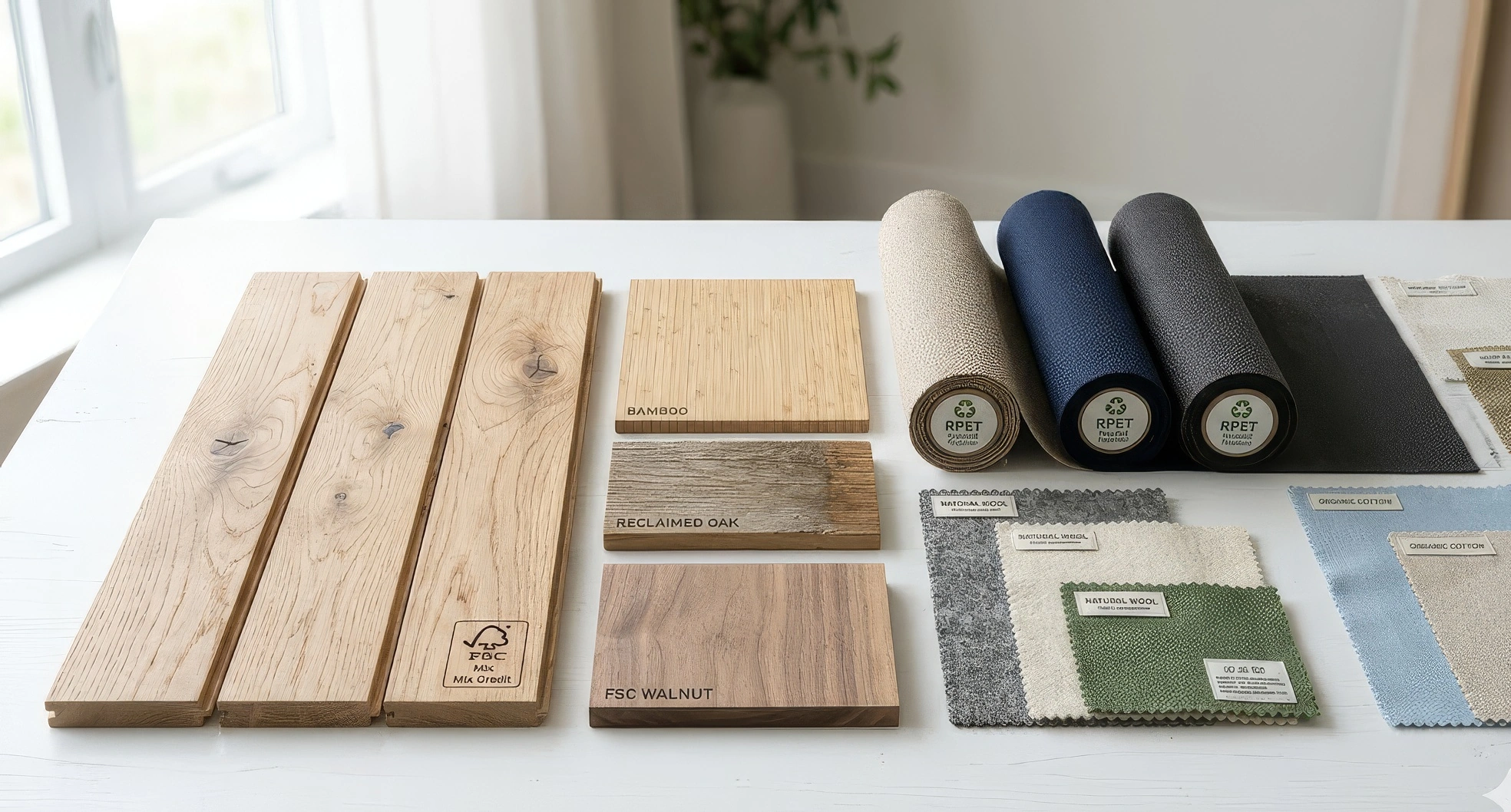
FSC-Certified Timber. The Forest Stewardship Council certification ensures wood comes from responsibly managed forests. Widely available in oak, walnut, ash, and birch. Adds 5–15% to material cost but is increasingly a brand requirement.
Engineered Wood. Plywood, MDF, and particleboard use wood more efficiently than solid timber. High-quality engineered substrates with natural veneer faces deliver the look of solid wood with better dimensional stability and lower material waste.
Reclaimed Wood. Salvaged timber from old buildings, ships, or industrial structures adds character and narrative. Popular in F&B settings and boutique hotels. Requires careful processing to ensure structural integrity.
Bamboo. Technically a grass, bamboo grows to harvestable size in 3–5 years versus 20–60 years for hardwood. Excellent strength-to-weight ratio. Well-suited for flooring, decorative panels, and lightweight furniture.
Upholstery: Beyond Leather
Upholstery is the second major material category in hotel FF&E:
Recycled Polyester. Made from post-consumer PET bottles. Now available in luxury-grade weaves indistinguishable from virgin polyester. Fire-rated options available for hospitality use.
Organic Cotton and Linen. Grown without synthetic pesticides. Higher cost but strong appeal for wellness-focused properties. Requires careful treatment for fire compliance.
Bio-Based Leather Alternatives. Plant-based materials using pineapple leaf fiber (Pinatex), mushroom mycelium, or cactus are emerging but not yet proven for high-wear hospitality applications. Watch this space for the next 2–3 years.
Wool. Naturally flame-resistant, moisture-wicking, and biodegradable. New Zealand and British wool remain the gold standard for contract upholstery.
Metals and Hardware
Recycled Aluminum. Uses 95% less energy than primary aluminum production. Ideal for outdoor furniture frames, light fixtures, and decorative elements.
Brass and Bronze. Inherently recyclable and long-lasting. Developing a natural patina that many designers prize. High-quality brass hardware can outlast the furniture it’s attached to.
Powder Coating. Solvent-free finishing process for metal furniture. Produces no volatile organic compounds (VOCs) and delivers superior durability versus liquid paint.
Finishes and Adhesives
Often overlooked, finishes and adhesives contribute significantly to indoor air quality:
Low-VOC Finishes. Water-based lacquers and UV-cured coatings release fewer volatile organic compounds than traditional solvent-based finishes. Essential for LEED IEQ credits.
Formaldehyde-Free Adhesives. Standard in European production, increasingly required in Gulf projects. Look for E0 or E1 rated boards.
Natural Oils and Waxes. Hardwax oil finishes (Rubio Monocoat, Osmo) offer zero-VOC alternatives for wood surfaces. Slightly less durable than conversion varnish but easily spot-repaired.
The Lifecycle Perspective
Sustainable FF&E isn’t just about initial material selection — it’s about total lifecycle impact:
- Durability reduces replacement frequency. A chair built to last 15 years is more sustainable than three chairs lasting 5 years each, regardless of material source.
- Repairability extends useful life. Furniture designed for component replacement (re-upholstery, hardware swap) stays in service longer.
- End-of-life planning. Can the furniture be disassembled for recycling? Are materials separable?
Practical Implementation
For hotel developers considering sustainable FF&E:
- Set targets early. Define sustainability requirements in the design brief, not as an afterthought during procurement
- Certify what matters. FSC wood and GREENGUARD-certified finishes are the highest-impact interventions
- Don’t greenwash. Token gestures (one “eco room”) undermine credibility. Integrate sustainability across the property
- Budget honestly. Sustainable materials typically add 10–20% to FF&E costs. The premium is declining as supply chains mature
At BSA Trading, we source from manufacturers who meet European environmental standards and can provide chain-of-custody documentation for certified materials.