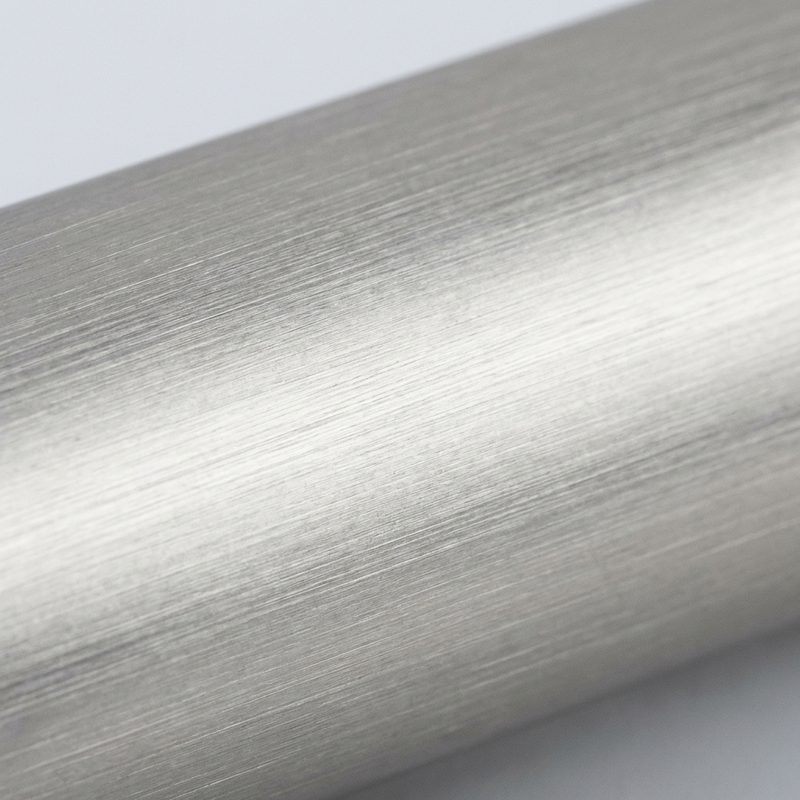
Metal & Hardware · Furniture specification
Chrome Furniture Finish Specifications
A crisp reflective finish for chrome tables, chair frames, lighting and modern furniture details.
Current material reference
Bright mirror chrome or satin chrome to approved control sample
Material guidance · supplier data required for approval
Material decision summary
Project suitability at a glance.
Specify the base metal, preparation, decorative finish, sheen, brushing direction and exposure class together.
Best for
- +Furniture frames, bases, trims, hardware, lighting and screens
- +High-contact details with an engineered substrate and finish
Avoid when
- −Only a colour name is specified without the base metal and protection system
- Traffic level
- High
- Maintenance
- Low
- Visual variation
- Medium
- Relative budget
- ●●●○
- Suitable environments
- Interior · High traffic
Material overview
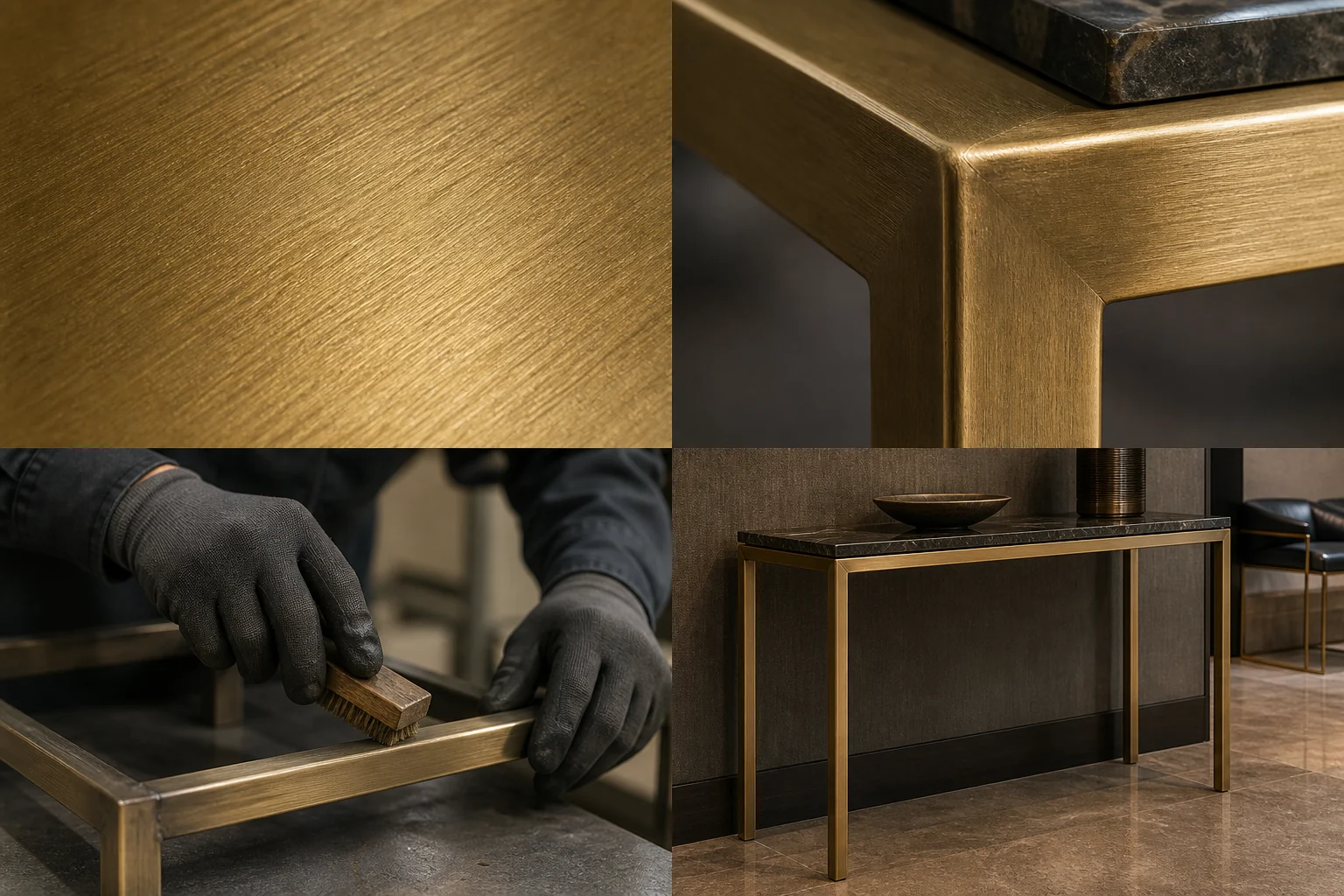
Most requested furniture applications
Specify both the base metal and decorative finish. “Brass finish” may mean solid brass, brass-plated steel, PVD stainless or paint; performance and cost differ substantially.
Material-specific authority schedule
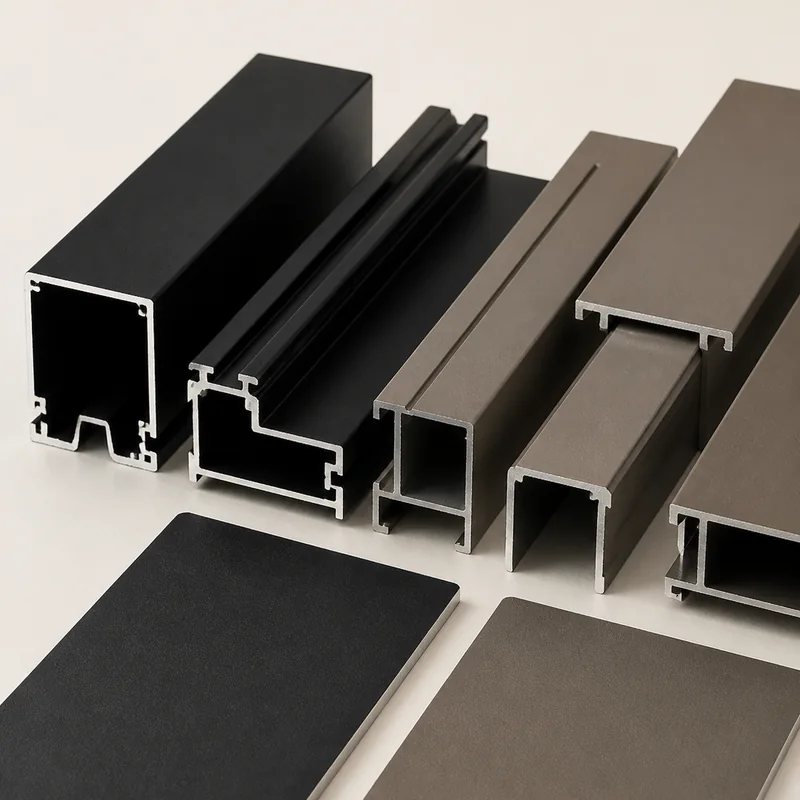
Ten controls owned by this exact material—not inherited category rows. Final values are confirmed from supplier data, the project sample and shop drawings.

- Declared project reference
- Chrome Furniture Finish: Bright mirror chrome or satin chrome to approved control sample
- Exact material identity
- Bright or satin chrome plating on declared steel/brass substrate with underlayer and plating build specified.
- Technical system definition
- A bright or satin chromium-plated finish over steel or brass, dependent on substrate polishing, underplate build, plating continuity and post-finish protection.
- Selection differentiator
- Crisp cool reflectivity and hard decorative surface for modern frames and hardware.
- Critical approval decision
- Specify substrate and plating build; bright chrome can hide neither substrate waviness nor poor weld polishing and is difficult to repair invisibly.
- Non-equivalent substitute
- Polished stainless, nickel plate and chrome paint differ in colour, corrosion, edges and repair.
- Fabrication focus
- Polish and blend substrate perfectly before plating; control pores, burns and edge coverage.
- GCC exposure limit
- Wet/chloride exposure can penetrate plating defects and corrode the substrate from edges.
- Material-specific care rule
- Use non-abrasive neutral cleaning and dry joints; never use steel wool.
- Reject the delivery when
- Reject blue/yellow burn, dark pores, peeling, rust bleed, substrate scratches or mixed bright/satin finish.
Approval pack
Documents required before ordering.
Material guidance · supplier data required for approval
- Chrome Furniture Finish: Identity/source evidence: Bright or satin chrome plating on declared steel/brass substrate with underlayer and plating build specified.
- Chrome Furniture Finish: Signed selection evidence: Plater declares process and thickness/control data appropriate to service.
- Chrome Furniture Finish: Second technical gate: Large first-off is inspected in reflected straight lines.
- Chrome Furniture Finish: Factory close-out: Polish and blend substrate perfectly before plating; control pores, burns and edge coverage.
Lead time & availability
Confirmed after source, finish and quantity selection
Family inspection atlas
A shared visual reference for construction and fabrication.
This atlas is shared by the material family; it is not a microscopy record of this exact selection. The approved sample and current supplier documents govern final colour and construction.
Material identity
What is unique—and what is shared with the family.
The exact material fingerprint comes first. Shared family science is explicitly separated in a collapsible appendix instead of being presented as unique content.
50 material-specific points · 39 shared family references
01 · Material fingerprint
What makes this exact selection technically distinct?
Position in the material family
Electroplated finish
- Reference that must be declared
- Bright or satin chrome plating on declared steel/brass substrate with underlayer and plating build specified.
- Selection differentiator
- Crisp cool reflectivity and hard decorative surface for modern frames and hardware.
- Not an equivalent substitute
- Polished stainless, nickel plate and chrome paint differ in colour, corrosion, edges and repair.
- Reject the delivery when
- Reject blue/yellow burn, dark pores, peeling, rust bleed, substrate scratches or mixed bright/satin finish.
Shared family reference
Open the shared Metal & Hardware engineering appendix
This appendix applies to the complete Metal & Hardware family. It is retained as supporting reference and is not counted as unique content for this material.
Shared family reference
Open the shared Metal & Hardware engineering appendix
This appendix applies to the complete Metal & Hardware family. It is retained as supporting reference and is not counted as unique content for this material.
02 · System anatomy
The material is not a single surface.
A bright or satin chromium-plated finish over steel or brass, dependent on substrate polishing, underplate build, plating continuity and post-finish protection.
01Decorative top surface
Layer function
Polish, patina, plating, PVD, clear coat or powder establishes colour, gloss and touch response.
How to verify
Name the exact finish route, product/layer build and brushing direction.
02Pretreatment / undercoat
Layer function
Cleaning, conversion coating, strike layers or primers create adhesion and corrosion resistance.
How to verify
Require process declaration and adhesion/corrosion evidence for the exposure.
03Base metal
Layer function
Stainless, mild steel, brass, bronze, copper or aluminium determines strength, corrosion and repair.
How to verify
Mill/material certificate or explicit alloy/substrate declaration.
04Fabrication / joint
Layer function
Tube/plate thickness, welds, braze, fasteners, drains and isolators control structural and corrosion performance.
How to verify
Shop drawings and first-off expose welds, inside returns, edges and dissimilar-metal interfaces.
03 · Decision gates
Reference benchmarks and the project rule.
Base metal / alloy
01- Reference band
- State alloy/grade and product form; “brass colour”, “chrome” or “stainless look” is not a substrate.
- Project rule
- Use one declared substrate/route across adjacent visible parts.
- Evidence status
- Material certificate or supplier declaration
Exposure class
02- Reference band
- Conditioned interior, wet interior, covered exterior, exposed exterior or coastal/chloride.
- Project rule
- The finish schedule must state exposure before selecting coating or grade.
- Evidence status
- Project location and finish-system evidence
Coating / plating build
03- Reference band
- Layer chemistry and thickness are process specific; record pretreatment, underlayers, topcoat and cure.
- Project rule
- Colour similarity cannot establish equal corrosion or wear performance.
- Evidence status
- Process sheet and measurable layer data
Adhesion
04- Reference band
- Use the method suitable for the coating type and thickness; ISO 2409 applies to suitable paint/coating systems.
- Project rule
- Test fabricated geometry, not only a flat laboratory coupon.
- Evidence status
- Adhesion result and fabricated witness sample
Corrosion evidence
05- Reference band
- ISO 9227 salt-spray results describe test resistance but do not independently predict long-term field ranking.
- Project rule
- Define substrate, scribe, duration, rating and real exposure together.
- Evidence status
- Current system report plus environment rationale
Visual tolerance
06- Reference band
- Colour, texture, sheen, brush direction, weld read-through, distortion and fingerprint response.
- Project rule
- Approve a production-size assembled sample under project light.
- Evidence status
- Signed first-off and boundary samples
04 · Family comparison
Four visually related systems that are not technically equivalent.
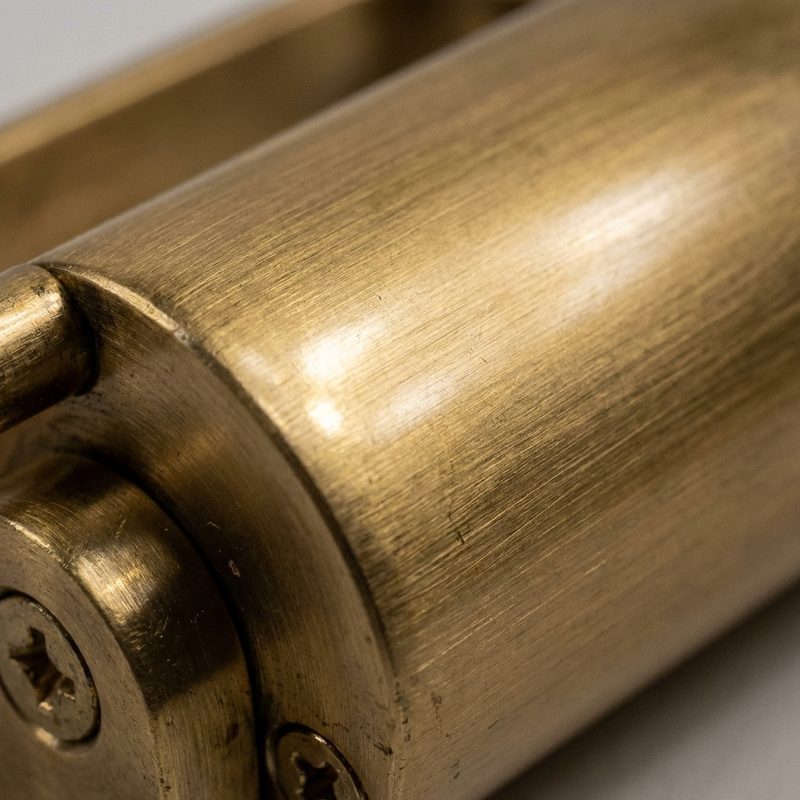

Solid / sheet living metal
- Best use
- Premium brass, bronze or copper where natural patina and repair are intentional.
- Trade-off / constraint
- Colour evolves with touch, atmosphere and cleaning unless sealed.
Electroplated finish
- Best use
- Bright chrome, nickel and decorative metal colours over engineered substrates.
- Trade-off / constraint
- Underlayers, edge coverage, porosity and repairability are critical.
PVD on stainless
- Best use
- Consistent premium metallic colours with good wear on suitable stainless fabrication.
- Trade-off / constraint
- Colour lot, substrate polish, weld preparation and recoating route require control.
Powder-coated metal
- Best use
- Robust colour and texture for steel or aluminium frames and repeated contract furniture.
- Trade-off / constraint
- Protection depends on alloy/substrate, pretreatment, edge coverage, cure and exposure-specific chemistry.
05 · Factory handbook
Hold points from receiving through production release.
Fabrication focus for this exact material
Polish and blend substrate perfectly before plating; control pores, burns and edge coverage.
-
01Material receiving
Control instruction
Verify alloy/grade, section, thickness, surface condition, traceability and storage separation.
Close-out evidence
Mill certificate/label and incoming inspection
-
02Cut / form
Control instruction
Control bend radii, grain direction, tool marks, edge easing and protective film.
Close-out evidence
First formed component against section drawing
-
03Weld / braze
Control instruction
Use compatible filler, controlled heat input, full dressing and contamination-free tools.
Close-out evidence
Weld procedure and unfinished first-off review
-
04Pretreat / finish
Control instruction
Clean, pretreat and coat within the declared process; orient brushing and rack parts to avoid visible variation.
Close-out evidence
Batch process record and witness coupons
-
05Assembled first-off
Control instruction
Inspect colour, weld blending, distortion, edges, fasteners, isolation, drainage and touch response.
Close-out evidence
Signed production-size assembly under project lighting
06 · Climate & operations
GCC exposure matrix and maintenance plan.
Material-specific climate warning
Wet/chloride exposure can penetrate plating defects and corrode the substrate from edges.
01Conditioned interior
Preferred- Material response
- Most declared decorative systems can perform when cleaning is controlled.
- Design control
- Select by touch, wear and repair route; keep one finish process.
02High-touch public area
Conditional- Material response
- Fingerprints, skin oils, rings and repeated wiping reveal coating weakness.
- Design control
- Approve handled ageing and cleanability on edges and rails.
03F&B / chemical cleaning
Conditional- Material response
- Acids, chlorides, degreasers and standing liquids attack finish and joints.
- Design control
- Name chemicals and protect horizontal traps, welds and dissimilar metals.
04Wet interior
Conditional- Material response
- Condensation and trapped moisture start at cut edges, fasteners and unsealed tubes.
- Design control
- Use suitable alloy/system, seal/drain cavities and isolate metals.
05Covered exterior
Conditional- Material response
- Sheltered surfaces may retain salt and dirt because rain does not wash them.
- Design control
- Select exterior system and specify accessible routine washing.
06Coastal exterior
Avoid- Material response
- Chlorides, crevices, rough finishes and insufficient cleaning increase pitting/tea staining risk.
- Design control
- Evaluate 316/appropriate alloy or duplex system, smooth finish, drainage and maintenance.
Operational maintenance plan
Material-specific care rule
Use non-abrasive neutral cleaning and dry joints; never use steel wool.
-
01Daily / weekly
Action
Remove dust and fingerprints with soft cloth and approved neutral cleaner; dry thoroughly.
Prohibited
No steel wool, abrasive pad or unknown polish.
-
02After contamination
Action
Remove salts, food acids and cleaners promptly; rinse where the system permits.
Prohibited
No chloride/bleach cleaner on stainless or decorative metal by default.
-
03Monthly / quarterly
Action
Inspect welds, crevices, underside, coating chips, loose fasteners and water traps.
Prohibited
Do not touch up over active corrosion without preparation.
-
04Coastal wash
Action
Set frequency by distance, shelter, salt deposition and finish; use low-chloride potable water.
Prohibited
Rain exposure is not a maintenance plan for sheltered furniture.
-
05Repair
Action
Follow the declared finish route: repolish/passivate, recoat, replate or replace the module.
Prohibited
Do not disguise substrate or finish-route changes with colour-matched paint.
07 · Reference library
The language that governs the decision—and where it comes from.
Material glossary
- 01PVD
- Physical vapour deposition: a thin decorative coating deposited in vacuum, commonly over stainless steel.
- 02Passivation
- Treatment that removes contamination and supports the protective passive layer of stainless steel.
- 03Tea staining
- Superficial brown discolouration of stainless associated with environment, finish, fabrication and cleaning.
- 04Duplex system
- Two complementary corrosion-protection systems, such as galvanizing plus powder coating.
- 05Brushing direction
- The visible linear grain created by finishing; inconsistent orientation reads as colour variation.
Professional and standards sources
- 01
ISO
ISO 9227 salt-spray tests
Neutral salt spray and related corrosion-test methods plus interpretation limits.
Open primary source ↗ - 02
ISO
ISO 2409 coating adhesion classification
Cross-cut classification for suitable paint/coating systems.
Open primary source ↗ - 03
worldstainless
Stainless corrosion properties
Grade, chloride, passive-film and coastal corrosion guidance.
Open primary source ↗ - 04
worldstainless
Cleaning and maintenance
Routine cleaning and stain-removal references for stainless surfaces.
Open primary source ↗
Material-specific technical dossier
Chrome Furniture Finish controls from decision to production.
Every row below is tied to this material’s identity, differentiator, fabrication, exposure or care route; no generic family rows are included in this dossier.
8 unique controls · 4 contextual test applications · 5 material-specific risks
System definition
A bright or satin chromium-plated finish over steel or brass, dependent on substrate polishing, underplate build, plating continuity and post-finish protection.
Critical decision
Specify substrate and plating build; bright chrome can hide neither substrate waviness nor poor weld polishing and is difficult to repair invisibly.
01 · Selection variables
What the material schedule must lock.
01Chrome Furniture Finish: Plating stack
- What must be declared
- Substrate, copper/nickel underlayers where used, chromium layer and satin/bright prefinish
- Approval basis
- Plater declares process and thickness/control data appropriate to service.
02Chrome Furniture Finish: Reflective fabrication
- What must be declared
- Weld blending, surface waviness, pits, edge coverage and rack/contact marks
- Approval basis
- Large first-off is inspected in reflected straight lines.
03Chrome Furniture Finish: identity declaration
- What must be declared
- Bright or satin chrome plating on declared steel/brass substrate with underlayer and plating build specified.
- Approval basis
- Specify substrate and plating build; bright chrome can hide neither substrate waviness nor poor weld polishing and is difficult to repair invisibly.
04Chrome Furniture Finish: equivalency boundary
- What must be declared
- Crisp cool reflectivity and hard decorative surface for modern frames and hardware.
- Approval basis
- Polished stainless, nickel plate and chrome paint differ in colour, corrosion, edges and repair.
05Chrome Furniture Finish: factory execution
- What must be declared
- Polish and blend substrate perfectly before plating; control pores, burns and edge coverage.
- Approval basis
- Plater declares process and thickness/control data appropriate to service.
06Chrome Furniture Finish: GCC exposure control
- What must be declared
- Wet/chloride exposure can penetrate plating defects and corrode the substrate from edges.
- Approval basis
- Release only when the project detail and maintenance route close this exact exposure risk for Chrome Furniture Finish.
07Chrome Furniture Finish: operational care route
- What must be declared
- Use non-abrasive neutral cleaning and dry joints; never use steel wool.
- Approval basis
- Issue a named cleaning and repair method for Chrome Furniture Finish; generic family care is not approval.
08Chrome Furniture Finish: delivery rejection boundary
- What must be declared
- Reject blue/yellow burn, dark pores, peeling, rust bleed, substrate scratches or mixed bright/satin finish.
- Approval basis
- The signed sample, first-off item and delivery inspection must all close this rejection condition for Chrome Furniture Finish.
| Variable | What must be declared | Approval basis |
|---|---|---|
| 01Chrome Furniture Finish: Plating stack | Substrate, copper/nickel underlayers where used, chromium layer and satin/bright prefinish | Plater declares process and thickness/control data appropriate to service. |
| 02Chrome Furniture Finish: Reflective fabrication | Weld blending, surface waviness, pits, edge coverage and rack/contact marks | Large first-off is inspected in reflected straight lines. |
| 03Chrome Furniture Finish: identity declaration | Bright or satin chrome plating on declared steel/brass substrate with underlayer and plating build specified. | Specify substrate and plating build; bright chrome can hide neither substrate waviness nor poor weld polishing and is difficult to repair invisibly. |
| 04Chrome Furniture Finish: equivalency boundary | Crisp cool reflectivity and hard decorative surface for modern frames and hardware. | Polished stainless, nickel plate and chrome paint differ in colour, corrosion, edges and repair. |
| 05Chrome Furniture Finish: factory execution | Polish and blend substrate perfectly before plating; control pores, burns and edge coverage. | Plater declares process and thickness/control data appropriate to service. |
| 06Chrome Furniture Finish: GCC exposure control | Wet/chloride exposure can penetrate plating defects and corrode the substrate from edges. | Release only when the project detail and maintenance route close this exact exposure risk for Chrome Furniture Finish. |
| 07Chrome Furniture Finish: operational care route | Use non-abrasive neutral cleaning and dry joints; never use steel wool. | Issue a named cleaning and repair method for Chrome Furniture Finish; generic family care is not approval. |
| 08Chrome Furniture Finish: delivery rejection boundary | Reject blue/yellow burn, dark pores, peeling, rust bleed, substrate scratches or mixed bright/satin finish. | The signed sample, first-off item and delivery inspection must all close this rejection condition for Chrome Furniture Finish. |
02 · Verification
Test and evidence matrix.
Test methods are not compliance certificates or automatic pass values. The project must state the method, required result, tested construction and current report it will accept.
ISO 9227:2022 + Amd 1:2024
01- What it measures
- Salt-spray methods for detecting coating discontinuities and quality consistency.
- How to use it here
- Specify specimen, exposure and acceptance separately; the method does not predict long-term service life or rank materials universally. Material-specific acceptance for Chrome Furniture Finish: Plater declares process and thickness/control data appropriate to service.
ISO 2409:2020
02- What it measures
- Cross-cut classification of coating resistance to separation.
- How to use it here
- Apply to suitable coating build and record substrate, pretreatment and cure. Material-specific acceptance for Chrome Furniture Finish: Large first-off is inspected in reflected straight lines.
ISO 2813:2014
03- What it measures
- Instrumental gloss measurement for repeatable batch control.
- How to use it here
- State measurement geometry, target and tolerance established by the control sample. Material-specific acceptance for Chrome Furniture Finish: Single plater/batch control, adhesion/corrosion evidence and assembled approval.
Project finish mock-up
04- What it measures
- Real fabricated corner/weld/edge showing preparation and finish continuity.
- How to use it here
- Small flat colour chips do not demonstrate edge coverage, weld read-through or directional brushing. Material-specific acceptance for Chrome Furniture Finish: Polish and blend substrate perfectly before plating; control pores, burns and edge coverage.
03 · Performance
Failure-mode and control register.

01Chrome Furniture Finish: Pitting, peeling or yellowish mismatch
- Likely cause
- Poor substrate preparation, incomplete underplate or mixed plating batches.
- Preventive control
- Single plater/batch control, adhesion/corrosion evidence and assembled approval.
02Chrome Furniture Finish: non-equivalent substitution accepted
- Likely cause
- Polished stainless, nickel plate and chrome paint differ in colour, corrosion, edges and repair.
- Preventive control
- Bright or satin chrome plating on declared steel/brass substrate with underlayer and plating build specified.
03Chrome Furniture Finish: material signature lost in fabrication
- Likely cause
- The workshop route does not implement the material-specific fabrication focus: Polish and blend substrate perfectly before plating; control pores, burns and edge coverage.
- Preventive control
- Large first-off is inspected in reflected straight lines.
04Chrome Furniture Finish: GCC exposure mismatch
- Likely cause
- Wet/chloride exposure can penetrate plating defects and corrode the substrate from edges.
- Preventive control
- Re-detail, relocate or reject Chrome Furniture Finish where the stated exposure cannot be controlled.
05Chrome Furniture Finish: cleaning or maintenance damage
- Likely cause
- Use non-abrasive neutral cleaning and dry joints; never use steel wool.
- Preventive control
- Train operations on the named care route and retain a signed repair reference for Chrome Furniture Finish.
| Failure mode | Likely cause | Preventive control |
|---|---|---|
| 01Chrome Furniture Finish: Pitting, peeling or yellowish mismatch | Poor substrate preparation, incomplete underplate or mixed plating batches. | Single plater/batch control, adhesion/corrosion evidence and assembled approval. |
| 02Chrome Furniture Finish: non-equivalent substitution accepted | Polished stainless, nickel plate and chrome paint differ in colour, corrosion, edges and repair. | Bright or satin chrome plating on declared steel/brass substrate with underlayer and plating build specified. |
| 03Chrome Furniture Finish: material signature lost in fabrication | The workshop route does not implement the material-specific fabrication focus: Polish and blend substrate perfectly before plating; control pores, burns and edge coverage. | Large first-off is inspected in reflected straight lines. |
| 04Chrome Furniture Finish: GCC exposure mismatch | Wet/chloride exposure can penetrate plating defects and corrode the substrate from edges. | Re-detail, relocate or reject Chrome Furniture Finish where the stated exposure cannot be controlled. |
| 05Chrome Furniture Finish: cleaning or maintenance damage | Use non-abrasive neutral cleaning and dry joints; never use steel wool. | Train operations on the named care route and retain a signed repair reference for Chrome Furniture Finish. |
04 · Tender-ready
Copy-ready specification clause.
Provide bright-mirror or satin chrome furniture finish on declared steel or brass substrate with complete plating build identified. Submit substrate/fabrication, polishing route, underplate/chromium process, thickness/control, adhesion, cleaner and corrosion limitations. Approve an assembled production-size control showing welds, edges, rack marks, reflection and adjacent-part colour. Polished stainless steel, silver paint and generic chrome-effect coatings are not equivalent.
05 · Quality control
Inspection plan from submittal to handover.
01Chrome Furniture Finish: identity and source
- Inspection
- Bright or satin chrome plating on declared steel/brass substrate with underlayer and plating build specified.
- Acceptance / hold point
- Documents, labels and physical material all identify the same Chrome Furniture Finish construction and source.
02Chrome Furniture Finish: control sample
- Inspection
- Crisp cool reflectivity and hard decorative surface for modern frames and hardware.
- Acceptance / hold point
- Plater declares process and thickness/control data appropriate to service.
03Chrome Furniture Finish: first-off fabrication
- Inspection
- Polish and blend substrate perfectly before plating; control pores, burns and edge coverage.
- Acceptance / hold point
- Large first-off is inspected in reflected straight lines.
04Chrome Furniture Finish: exposure and care trial
- Inspection
- Wet/chloride exposure can penetrate plating defects and corrode the substrate from edges. Use non-abrasive neutral cleaning and dry joints; never use steel wool.
- Acceptance / hold point
- Single plater/batch control, adhesion/corrosion evidence and assembled approval.
05Chrome Furniture Finish: delivery release
- Inspection
- Reject blue/yellow burn, dark pores, peeling, rust bleed, substrate scratches or mixed bright/satin finish.
- Acceptance / hold point
- Chrome Furniture Finish is released only when no stated rejection condition is present and the signed reference remains traceable.
| Stage | Inspection | Acceptance / hold point |
|---|---|---|
| 01Chrome Furniture Finish: identity and source | Bright or satin chrome plating on declared steel/brass substrate with underlayer and plating build specified. | Documents, labels and physical material all identify the same Chrome Furniture Finish construction and source. |
| 02Chrome Furniture Finish: control sample | Crisp cool reflectivity and hard decorative surface for modern frames and hardware. | Plater declares process and thickness/control data appropriate to service. |
| 03Chrome Furniture Finish: first-off fabrication | Polish and blend substrate perfectly before plating; control pores, burns and edge coverage. | Large first-off is inspected in reflected straight lines. |
| 04Chrome Furniture Finish: exposure and care trial | Wet/chloride exposure can penetrate plating defects and corrode the substrate from edges. Use non-abrasive neutral cleaning and dry joints; never use steel wool. | Single plater/batch control, adhesion/corrosion evidence and assembled approval. |
| 05Chrome Furniture Finish: delivery release | Reject blue/yellow burn, dark pores, peeling, rust bleed, substrate scratches or mixed bright/satin finish. | Chrome Furniture Finish is released only when no stated rejection condition is present and the signed reference remains traceable. |
Required approval evidence
- +Chrome Furniture Finish: Identity/source evidence: Bright or satin chrome plating on declared steel/brass substrate with underlayer and plating build specified.
- +Chrome Furniture Finish: Signed selection evidence: Plater declares process and thickness/control data appropriate to service.
- +Chrome Furniture Finish: Second technical gate: Large first-off is inspected in reflected straight lines.
- +Chrome Furniture Finish: Factory close-out: Polish and blend substrate perfectly before plating; control pores, burns and edge coverage.
- +Chrome Furniture Finish: Exposure and care record: Wet/chloride exposure can penetrate plating defects and corrode the substrate from edges. Use non-abrasive neutral cleaning and dry joints; never use steel wool.
- +Chrome Furniture Finish: Delivery rejection record: Reject blue/yellow burn, dark pores, peeling, rust bleed, substrate scratches or mixed bright/satin finish.
Questions to close before approval
- 01Chrome Furniture Finish: Has the exact identity been declared and evidenced: Bright or satin chrome plating on declared steel/brass substrate with underlayer and plating build specified?
- 02Chrome Furniture Finish: Which project requirement makes this differentiator necessary: Crisp cool reflectivity and hard decorative surface for modern frames and hardware?
- 03Chrome Furniture Finish: Has the team excluded the non-equivalent route: Polished stainless, nickel plate and chrome paint differ in colour, corrosion, edges and repair?
- 04Chrome Furniture Finish: How will the factory prove this execution control: Polish and blend substrate perfectly before plating; control pores, burns and edge coverage?
- 05Chrome Furniture Finish: Can the project control this GCC exposure: Wet/chloride exposure can penetrate plating defects and corrode the substrate from edges?
- 06Chrome Furniture Finish: Who owns this operating rule after handover: Use non-abrasive neutral cleaning and dry joints; never use steel wool?
Exact material application
Chrome Furniture Finish on a dedicated furniture product.
This material-specific application image shows Chrome Furniture Finish on its own product and is not reused by any other material page. Final colour, pattern and finish remain subject to the approved physical sample.
Project notes
From sample to production.
01
What to specify
Specify both the base metal and decorative finish. “Brass finish” may mean solid brass, brass-plated steel, PVD stainless or paint; performance and cost differ substantially.
02
Fabrication & detailing
Coordinate weld locations, wall thickness, drainage, concealed fixings and dissimilar-metal isolation. Complete grinding and polishing before the final decorative coating.
03
Colour & finish approval
A signed metal control sample defines tone, texture, gloss and brushing direction. Large fabricated pieces can read differently from small chips, so full-size samples may be requested.
04
Care & maintenance
Clean with a soft cloth and mild neutral detergent, then dry. Avoid abrasives, chloride cleaners and aggressive polish; coastal pieces require more frequent fresh-water cleaning.
Specification note
This page is a preliminary specification guide. No value, brand reference or material name constitutes automatic compliance. Current product data, test reports, physical sample or slab and the furniture construction must be approved for each project before ordering or manufacture.
Related materials