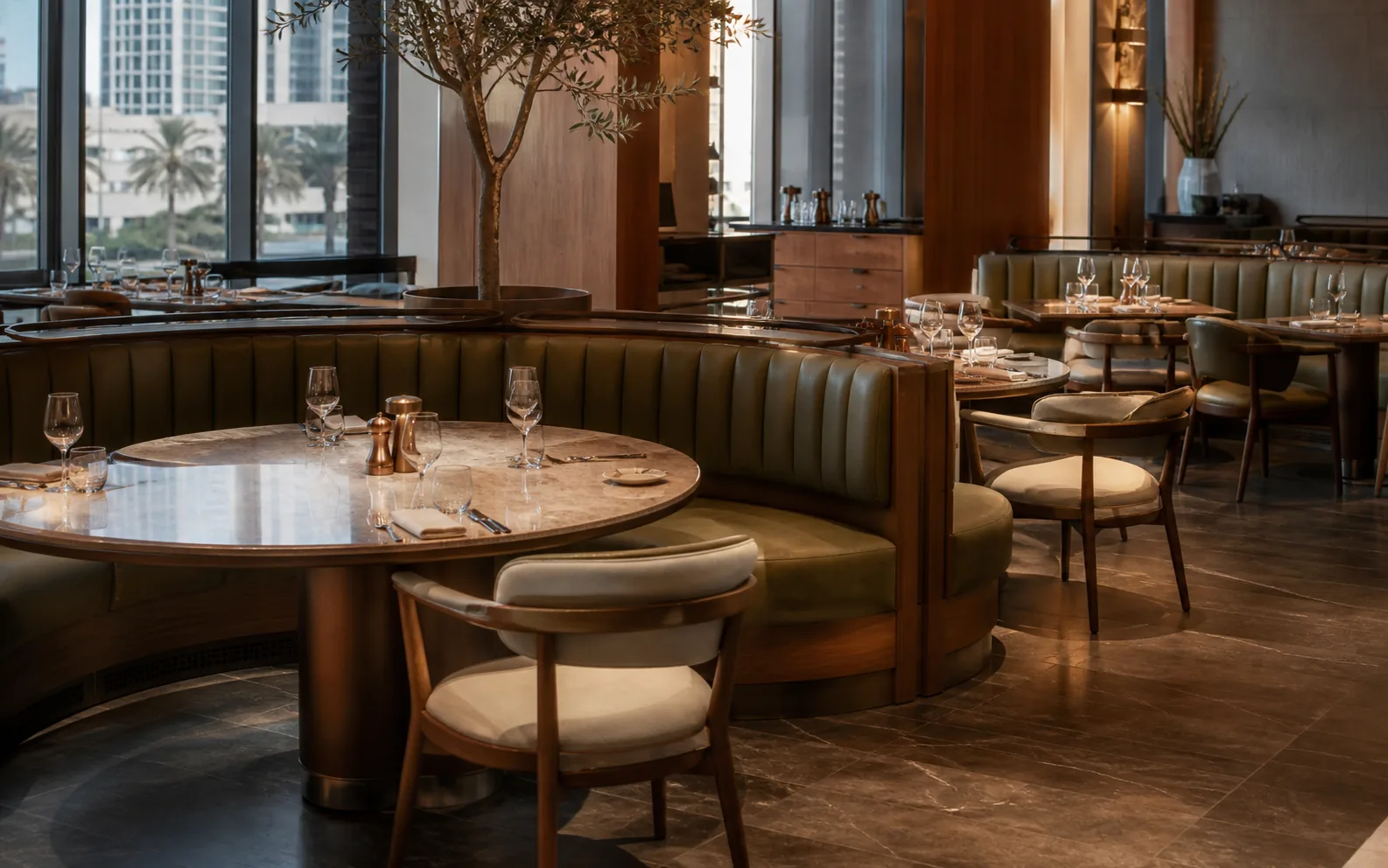
Hotel Lobby Furniture in Dubai: Reception & Lounge FF&E
A professional guide to hotel lobby furniture in Dubai, covering reception counters, concierge desks, lounge seating, tables, public areas, guest flow, luggage, materials, durability, and custom FF&E.
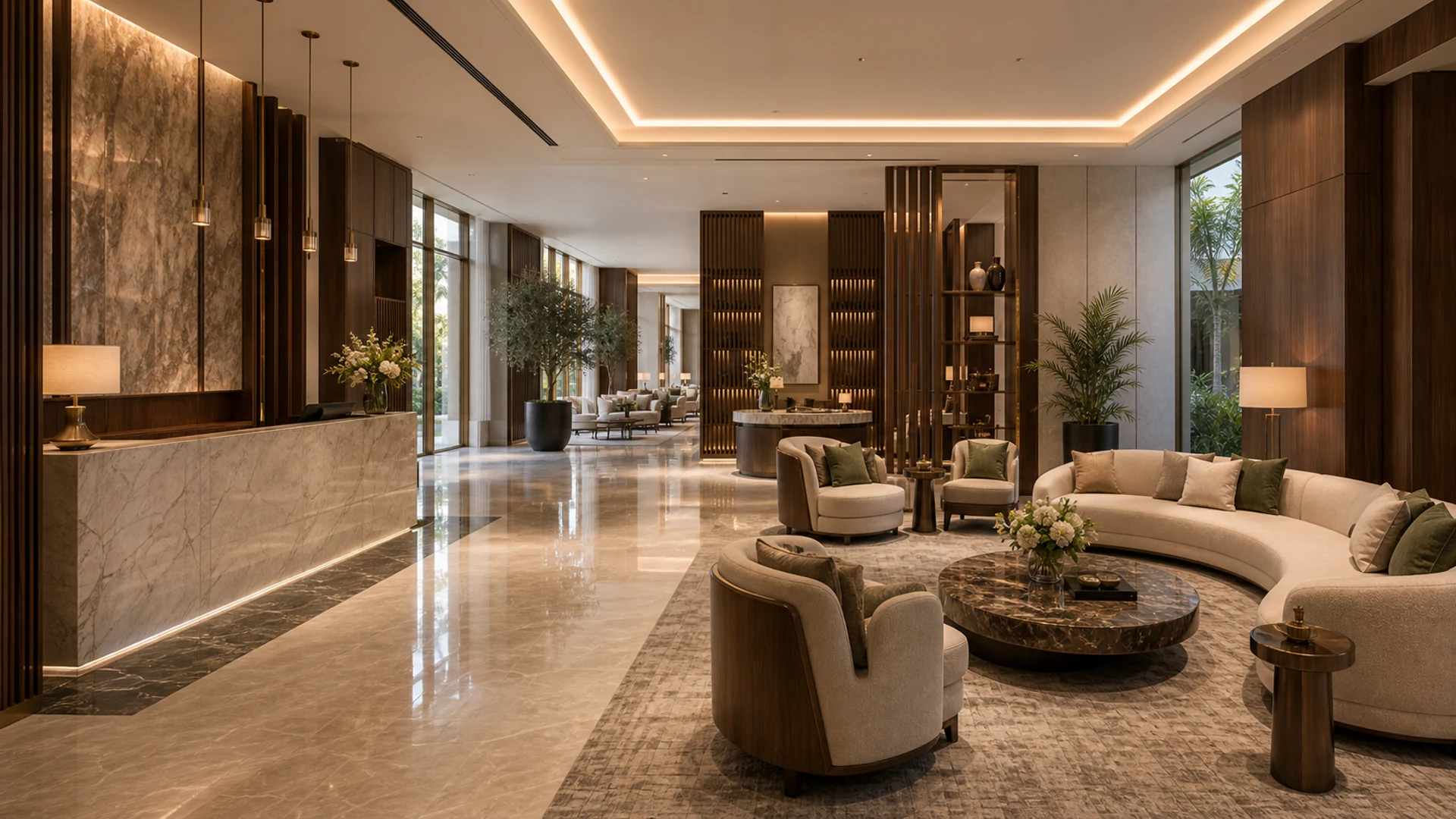
Hotel lobby furniture is not just an arrival image. It is a working piece of hotel infrastructure. The lobby has to welcome guests, absorb waiting time, direct circulation, support check-in, handle luggage, create meeting points, and still look calm at peak hours.
In Dubai, where hotels compete heavily on first impression, lobby furniture must feel premium without becoming fragile. It has to carry the brand and survive operations.
Professional rule: design the lobby around movement first, furniture second. If guests, luggage, and staff cannot move naturally, the furniture layout is wrong no matter how beautiful the pieces are.
Break the lobby into operating zones
A good lobby furniture plan starts by separating functions:
| Zone | Furniture required | Key planning issue |
|---|---|---|
| Arrival pause | Statement table, flowers, seating or clear space | Do not block the entrance or view to reception |
| Reception | Custom counter, guest-facing ledge, staff storage | Cable routing, accessibility, queue control |
| Concierge | Desk, guest chairs, display or storage | Privacy and visibility |
| Waiting lounge | Sofas, armchairs, benches, coffee tables | Comfort without blocking circulation |
| Informal meeting | Lounge chairs, communal tables, power access | Business guests and short meetings |
| Lift lobby | Benches, side tables, wall furniture | Durable, compact, not obstructive |
| Lobby cafe/bar | Dining chairs, tables, bar stools, service furniture | F&B operations and guest flow |
BSA’s hotel lobbies and lounges scope shows the wider public-area furniture package.
Reception counters
Reception is usually the most technical furniture item in the lobby. It combines guest experience, staff ergonomics, technology, storage, security, and brand identity.
A professional reception counter specification should include:
- Overall length and guest positions.
- Accessible service point if required.
- Staff worktop depth.
- POS, printer, scanner, and card machine positions.
- Cable routing and ventilation.
- Lockable storage.
- Stone, timber, metal, lacquer, or solid-surface finishes.
- Kick plates or luggage-impact protection.
- Lighting or signage integration.
- Modular breakdown for delivery.
The counter should be drawn before production. A reference image is not enough.
Concierge and guest service furniture
Concierge furniture should be approachable and functional. It often needs a lower, more conversational format than reception. The desk should hide operational clutter while allowing staff to engage guests comfortably.
For luxury properties, concierge furniture can become part of the arrival ritual. For business hotels, speed and clarity matter more.
Lobby lounge seating
Lobby seating must work for different guest behaviors:
- A solo guest waiting for transport.
- A family waiting for check-in.
- Two business guests having a quick meeting.
- A group arrival with luggage.
- Guests ordering coffee from the lobby lounge.
Use a mix of sofas, lounge chairs, benches, and smaller tables. Avoid a single oversized sofa layout that looks good in photography but does not support real use.
Seating construction
Hotel lobby seating should use:
- Strong internal frames.
- Commercial foam density.
- High-abrasion upholstery.
- Replaceable seat cushions.
- Cleanable fabrics or leather alternatives.
- Stable legs or bases.
- Floor glides that protect marble, timber, or tile.
If the lobby is attached to F&B, specify upholstery for food and drink spills, not just visual softness.
Tables and surfaces
Lobby tables receive more abuse than expected. Guests place luggage, coffee, laptops, flowers, bags, and phones on them. Select finishes accordingly.
Good options include sealed timber, stone, sintered stone, metal, solid surface, or durable lacquer depending on the design. Fragile glass or soft finishes should be used carefully in high-traffic zones.
Table heights should coordinate with seating. Oversized coffee tables can block movement. Tiny side tables are not useful for guests with bags and drinks.
Screens, planters, and zoning elements
Public-area zoning can be done with furniture rather than walls:
- Planters
- Low screens
- High-back seating
- Decorative partitions
- Console tables
- Rug zones
- Lighting clusters
These elements help divide the lobby without closing it. They should preserve staff sightlines and fire routes.
Luggage and circulation
Every furniture layout should be tested with luggage. A lobby may look spacious until guests arrive with suitcases. Check:
- Main path from entrance to reception.
- Reception to lift route.
- Group arrival waiting areas.
- Bell desk and luggage trolley movement.
- Access to cafe, concierge, toilets, and exits.
- Clearances around coffee tables and lounge chairs.
Furniture should not create pinch points near the entrance or lifts.
Durability and maintenance
Public-area furniture should be specified for lifecycle cost. Ask:
- Can cushions be replaced?
- Can the supplier reproduce the same fabric or finish later?
- Can table tops be refinished?
- Are legs and glides serviceable?
- Are fabrics stain-resistant?
- Is there a spare fabric allowance?
Hotel lobbies stay visible every day. Small damage becomes part of the guest impression quickly.
What should be custom?
Custom production makes sense for:
- Reception counters
- Concierge desks
- Long banquettes
- Feature sofas
- Large coffee tables
- Screens and partitions
- Planters and decorative public-area elements
- Integrated lobby cafe or bar furniture
Loose armchairs and side tables can be custom or semi-custom depending on budget and schedule.
BSA lobby furniture supply
BSA Trading supplies hotel lobby furniture for Dubai, UAE, and GCC projects. The scope includes reception counters, concierge desks, lounge sofas, armchairs, banquettes, coffee tables, side tables, planters, screens, corridor furniture, and public-area accessories.
We coordinate furniture with drawings, materials, finish samples, production, delivery, and installation support so the lobby works as an operating environment, not only as a visual concept.