Handmade Indonesian Teak Furniture: BSA Custom Range
Explore BSA's own Indonesian production line for handmade custom teak furniture, from timber selection and joinery to resort, hotel, villa, and outdoor collections.
BSA Trading now offers something more direct than a sourced furniture range: our own production line in Indonesia, specialised in handmade custom teak furniture. It gives hotel owners, developers, designers, and private clients one coordinated route from an initial sketch to finished pieces ready for a project in Dubai, the UAE, or the wider GCC.
The line is built for work that standard catalogues cannot solve. A resort may need a chaise adjusted to its pool-deck module. A restaurant may need 120 dining chairs with a particular woven back. A villa may need a dining table, cabana, benches, and lounge furniture to share one design language. With custom production, those decisions are developed as one collection rather than assembled from unrelated products.
The point of BSA’s Indonesian line is not teak as a generic material. It is control: proportion, grain selection, joinery, hand finishing, woven detail, upholstery coordination, quality checks, and packing are developed around the project brief.
Why Indonesia, and why teak?
Indonesia combines deep furniture-making knowledge with a skilled workforce accustomed to shaping, joining, sanding, weaving, and finishing timber by hand. That matters in custom furniture, where the quality is read at the transitions: the curve of an arm, the shoulder of a joint, the consistency of a woven panel, and the way several pieces sit together as a family.
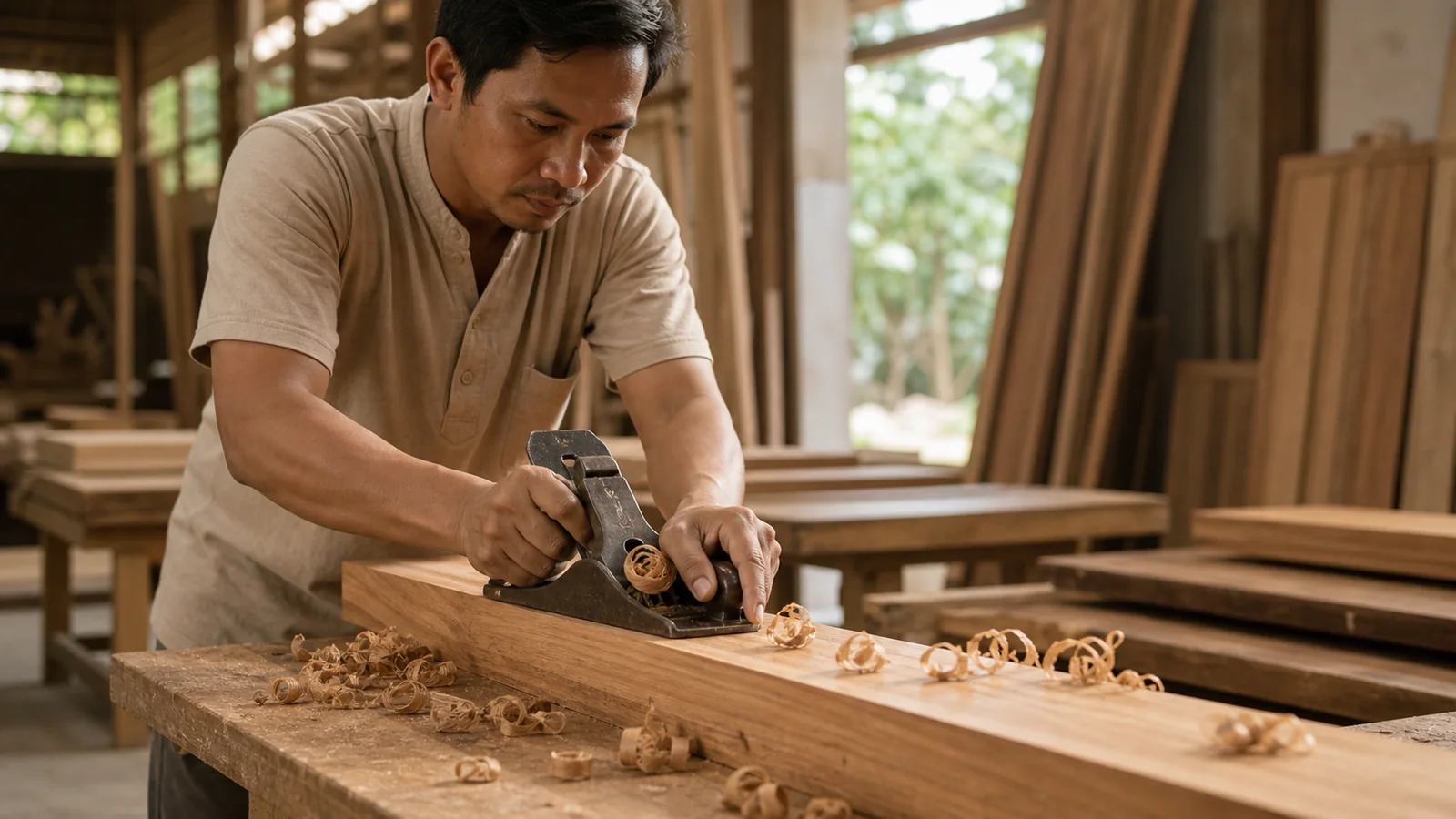
Teak is especially valuable for hospitality and residential projects because it balances visual warmth with practical performance. Its natural oils, dimensional stability, and dense grain make it a strong choice for exterior furniture when the construction and maintenance plan are correct. Indoors, the same material gives reception pieces, benches, dining tables, consoles, and lounge chairs a tactile quality that veneers and printed surfaces struggle to reproduce.
Teak is not maintenance-free, and it should not be sold that way. Natural teak exposed to sun and weather gradually moves from honey brown toward a silver-grey patina. Some clients want that evolution; others want the original warmth retained through periodic cleaning and re-oiling. BSA agrees the intended appearance at specification stage so the finish, maintenance instructions, and replacement expectations all point in the same direction.
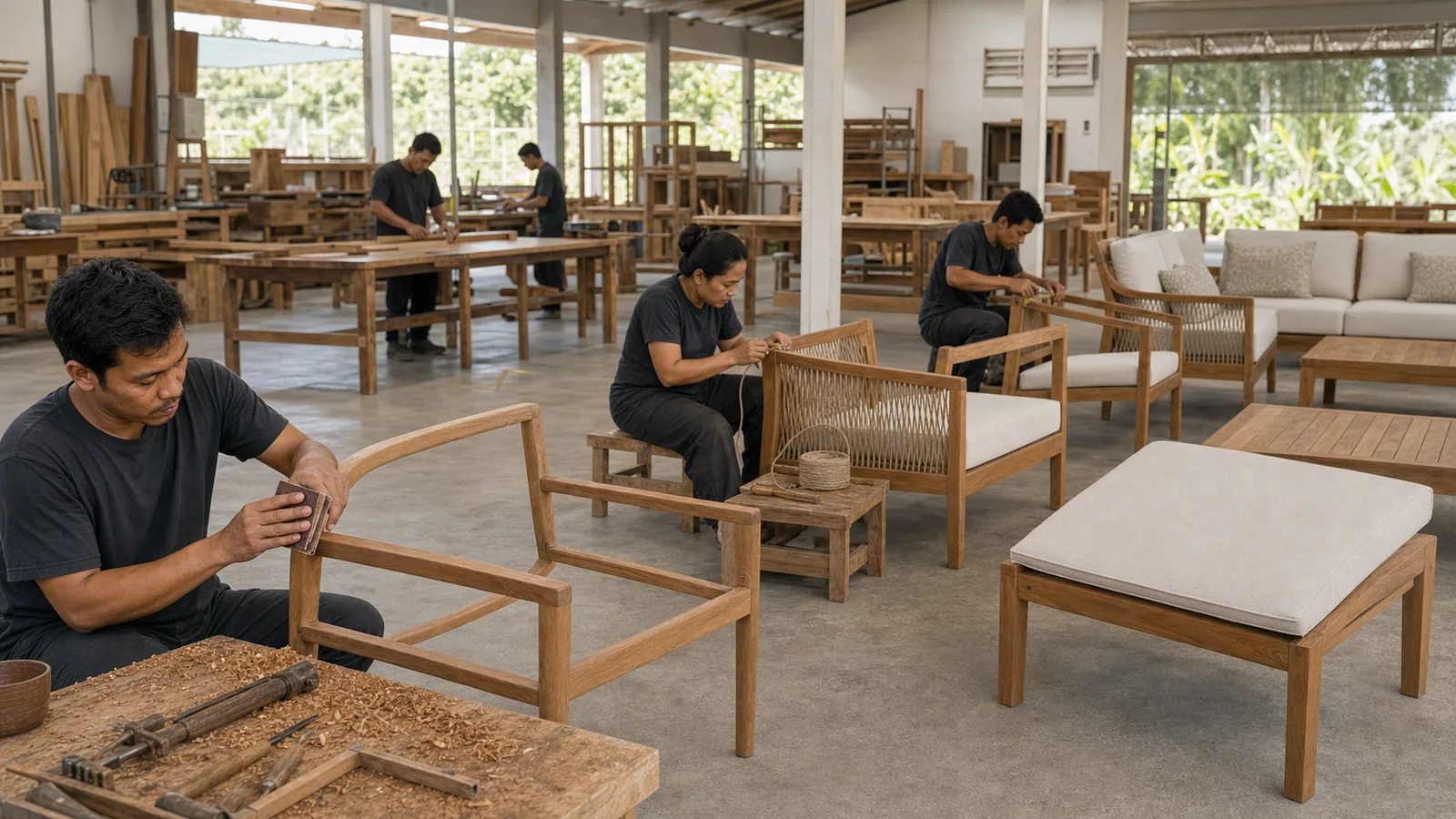
Inside BSA’s own Indonesian production line
Our production process begins with the design intent, not with a fixed product list. The input can be a consultant’s drawing package, a furniture schedule, a concept image, or a physical reference. BSA’s team translates it into dimensions, construction details, material choices, finish samples, and an approval path appropriate to the project.
1. Timber selection and component planning
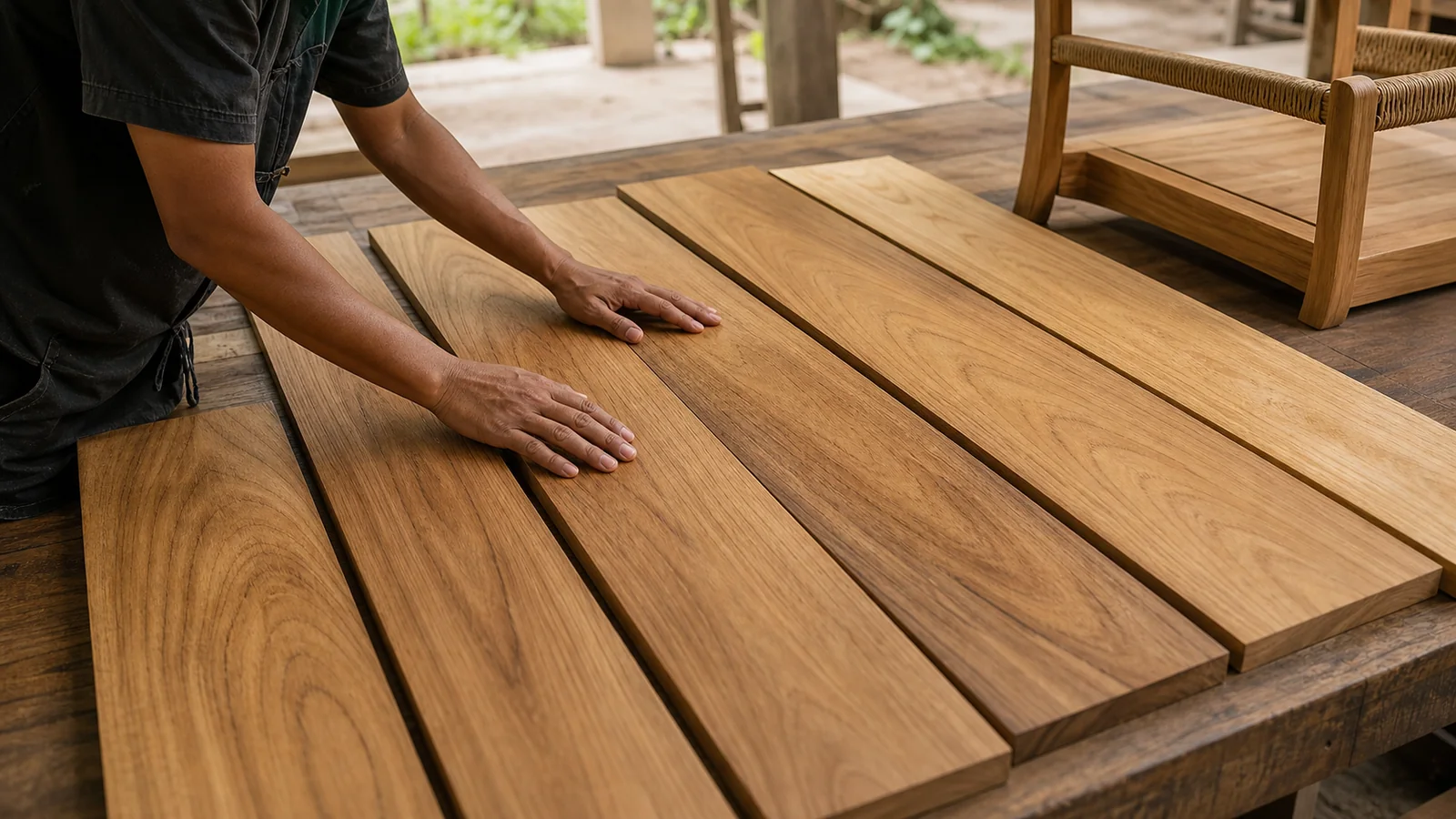
Boards are selected for the job each component must do. Straight, stable lengths suit structural rails and legs; expressive grain can be reserved for tabletops, arms, and visible faces. On a multi-piece collection, tone and grain are graded across the order so one chair does not read as a different material from the table beside it.
For project work, the timber specification and any required origin or chain-of-custody documentation should be agreed before production. BSA can align the material submittal with the consultant’s requirements rather than introducing paperwork after the furniture is complete.
2. Shop drawings, mock-ups, and joinery
Custom does not mean improvised. Critical pieces move through shop drawings and, where the scale or design risk warrants it, a full-size prototype or control sample. Seat height, depth, back angle, arm profile, table clearance, cushion thickness, and the relationship between timber and woven elements can all be judged before the full quantity begins.
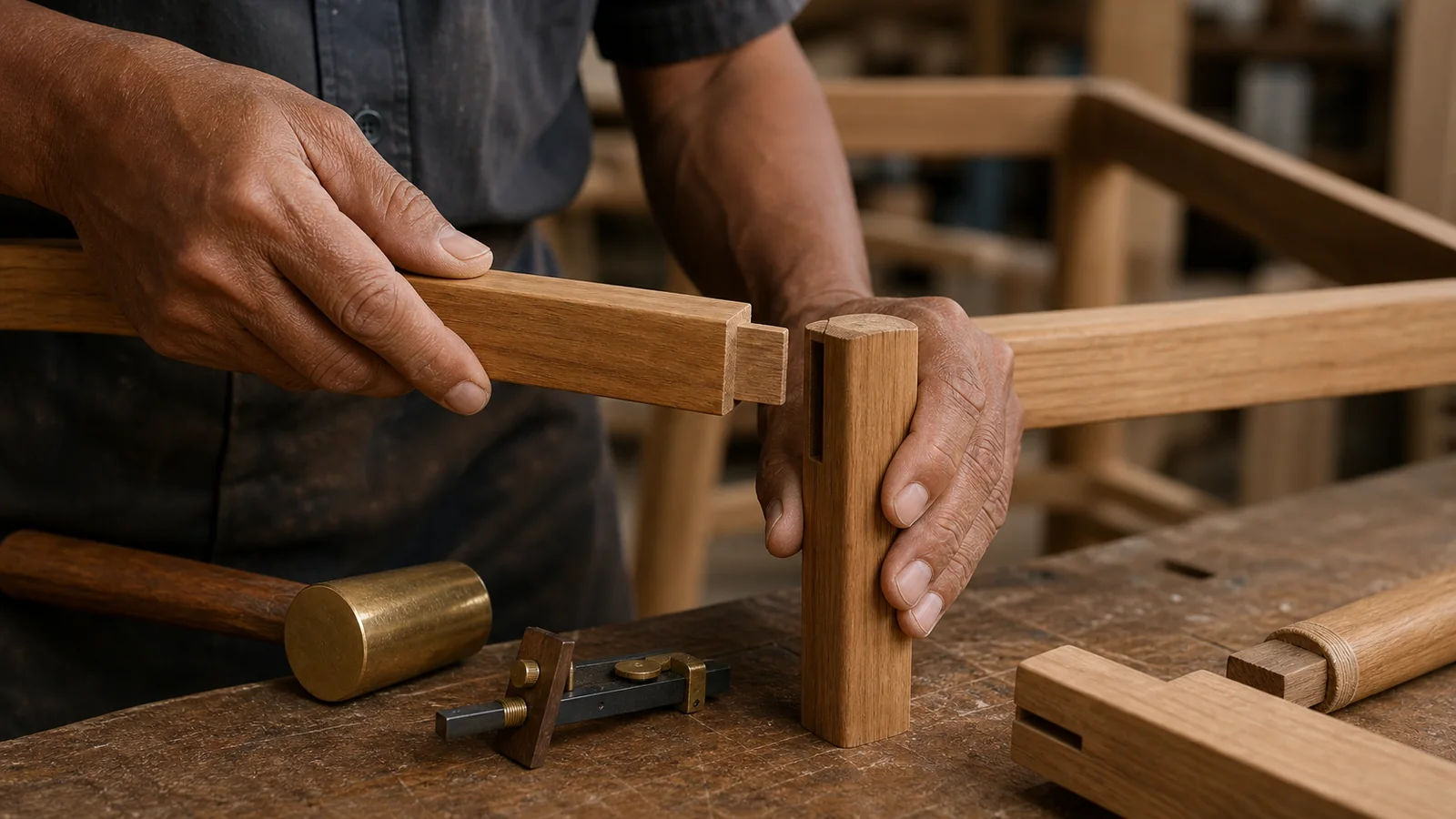
Traditional joint logic remains useful because outdoor furniture is repeatedly loaded, moved, heated, cooled, and exposed to humidity. A well-proportioned mortise-and-tenon joint creates mechanical strength inside the timber rather than asking surface screws to do all the work. The precise construction route still depends on the piece, its dimensions, and whether it is intended for indoor, covered-outdoor, or exposed-outdoor use.
3. Hand shaping and sanding
The difference between an ordinary frame and a refined one is often a few millimetres removed by hand. Arms are eased where a guest touches them, edges are softened without losing definition, and adjacent components are blended so the silhouette reads as one continuous line.
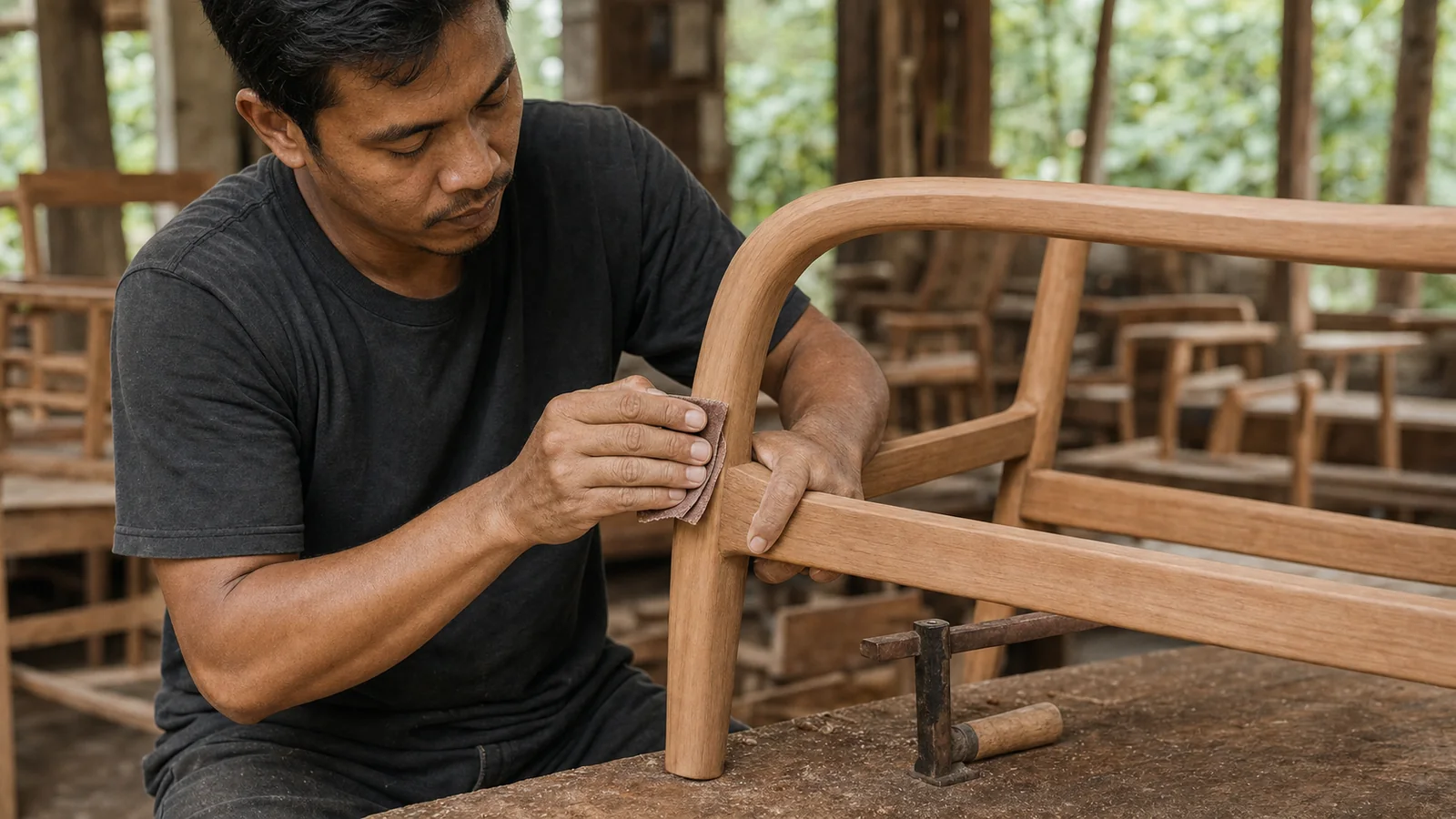
This is also where custom furniture earns its visual lightness. Teak furniture does not need to look heavy. Correct section sizes, strong joints, controlled radii, and careful sanding allow a frame to remain slim while still being designed for hospitality use.
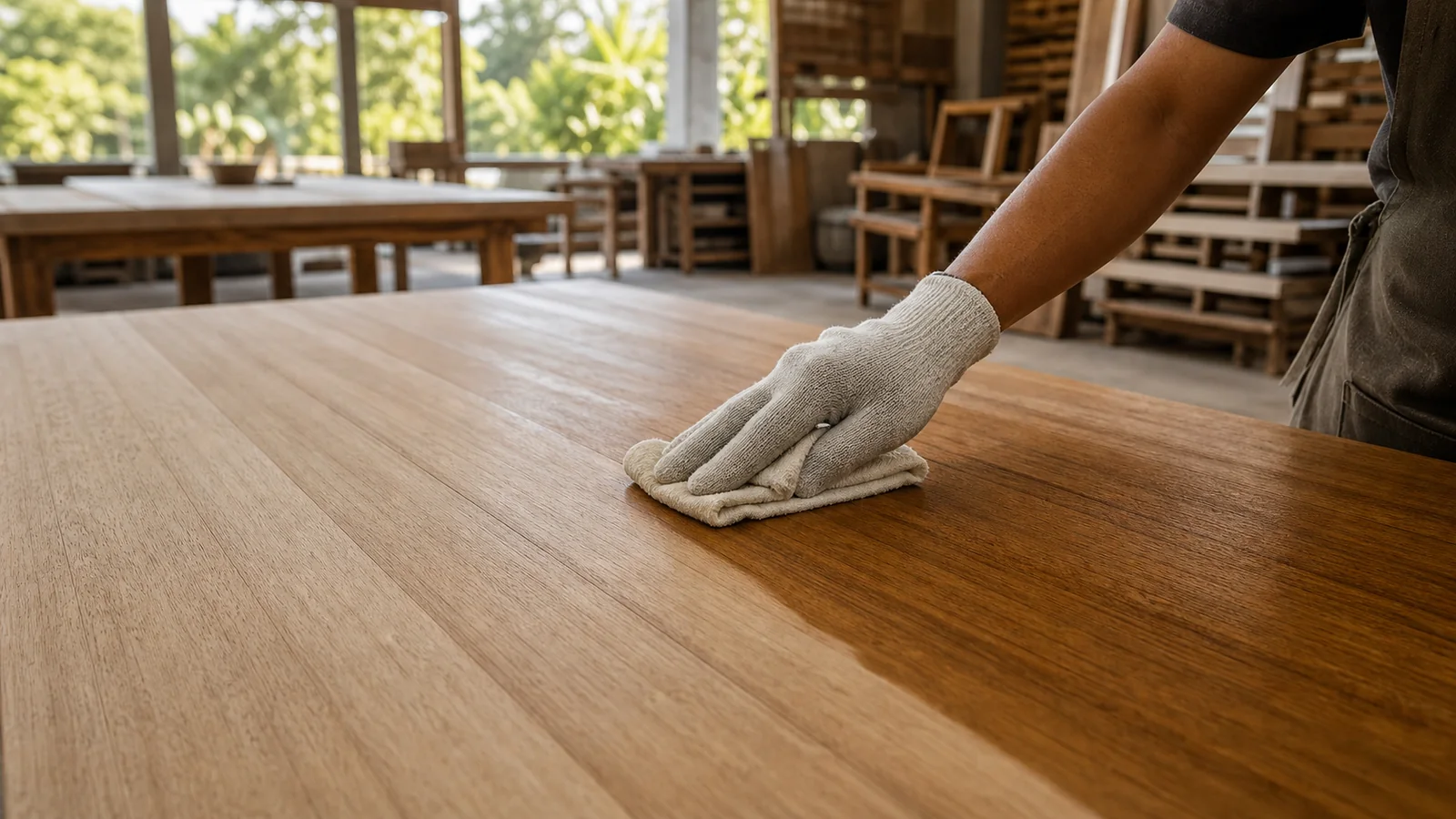
4. Finish, weaving, and upholstery coordination
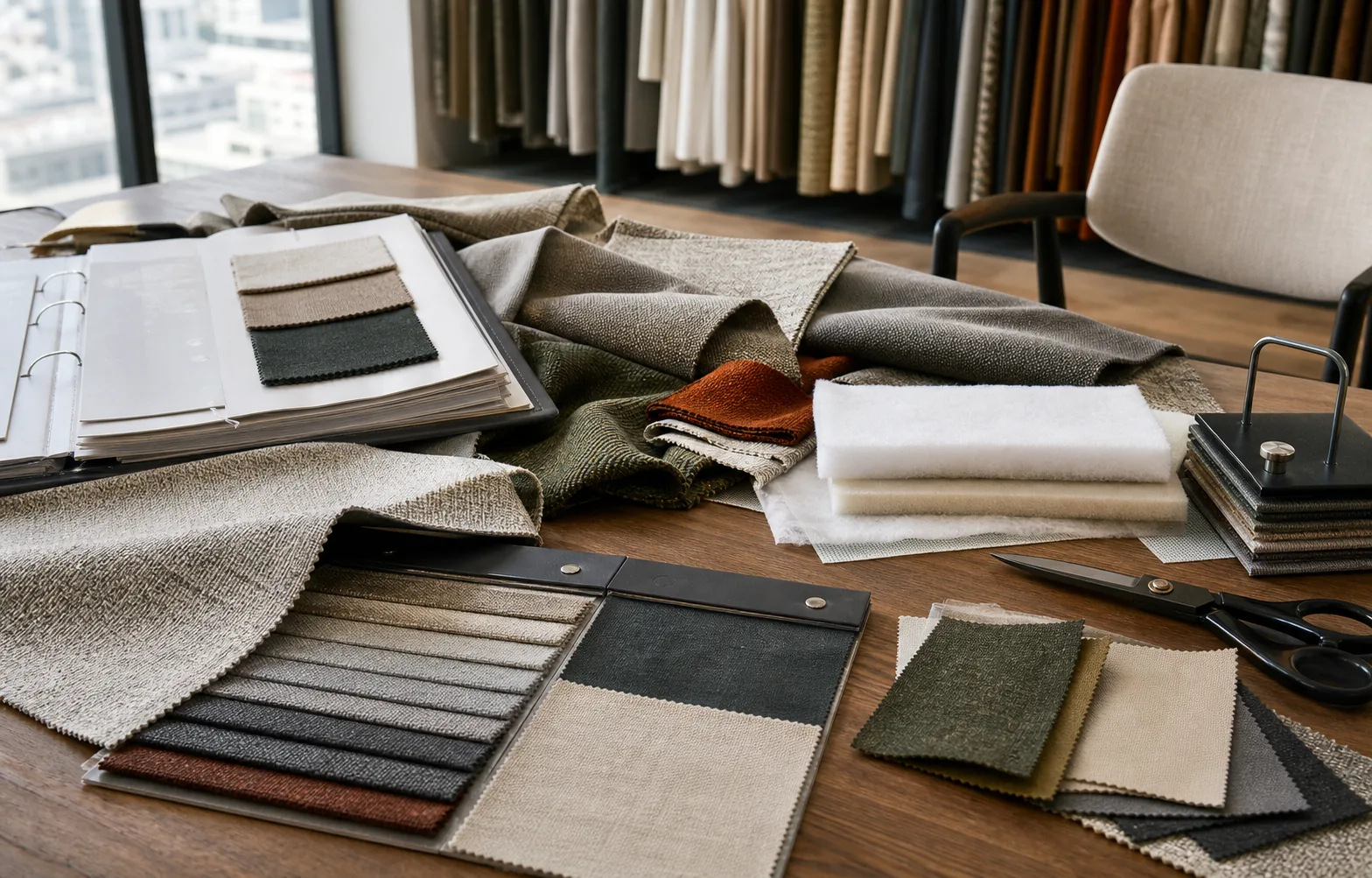
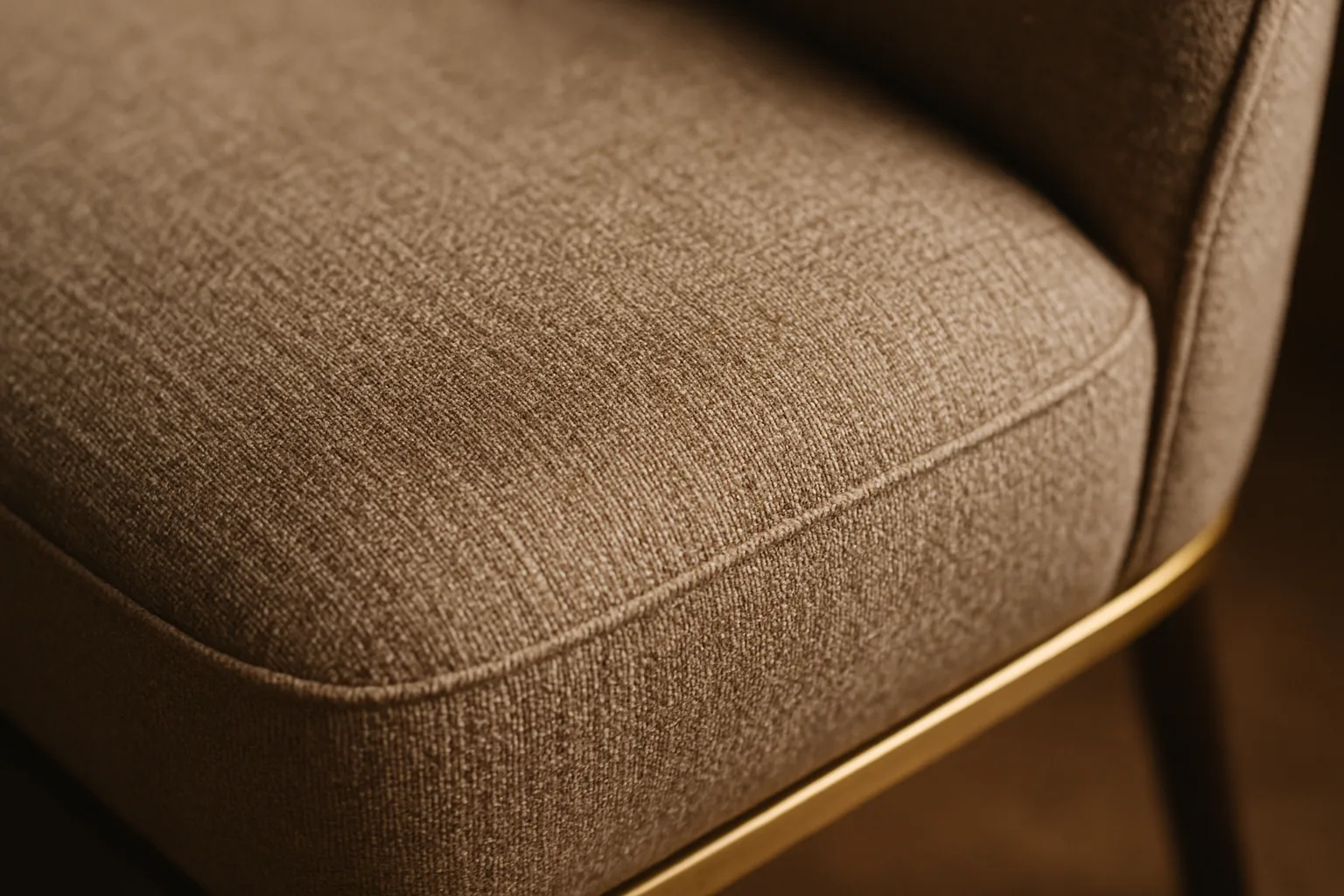
Finish changes how teak feels as much as how it looks. A natural oil brings out the grain with a low satin appearance. A specified tone can make a collection warmer, quieter, or better aligned with adjacent stone and metal finishes. Samples are the right place to make that decision; a phone screen is not.
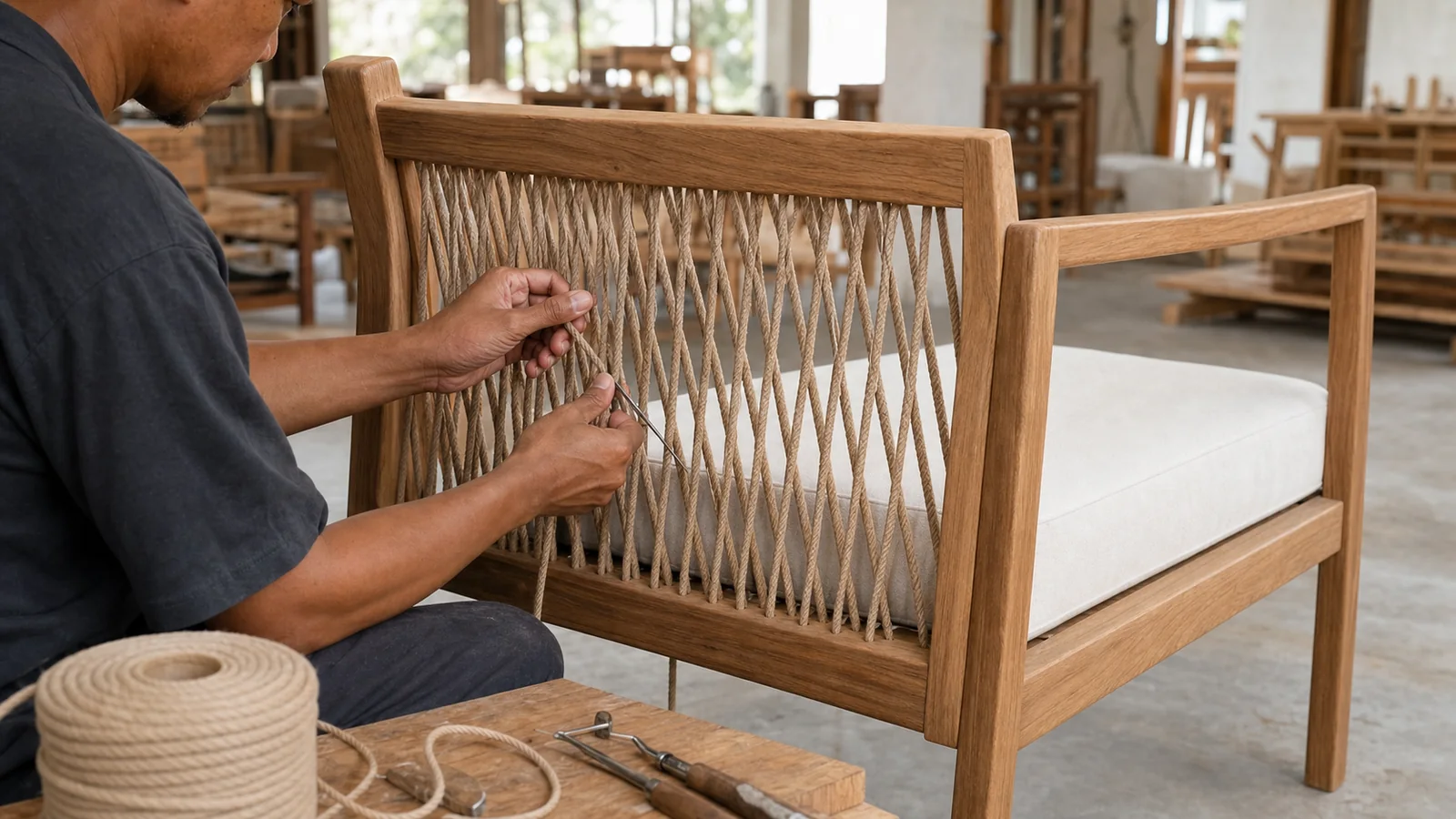
Woven side and back panels add ventilation, visual softness, and a lighter silhouette. Their pattern, colour, tension, and attachment detail are part of the engineering, not decoration applied at the end. For outdoor pieces, the rope or fibre specification must suit UV exposure and cleaning, while cushions need the right foam, drainage, textile, seam, and removable-cover construction for the location.
Explore the teak furniture line
The collection is not a closed catalogue. It is a production capability organised around several core furniture families, each of which can be adjusted for the project.
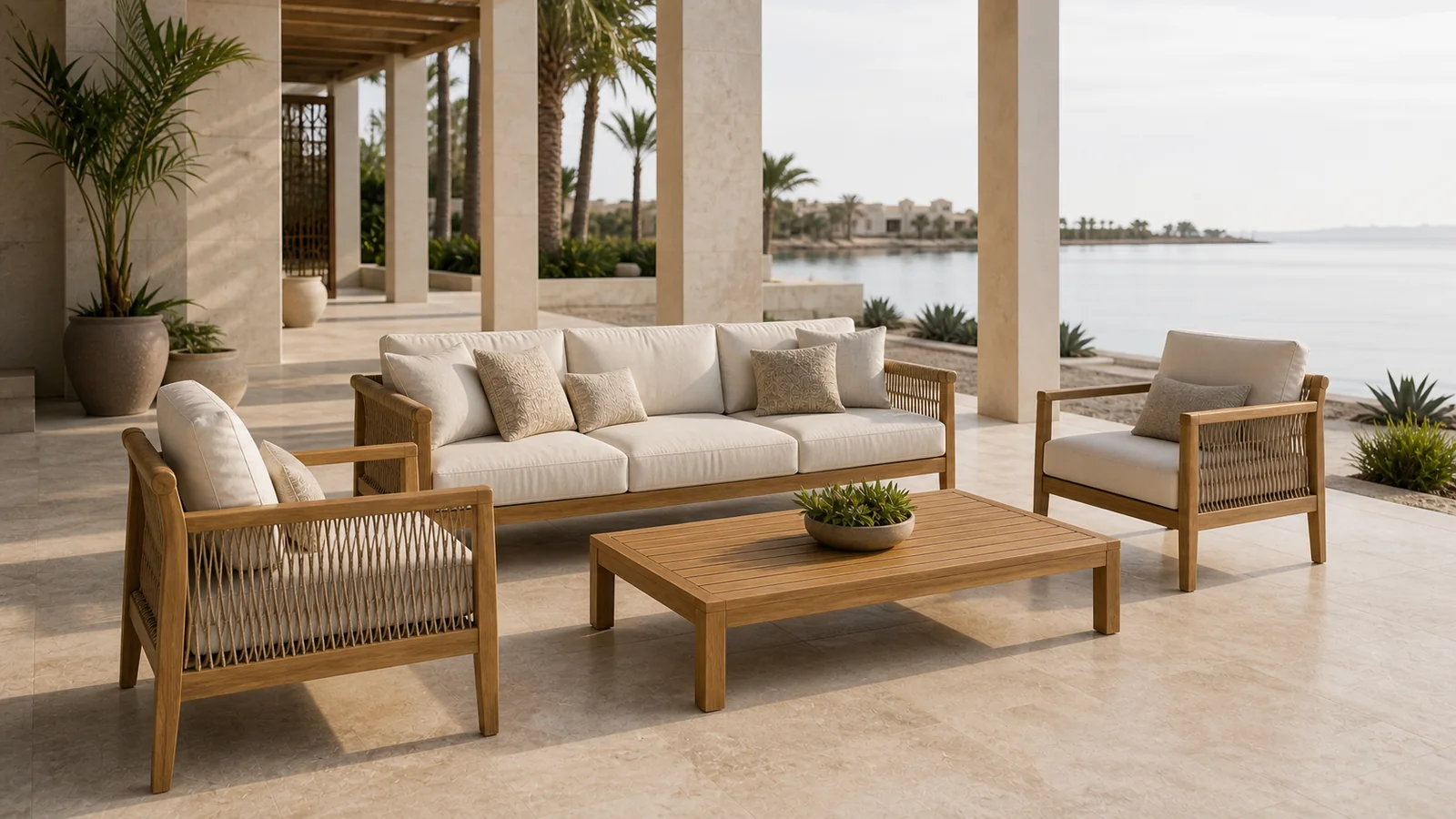
Lounge sofas, armchairs, and low tables
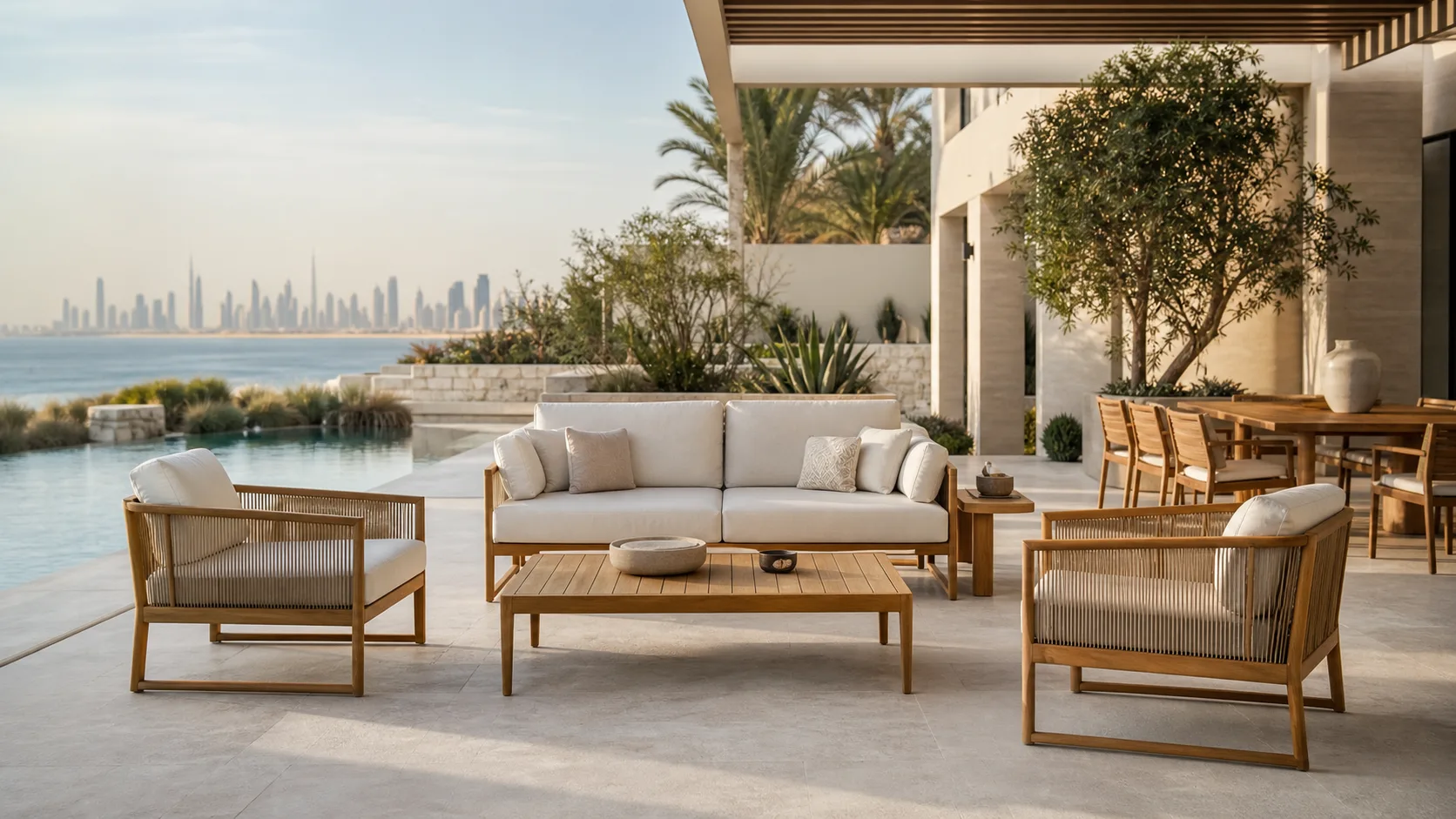
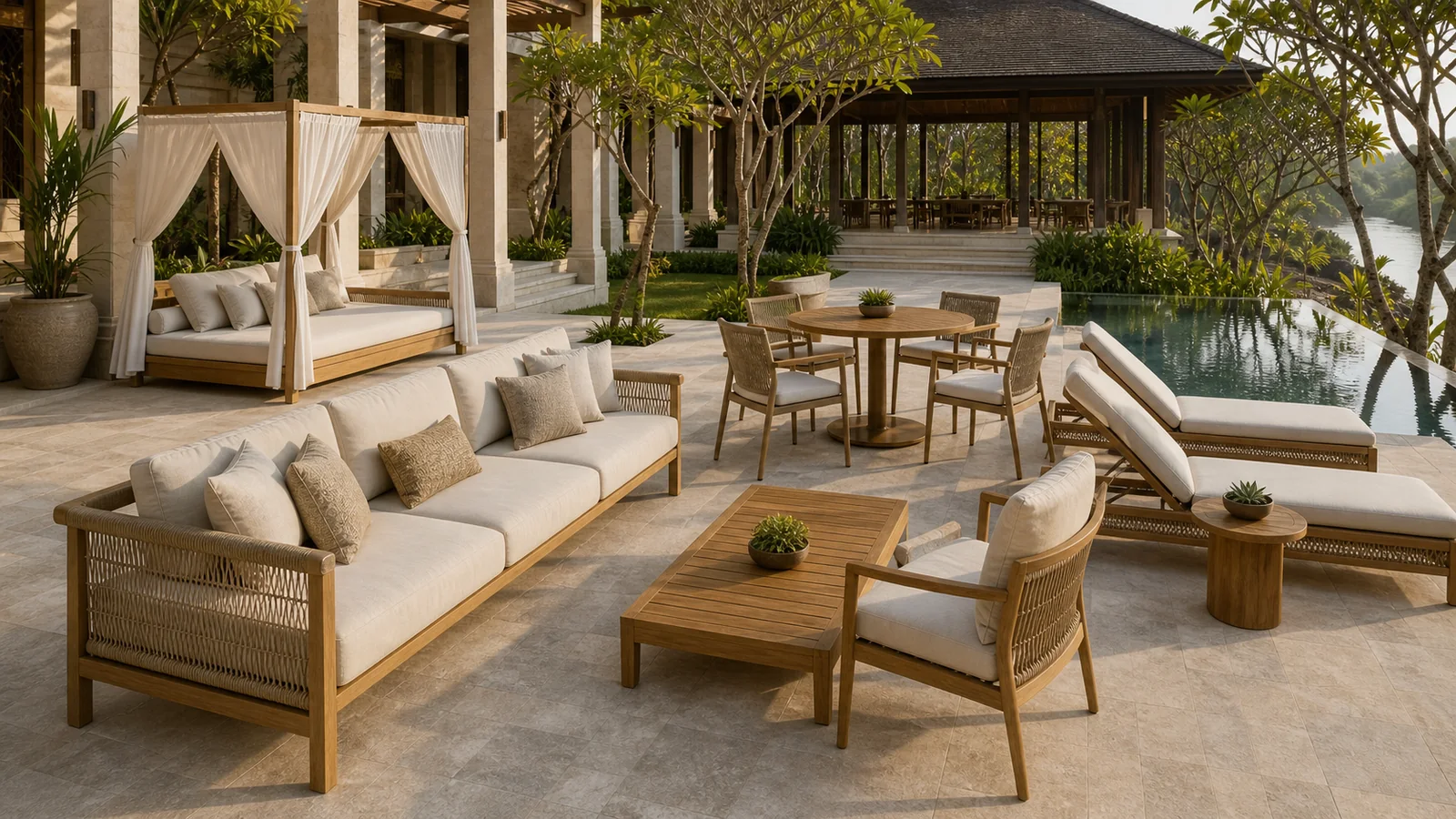
Teak lounge groups suit resort terraces, hotel courtyards, rooftop venues, beach clubs, private gardens, and large villa balconies. Frames can be all timber or combined with woven panels; cushions can be loose, tailored, or modular. Coffee and side tables carry the same profiles and finish so the setting reads as a designed collection.
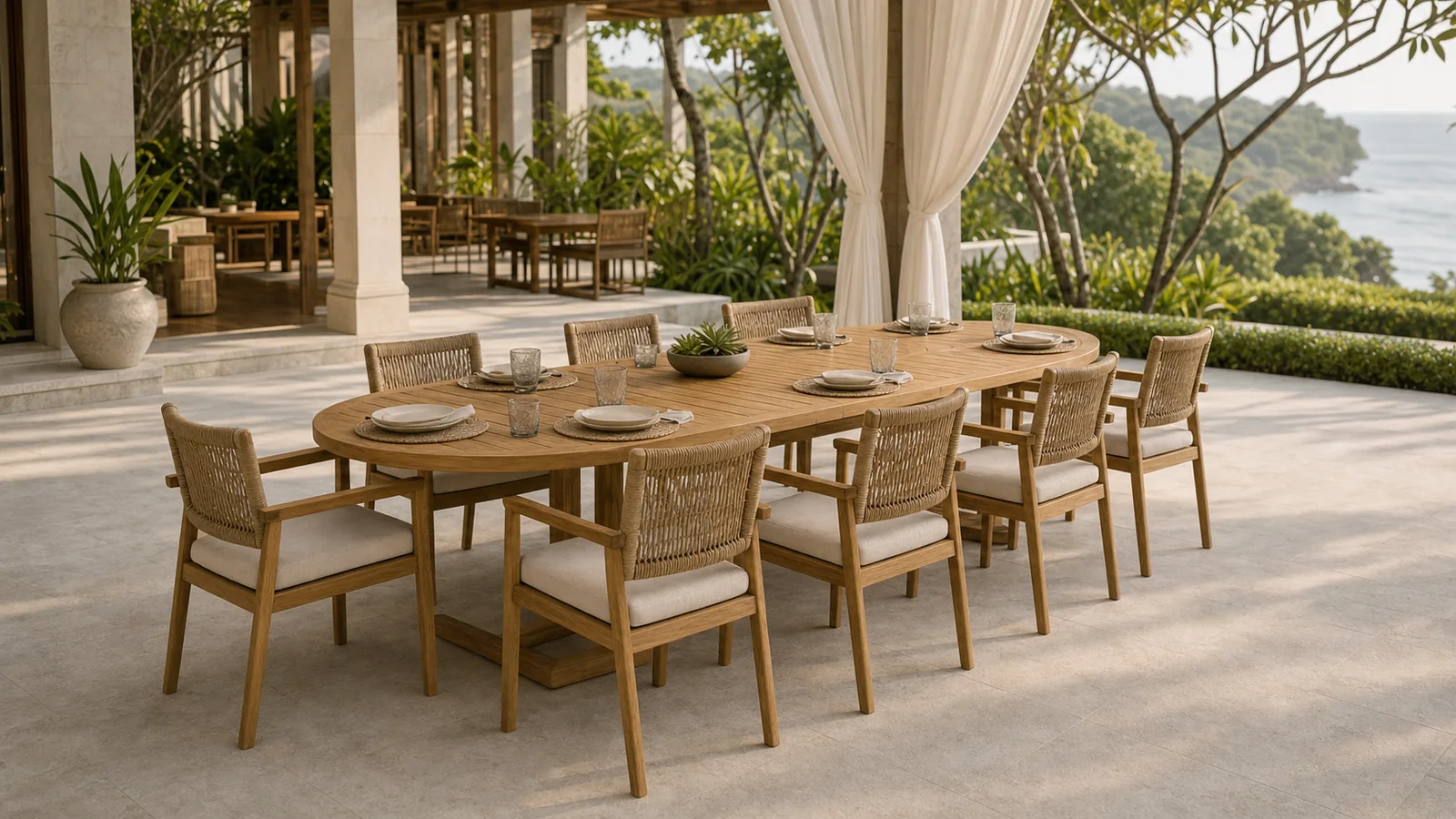
Dining tables and chairs
The production line can develop round, oval, rectangular, and communal tables with matching dining or carver chairs. For restaurant and hotel use, the brief must consider more than appearance: chair weight, pull-out clearance, arm height below the tabletop, floor glides, cleanability, stacking requirements where relevant, and replacement quantities all affect the final design.
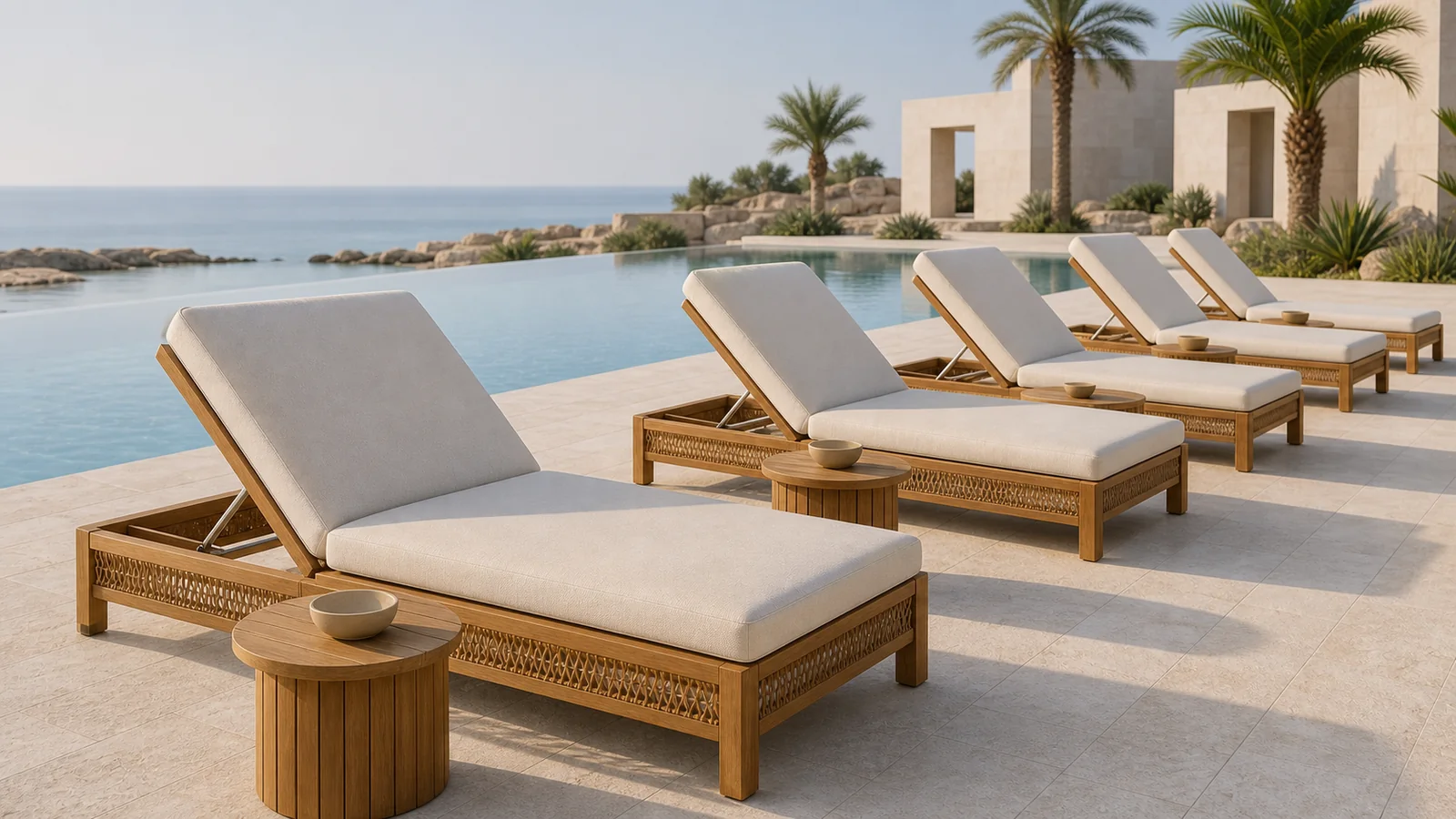
Pool chaises and sun loungers
A commercial pool chaise needs an adjustable back that is easy for guests, hardware selected for the environment, wheels that staff can actually use, replaceable glides, and cushions that can release water. BSA can tune the frame width, height, side-panel detail, and textile package to the deck plan and operator’s maintenance routine.
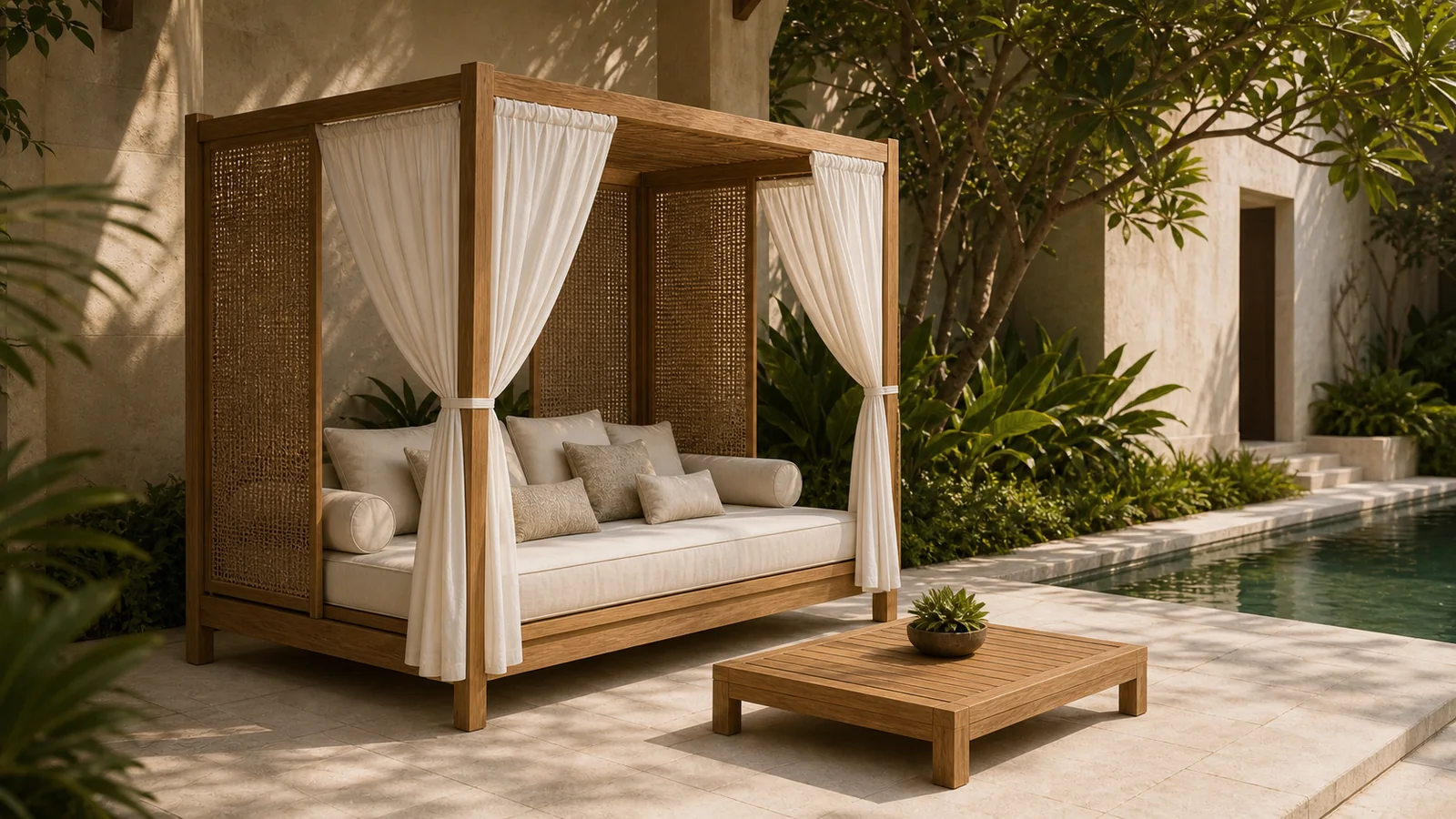
Daybeds and cabanas
Daybeds turn a furniture item into a guest zone. The teak structure can be coordinated with woven privacy panels, removable curtains, canopy fabric, mattress construction, loose cushions, and matching service tables. For hospitality projects, access for housekeeping and replacement of soft components should be resolved before the final silhouette is approved.
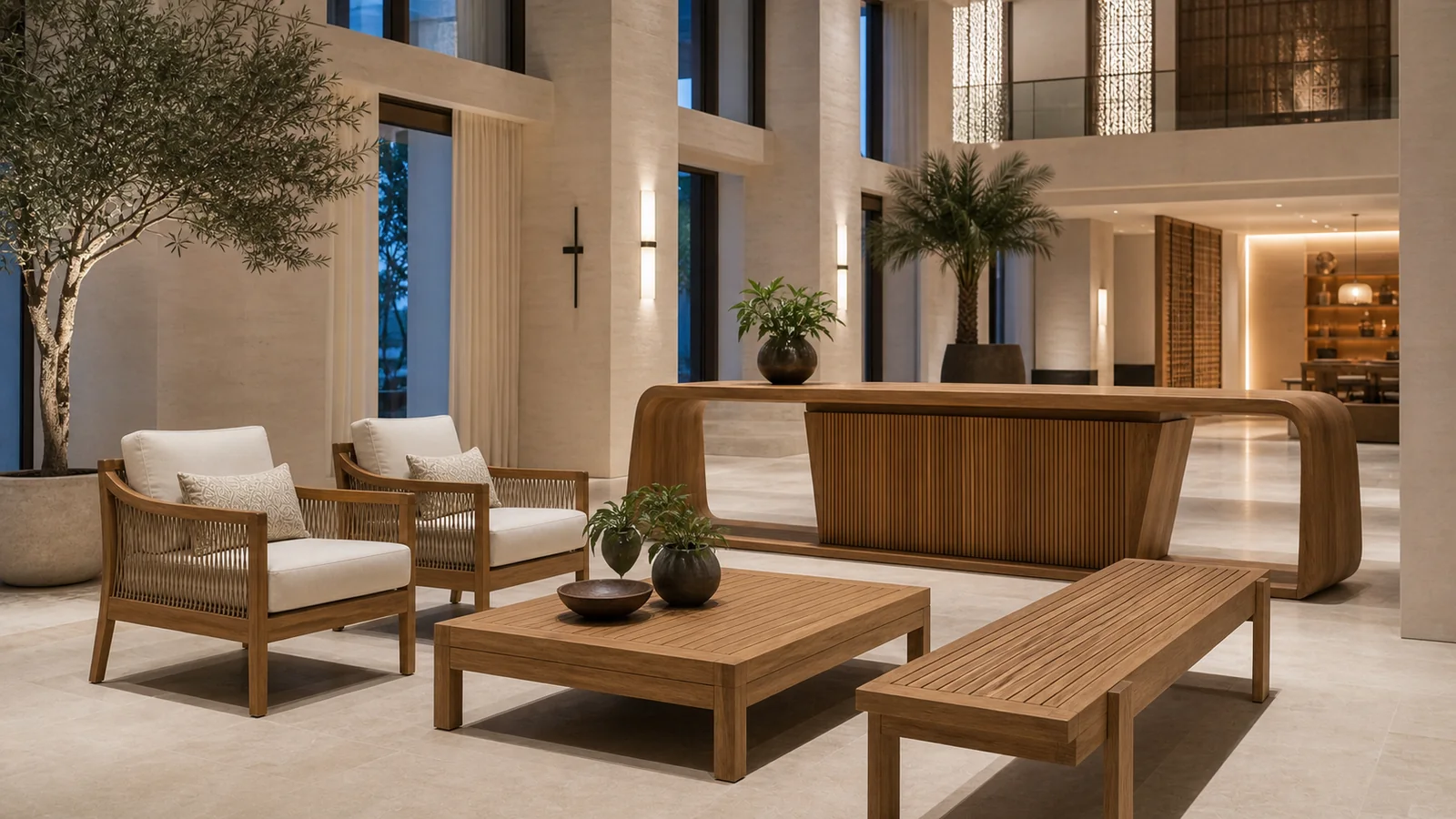
Indoor statement pieces
Teak is not limited to poolside furniture. BSA’s Indonesian line can produce reception consoles, lobby benches, dining and meeting tables, sideboards, lounge chairs, and project-specific pieces where solid timber and hand-shaped detail are central to the interior concept.
Built for a specific project, not an abstract climate
“Outdoor in the GCC” is not one condition. A shaded Abu Dhabi terrace, a Dubai pool deck, a beachfront resort in Oman, and an exposed Red Sea property place different demands on furniture. The specification should respond to actual sun, salt, humidity, irrigation, cleaning routines, storage, and guest turnover.
The timber frame is only one part of that response. Exposed hardware, glides, rope, foam, fabric, zips, thread, and covers must be selected as a system. BSA can coordinate solid teak with 316-grade stainless components, UV-stable woven elements, quick-dry foam, and solution-dyed outdoor textiles where the project requires them. Our practical guide to teak furniture for the UAE climate covers heat, humidity, coastal air, natural patina, and maintenance, while the broader outdoor resort and pool furniture guide explains the performance questions that should be settled before an order.
Quality control and export preparation
Before packing, the control sample becomes the reference for production. Dimensions, joint alignment, frame level, finish consistency, weave tension, cushion fit, and the stability of moving components are checked against the approved piece. On repeated hotel quantities, this is what keeps chair number 80 consistent with chair number one.
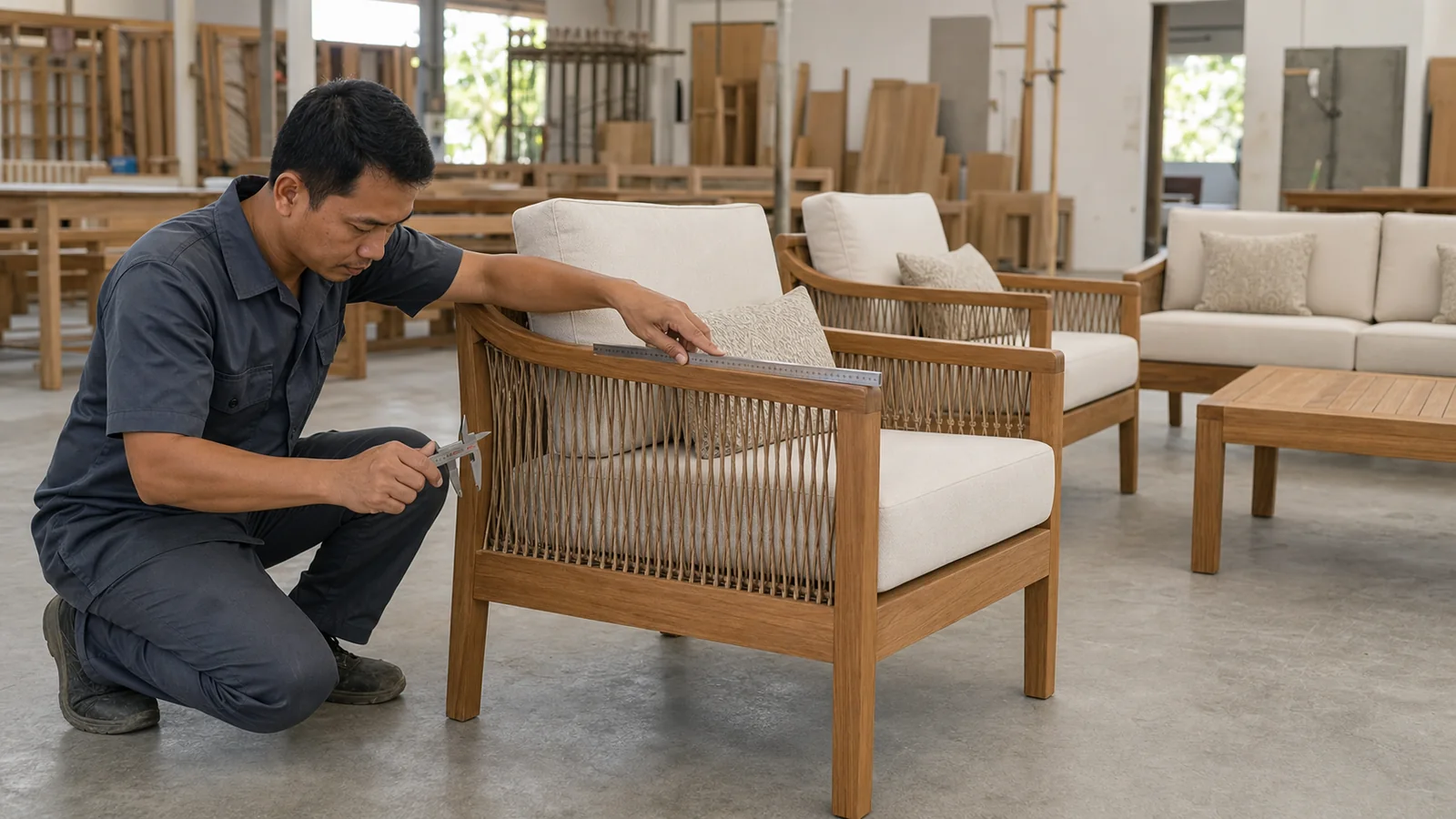
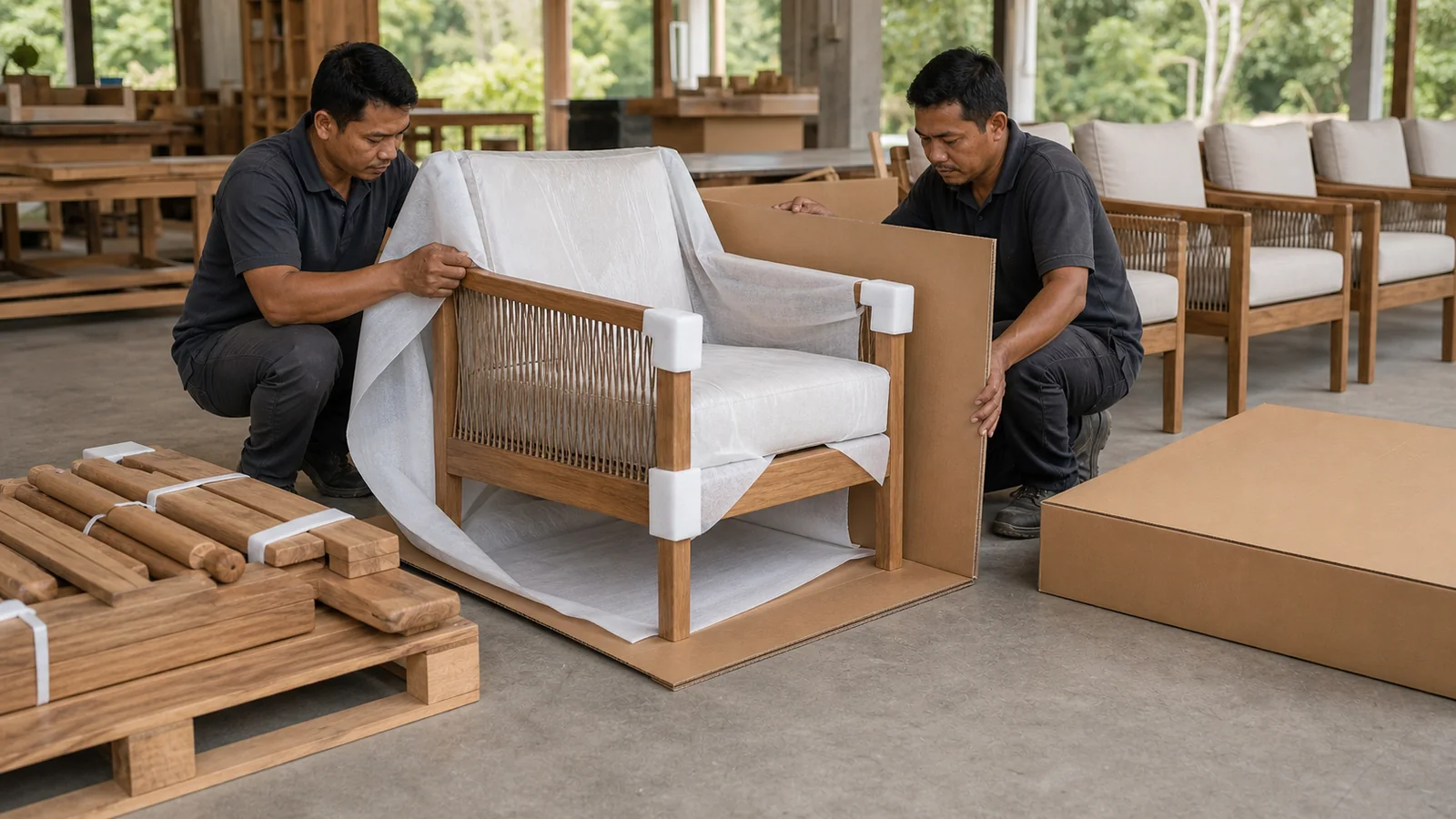
Packing is designed around the furniture and its journey. Finished teak needs breathable surface protection, guarded corners, secure internal spacing, and cartons or crates that prevent rubbing without trapping unnecessary moisture. Knock-down elements are labelled within the project packing schedule, with hardware and assembly information controlled so site teams are not matching anonymous parts during installation.
What can be customised?
- Overall dimensions, seat height, depth, back angle, and table clearance
- Frame sections, profiles, curves, slat spacing, and edge details
- Natural, oiled, toned, or project-matched finish direction
- Woven-panel pattern, colour, density, and attachment detail
- Cushion thickness, firmness, foam type, textile, seams, and removable covers
- Hardware, glides, adjustment mechanisms, and knock-down construction where appropriate
- Quantities from a focused private order to repeated hospitality and residential packages
- Packing, spare components, and delivery sequencing by area or room
For a useful first review, send BSA the reference image or drawing, required quantity, approximate dimensions, project location, intended use, preferred finish, upholstery direction, and target date. We can then identify what should be sampled, what needs a prototype, and where the design can be value-engineered without losing its character.
Explore BSA’s wider outdoor furniture collection, review our material library, or read how a bespoke package moves from drawings to delivery in our custom furniture manufacturing guide.