Teak Furniture for the UAE Climate: Heat, Humidity & Care
A practical UAE guide to specifying and maintaining teak outdoor furniture around heat, UV, humidity, coastal salt, pool water, cushions, hardware, and natural patina.
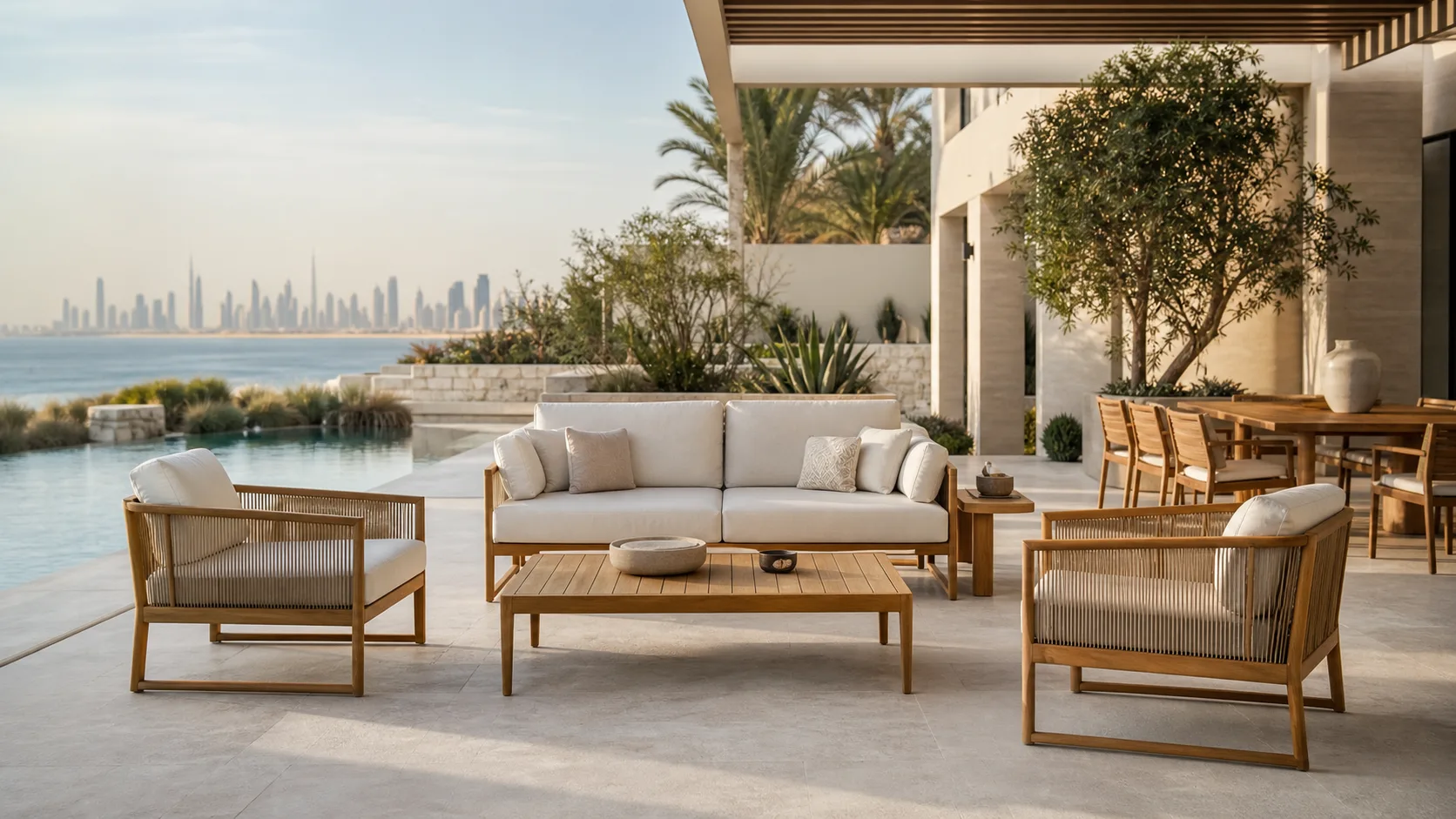
Teak is often presented as the answer to every outdoor-furniture problem. The more useful answer is precise: teak is one of the strongest natural-timber choices for the UAE, provided the whole furniture system is designed for the actual site.
A shaded villa terrace in Dubai is not the same environment as a beachfront resort in Ras Al Khaimah. A rooftop restaurant faces different heat and wind from a pool deck that is rinsed every morning. Even within one hotel, furniture beneath a pergola can age differently from the same collection positioned five metres away in direct sun.
This guide explains what UAE owners, designers, operators, and procurement teams should decide before ordering teak furniture—and how to care for it once the project opens.
The key question is not simply “Is it teak?” It is: how are the timber, joints, hardware, glides, woven elements, cushions, covers, and maintenance routine working together in this particular location?
What the UAE climate does to outdoor furniture
UAE outdoor furniture is exposed to overlapping stresses. The intensity varies by emirate, season, orientation, shade, distance from the sea, and daily operating routine.
Strong sun and surface heat
Direct sun changes colour, heats surfaces, and accelerates the ageing of finishes, textiles, rope, thread, and plastic components. Teak itself may remain serviceable while a poorly selected cushion cover fades, a low-grade glide becomes brittle, or an unsuitable coating begins to look uneven.
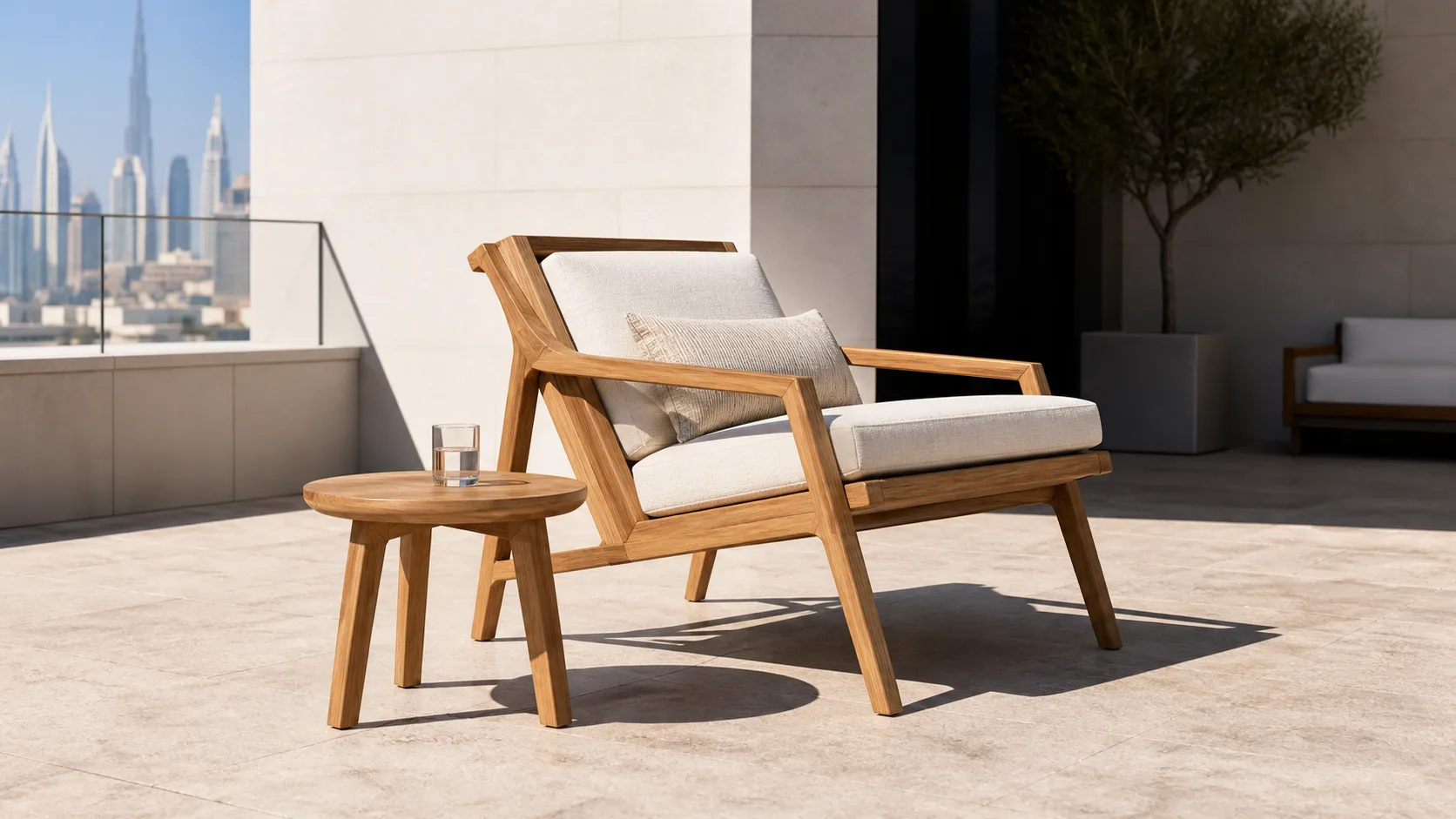
Shade is therefore part of the furniture specification. Plans should identify pieces that are fully exposed, partly shaded, or protected beneath a roof. That distinction affects finish expectations, textile selection, inspection frequency, and whether cushions need to be removed between service periods.
Humidity, condensation, and slower drying
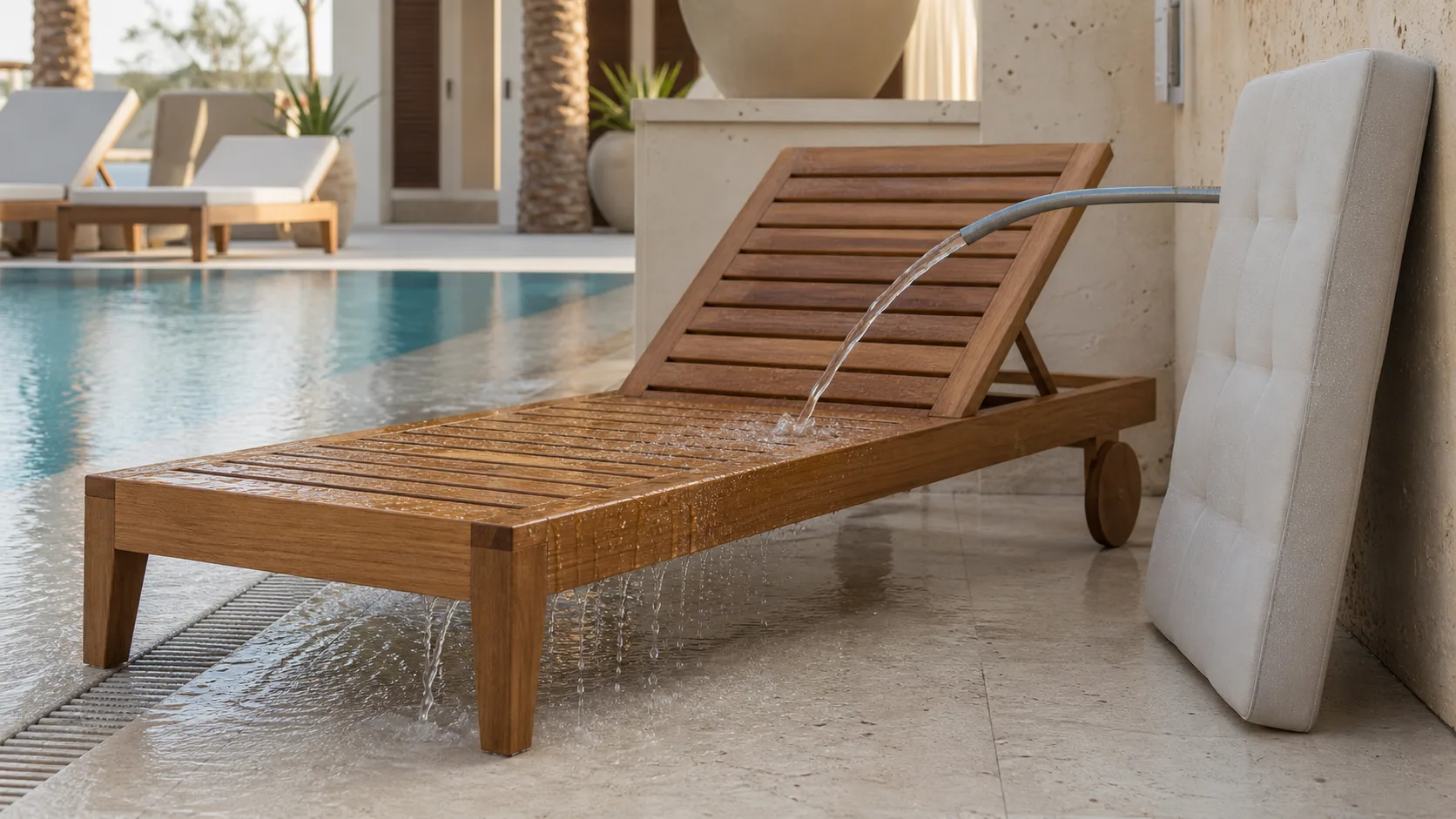
Humidity does not mean the teak will immediately fail. It means every detail that holds moisture deserves attention. Tight cushion platforms, blocked drain gaps, permanently covered furniture, absorbent foam, and seams that cannot release water can keep a piece wet long after its visible surface appears dry.
Teak sections should shed water rather than create pockets. Cushions should be removable, and the support beneath them should allow air to circulate. Covers must fit securely but also suit the manufacturer’s instructions; wrapping damp furniture in a non-breathable sheet can create the condition the cover was meant to prevent.
Coastal salt and airborne sand
Salt affects more than furniture positioned directly on the beach. Coastal air can leave deposits on timber, metal, textiles, and mechanisms. Sand adds abrasion and can collect inside tracks, wheels, adjustable backs, woven panels, and the contact points beneath furniture legs.
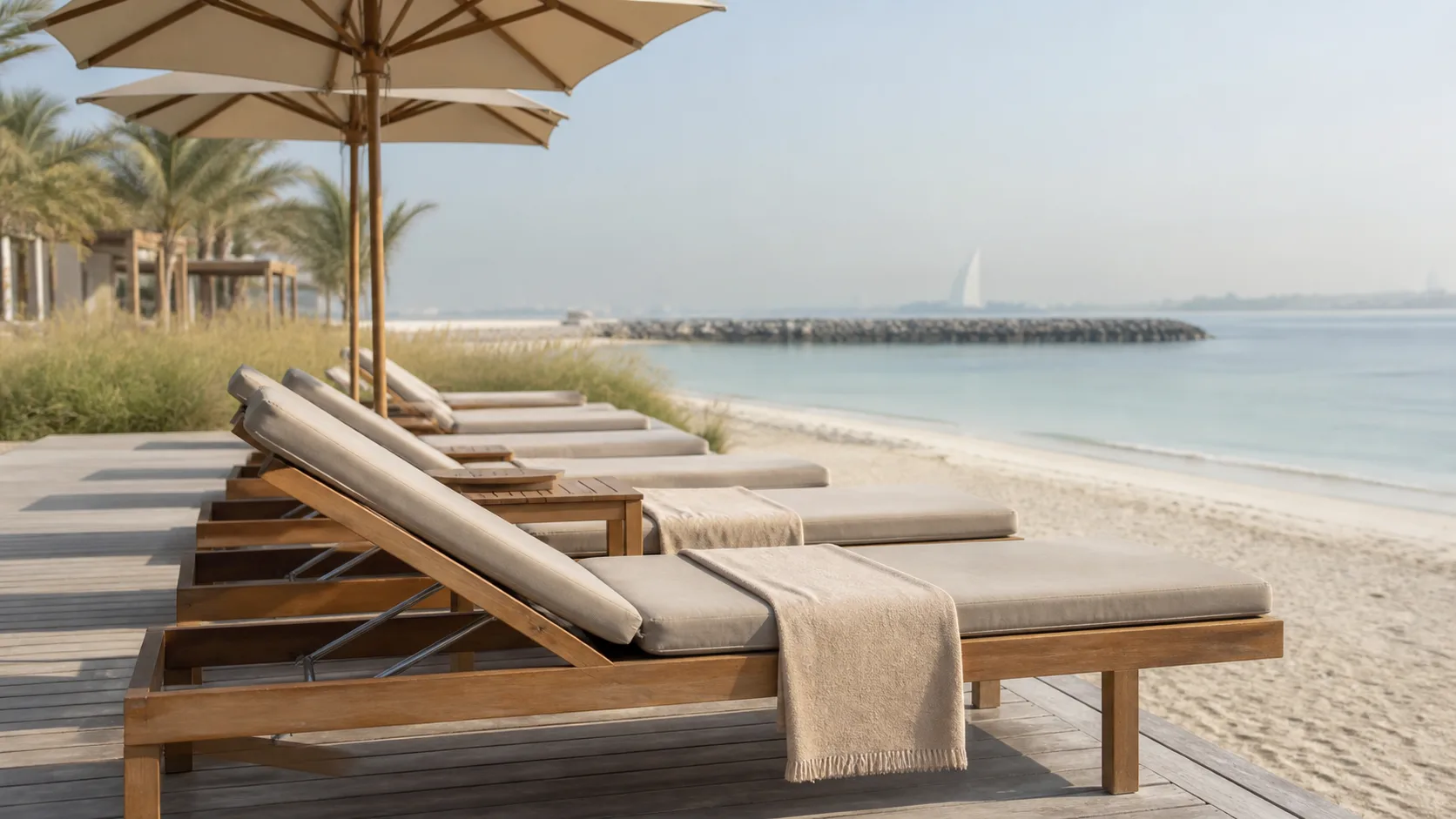
Regular fresh-water rinsing and gentle cleaning are especially important near the sea. Exposed metal components must be selected for the environment, and still need inspection; specifying a suitable grade does not remove the need to clean deposits or check fixings.
Pool water and cleaning chemicals
Pool furniture experiences wet swimwear, sunscreen, body oils, towels, splashes, chlorinated water, and frequent deck cleaning. These stresses reach the cushion and stitching as well as the timber. Furniture should never block deck drainage, and staff need enough access around each item to rinse, clean, move, and inspect it safely.
Why teak remains a strong choice
Teak combines natural oil content, relatively good dimensional stability, dense grain, repairability, and a warm appearance. It does not need a thick opaque coating to look complete, and a well-made piece can be cleaned, refinished, and maintained rather than discarded when its surface ages.
These qualities do not make all teak furniture equal. Timber selection, moisture condition at production, component proportions, grain direction, joinery, machining, sanding, and finish preparation all influence the result. The design also needs to allow the normal movement of natural wood instead of trying to lock every surface rigidly in place.
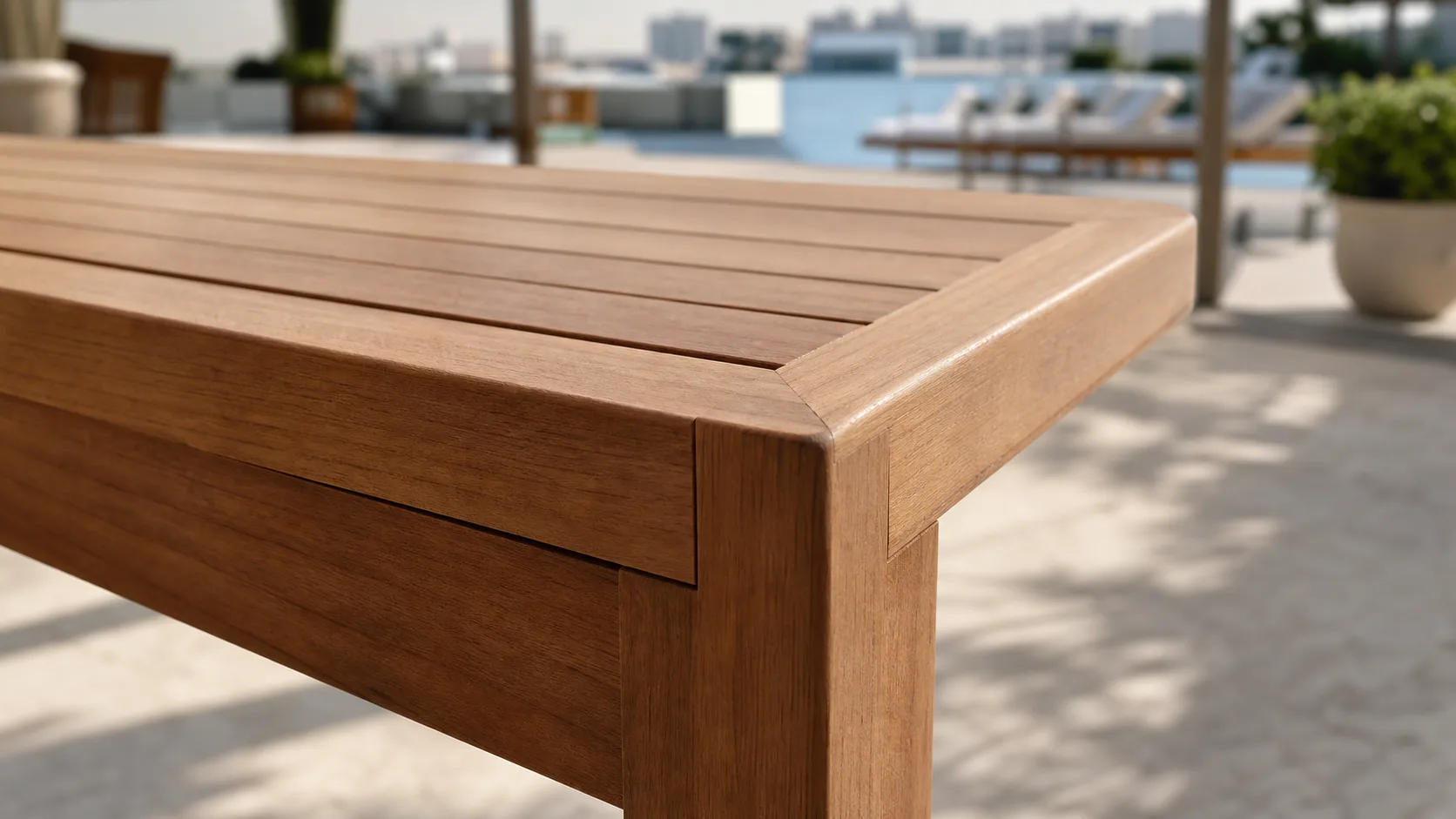
BSA addresses those decisions through our own Indonesian production line for handmade custom teak furniture. This makes it possible to develop dimensions and construction around the project rather than asking the site to adapt to a fixed catalogue item.
Decide the intended appearance before production
Outdoor teak normally follows one of two broad visual directions.
Natural weathering to silver grey
Teak exposed without a colour-retaining programme gradually moves from honey brown toward a silver-grey patina. Many resorts and coastal residences choose this deliberately because it feels relaxed and becomes part of the landscape. The goal should be an even, clean patina—not a surface marked by spills, mildew, rust transfer, or trapped dirt.
Retaining the warmer teak colour
Clients who want the original warmth should approve a suitable finish sample and accept the maintenance it requires. Re-oiling is not simply adding more product whenever the wood looks dry. The surface must be properly cleaned and allowed to dry, and the chosen product must be compatible with the previous treatment and the furniture maker’s instructions.
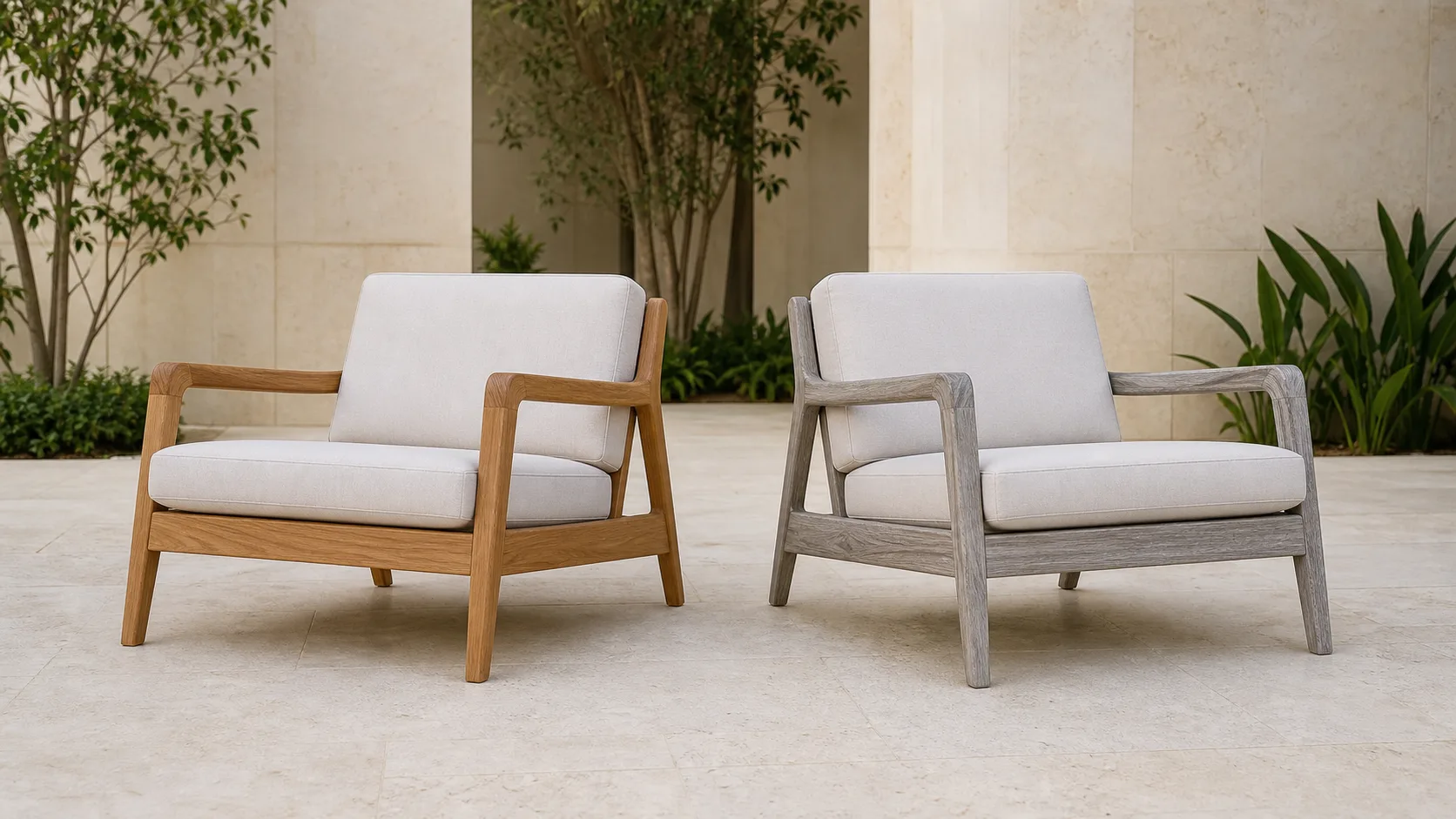
Neither direction is inherently more premium. Problems begin when the designer expects warm teak, the operator expects zero maintenance, and the maintenance team assumes natural greying was the approved result. Record the finish direction in the material submittal, control sample, handover manual, and replacement order.
The frame is only one part of the specification
The best-performing outdoor furniture is treated as a coordinated system.
Joints, drainage, and glides
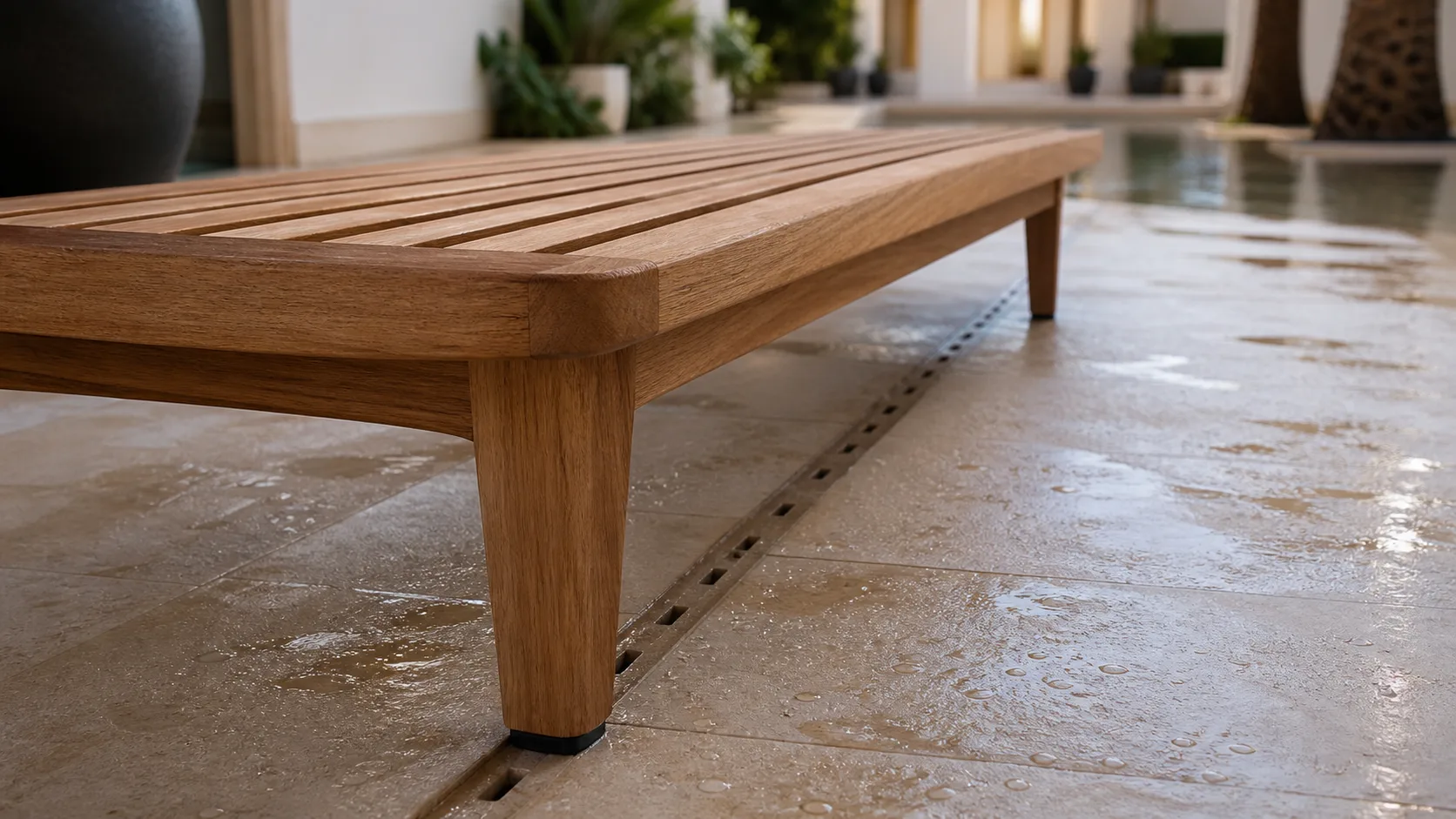
Joints must suit repeated loading and movement, not just pass a showroom inspection. Horizontal surfaces need sensible gaps and falls so water can leave. Replaceable glides protect both the timber and the floor, help prevent direct contact with standing water, and allow an operator to service the furniture without replacing an entire leg.
Hardware and moving parts
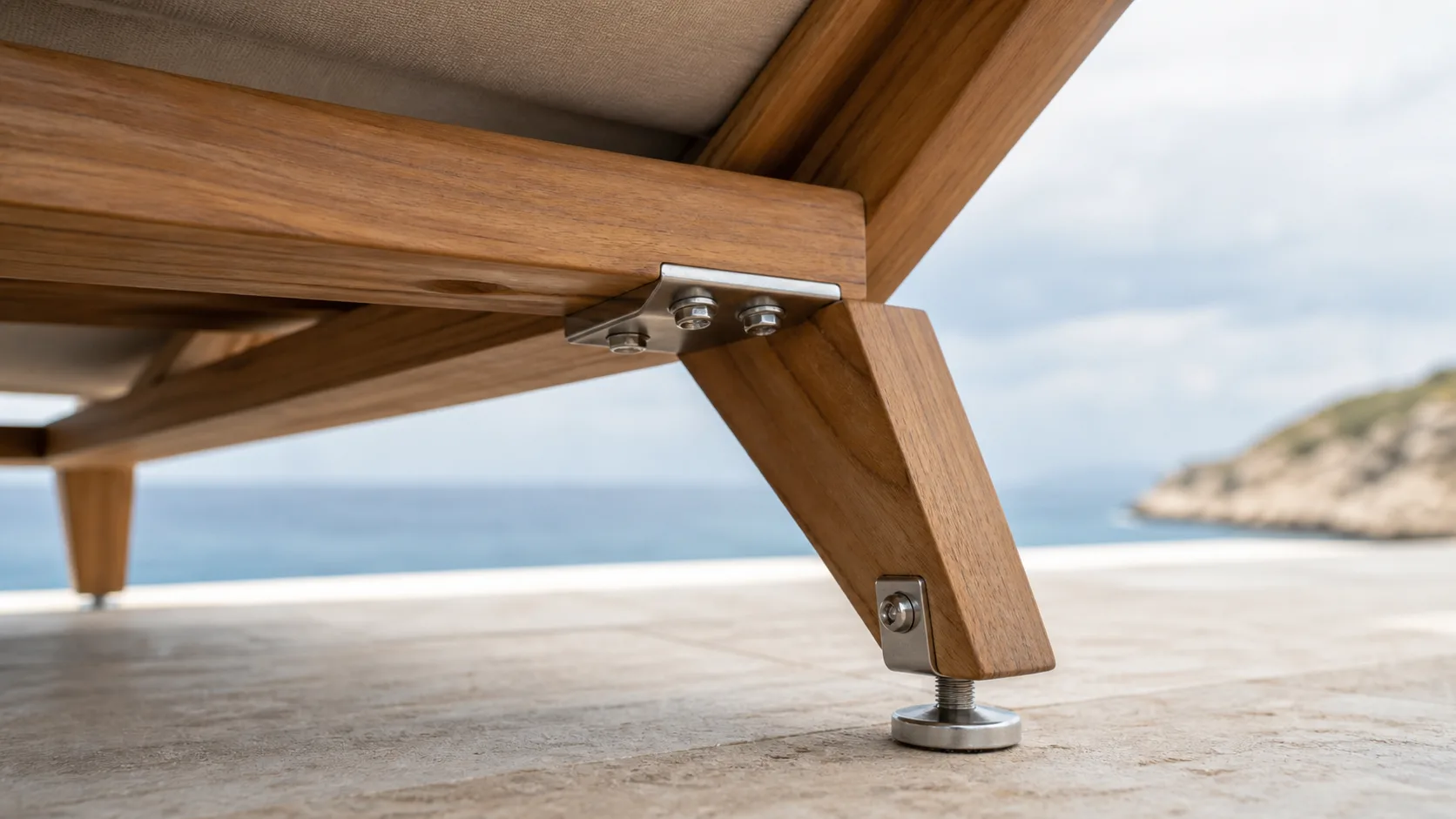
Adjustable chaises, folding pieces, wheels, and knock-down furniture introduce metal components and wear points. Hardware must suit the exposure and remain accessible for inspection or replacement. Where the project requires it, BSA can coordinate corrosion-resistant stainless components, but the precise material and detailing should be confirmed against the location and consultant’s requirements.
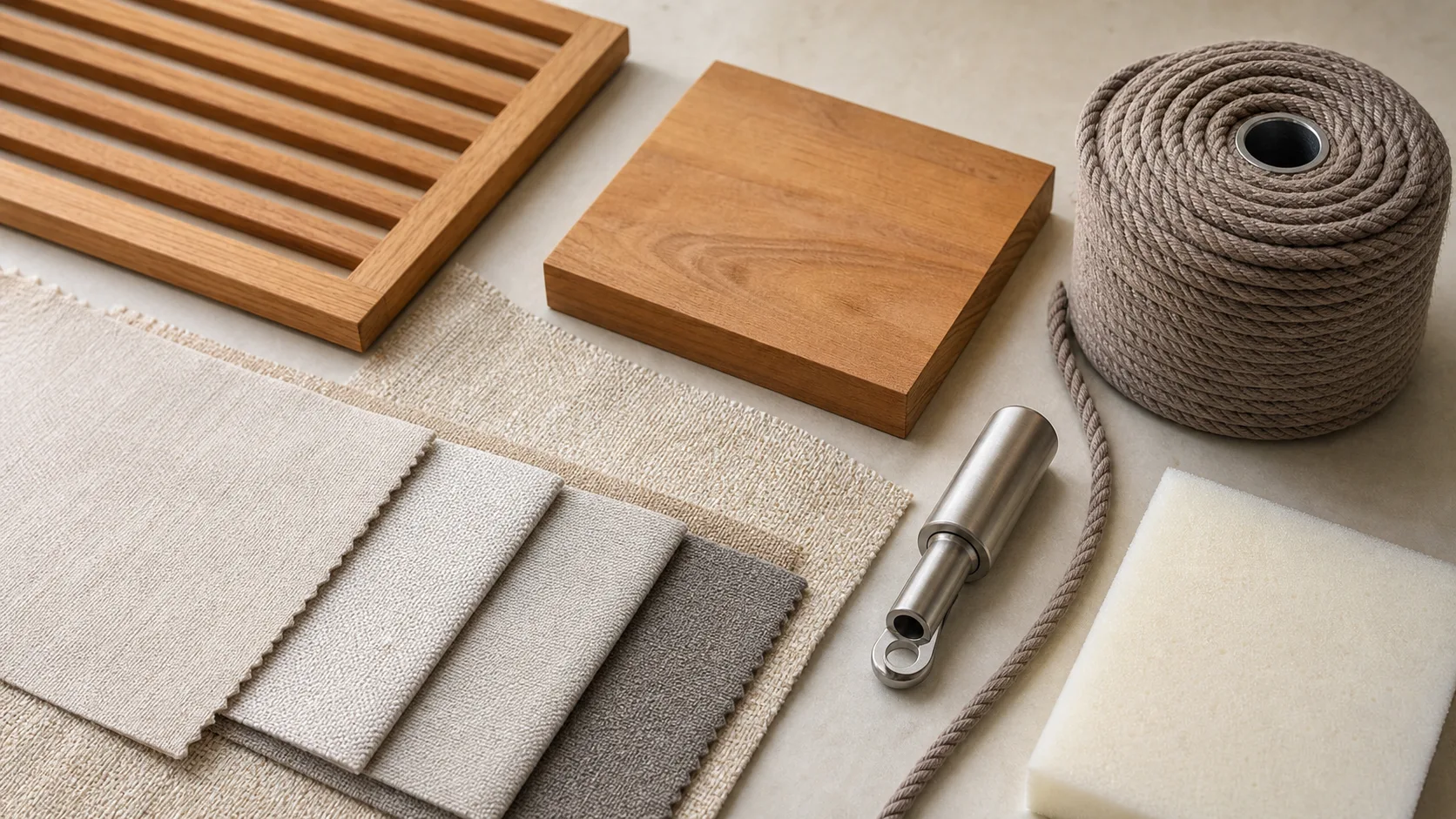
Rope, fabric, foam, thread, and zips
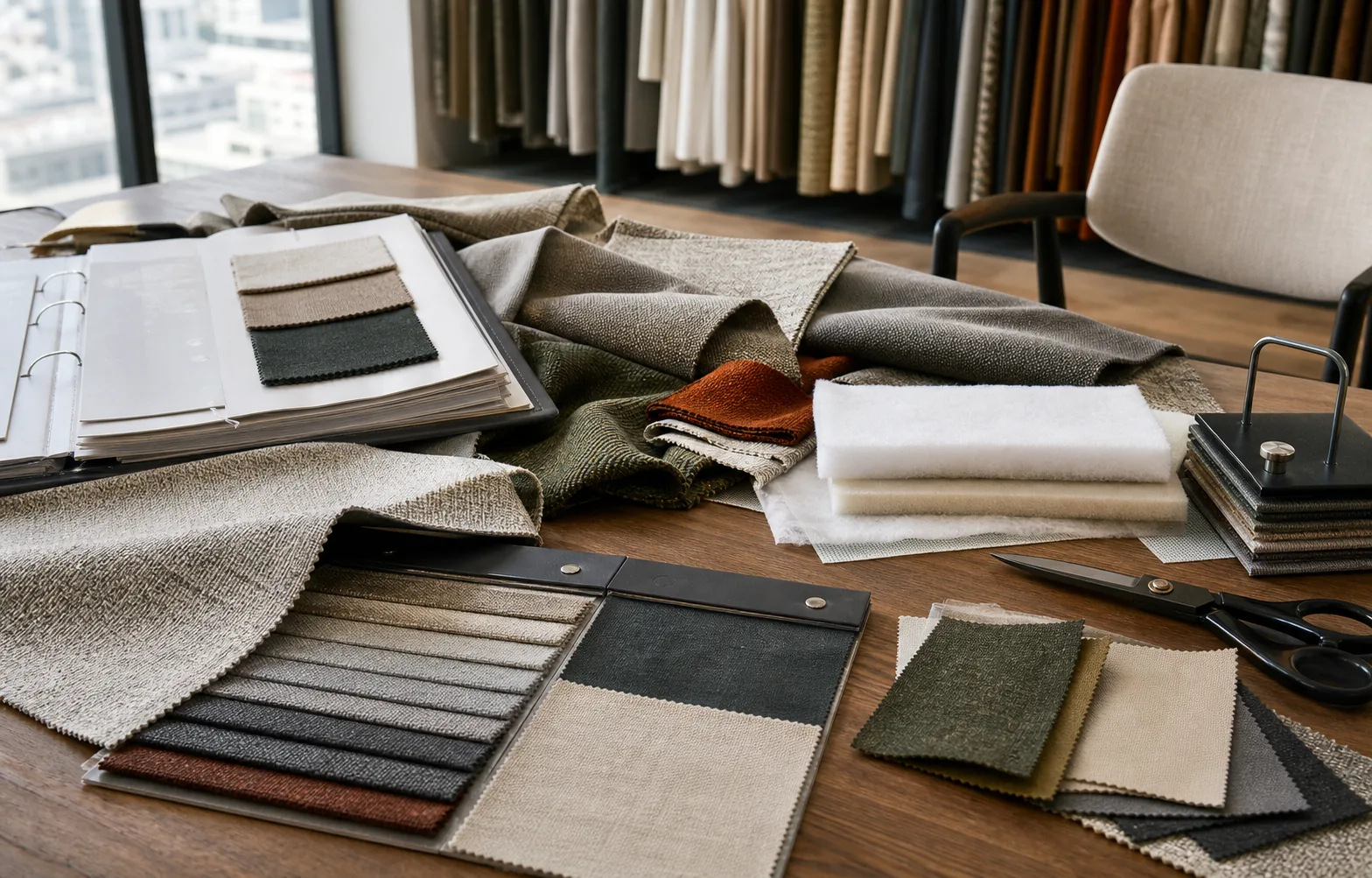
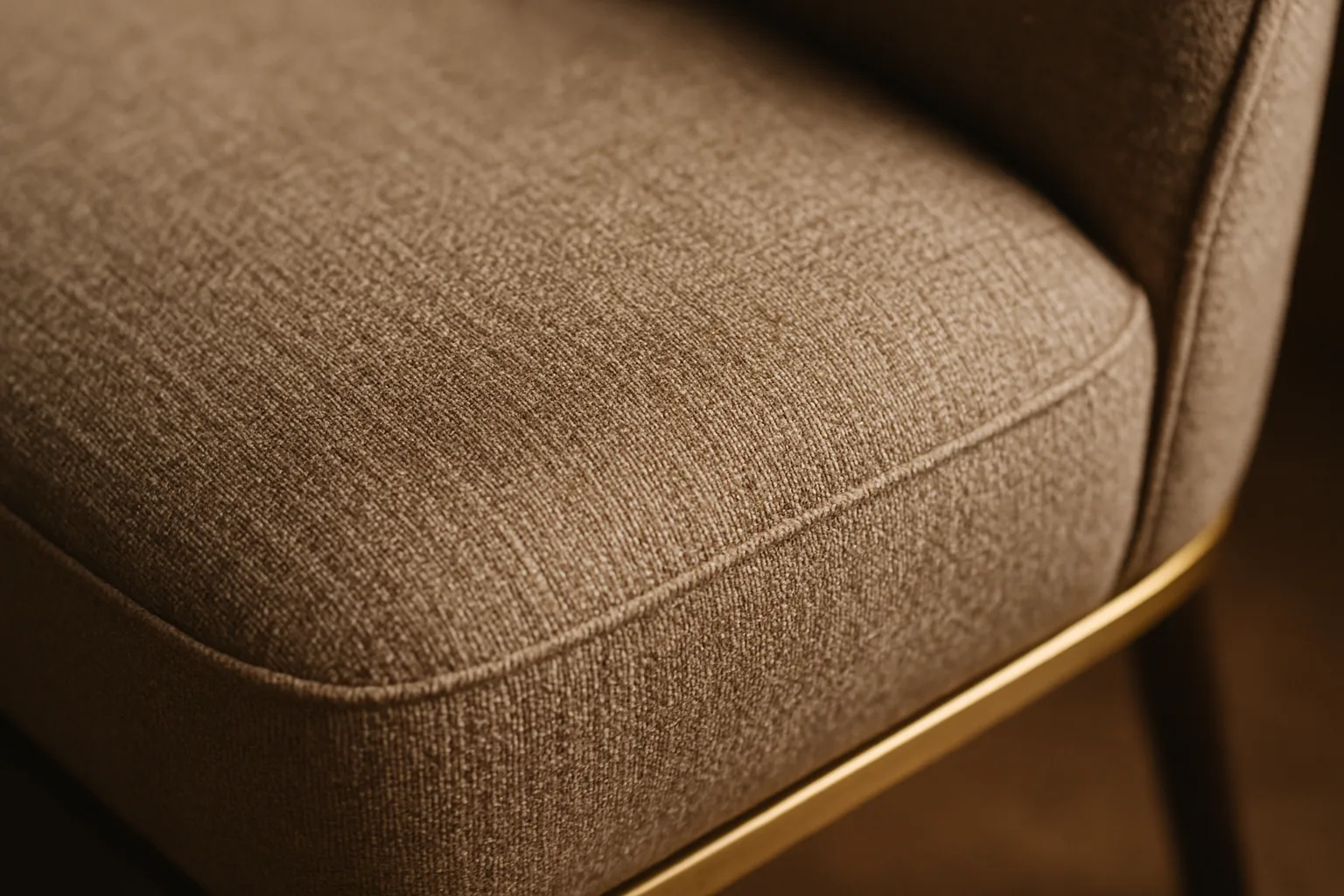
An outdoor cushion is not an indoor cushion covered in water-resistant fabric. Its cover, seams, zip position, internal wrap, foam, support base, and storage routine all determine how quickly it can recover after rain, rinsing, or a wet guest. Woven rope also needs the right UV and cleaning performance, consistent tension, and an attachment detail that can be inspected.
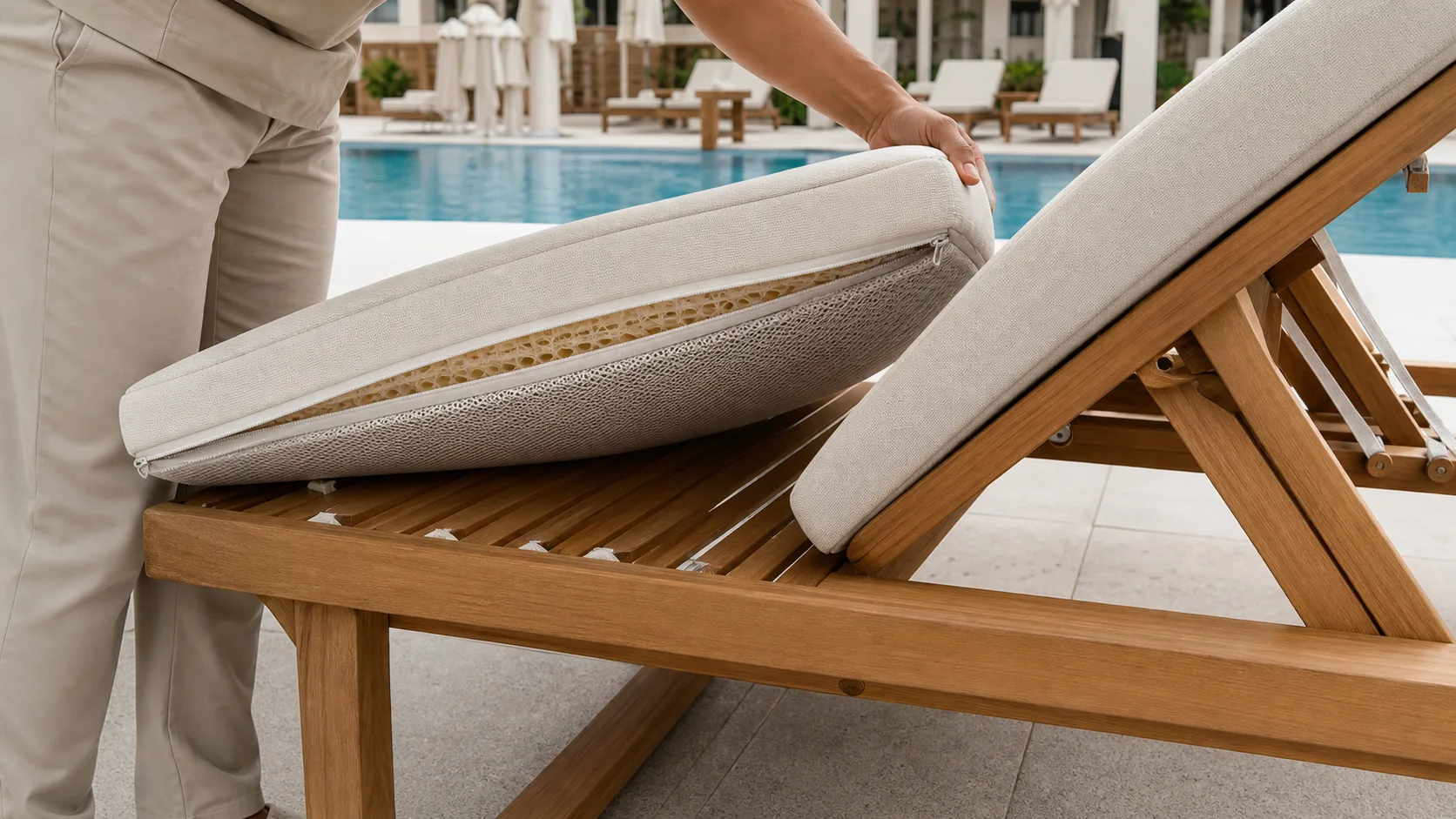
Review all components together during sampling. A beautiful fabric that holds water against the frame, or a durable foam trapped above a solid panel, still creates an unsuitable assembly.
A practical teak cleaning method
Always begin with the furniture maker’s care instructions and test any method on an inconspicuous area. For routine care, a conservative sequence is usually the safest:
- Remove cushions and loose debris.
- Rinse away sand and salt with low-pressure fresh water where appropriate.
- Clean with a soft brush or cloth and a mild product approved for the finish.
- Work with the grain and clean the complete visible surface rather than creating isolated patches.
- Rinse away residue and allow the furniture to dry with clear airflow.
- Refit only dry cushions and confirm that drainage paths remain open.
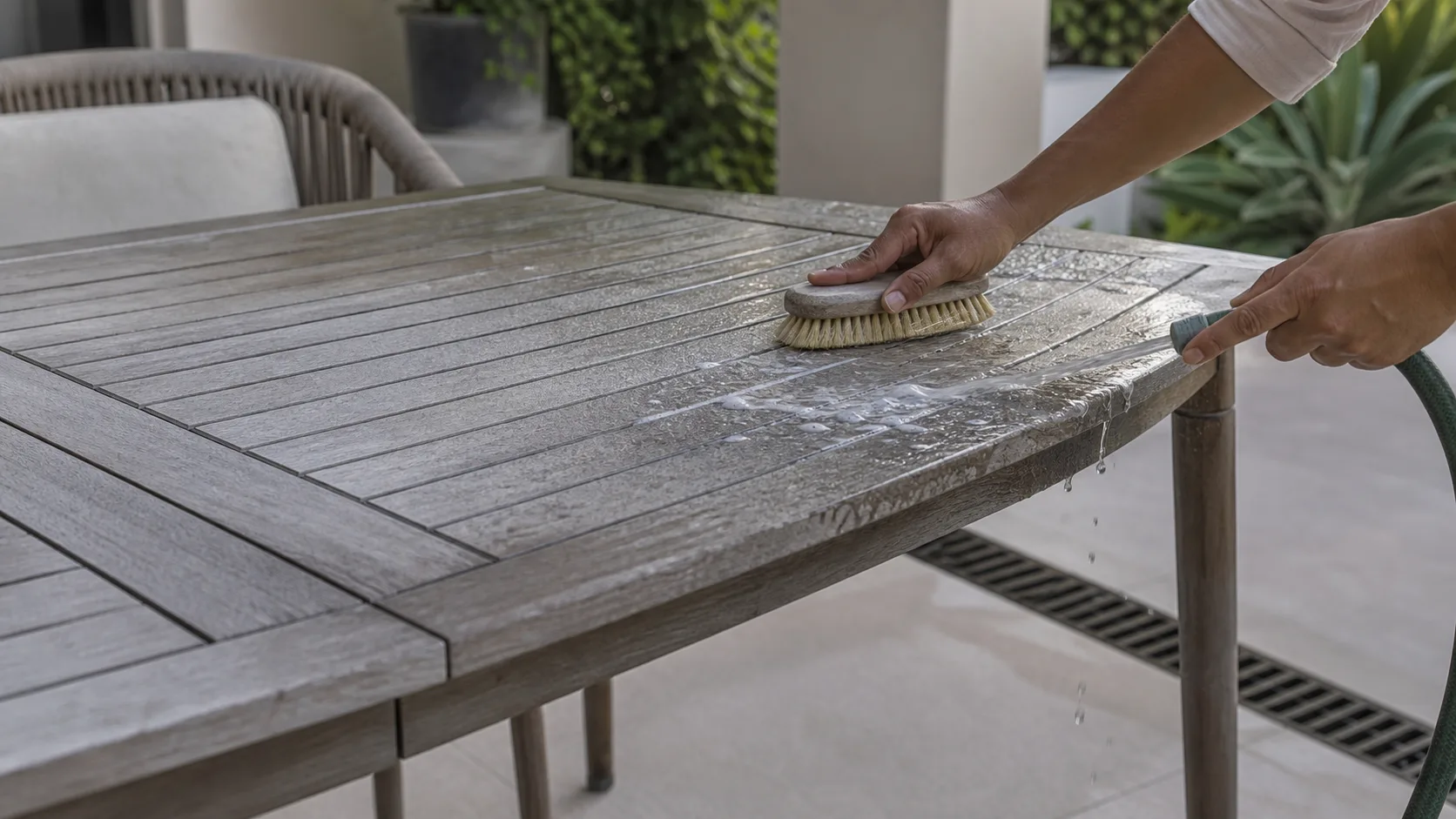
Avoid aggressive pressure washing, steel wool, harsh improvised chemicals, and heavy sanding as a routine response. They can roughen the grain, create uneven colour, damage adjacent materials, or remove more surface than the condition requires. Stains from food, sunscreen, birds, metal, or irrigation should be identified before treatment rather than attacked with the same cleaner.
When and how to re-oil teak
Re-oiling is an appearance programme, not a structural cure. It should be considered only when the approved finish direction calls for it and after the furniture is clean and fully dry. A control area helps confirm colour and absorption before the whole collection is treated.
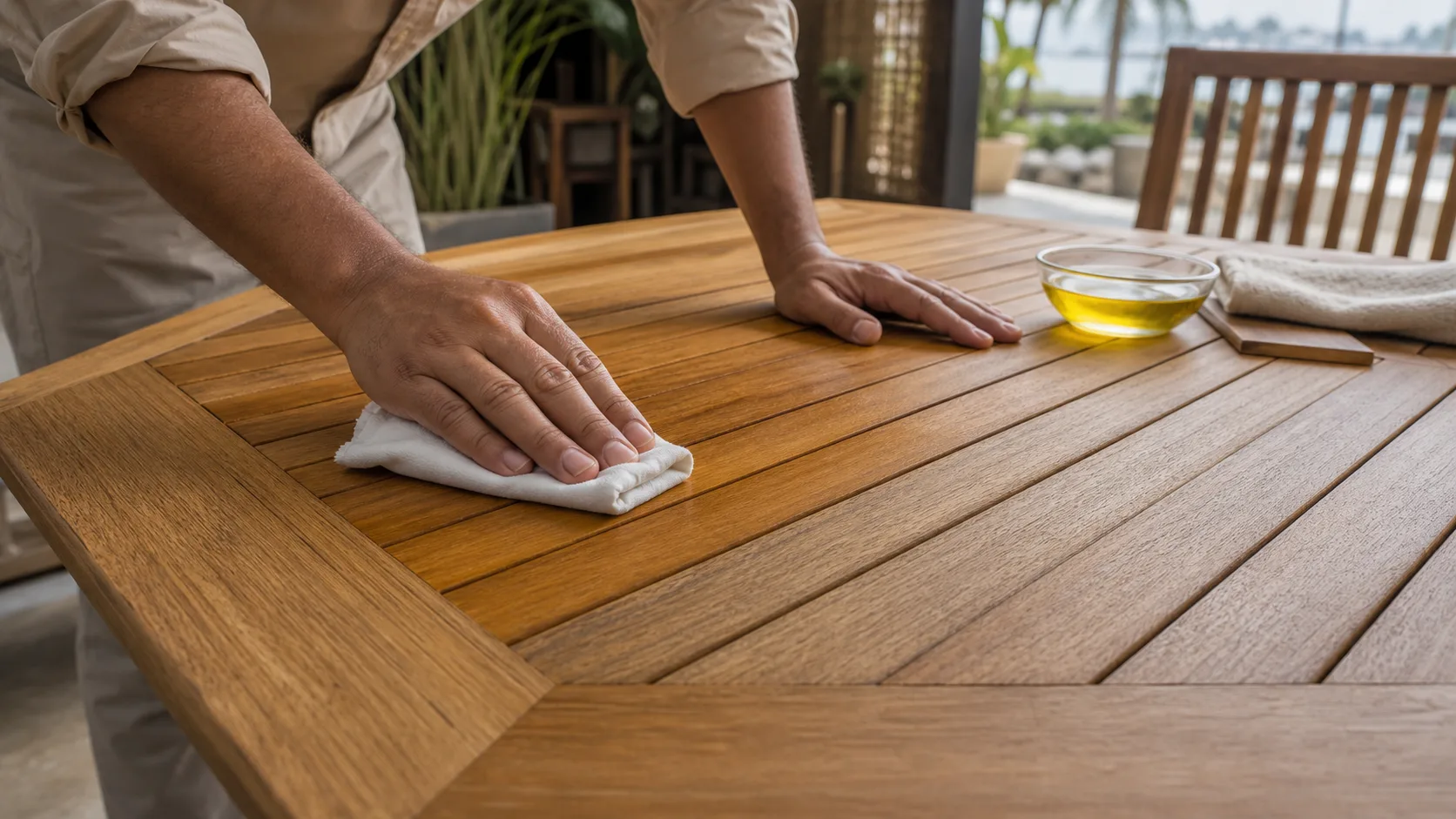
More oil is not automatically better. Excess product can create a sticky or uneven surface that attracts dust. The maintenance team should use the specified product, application method, drying time, cloth disposal precautions, and re-use interval supplied for that finish. If the previous coating is unknown or failing, inspect and agree a restoration method before applying another layer.
A UAE maintenance calendar that adapts to the site
Use the following as a planning framework, then adjust it from site records. Highly exposed coastal and pool locations may need attention more often than shaded residential terraces.
| Interval | Practical actions |
|---|---|
| During daily operation | Remove spills and standing water; keep vents and drain gaps clear; allow wet cushions to dry; report loose or unstable pieces. |
| Weekly or as exposure requires | Remove sand and surface deposits; rinse coastal or poolside furniture where appropriate; inspect cushion undersides and moving parts. |
| Monthly | Check joints, fasteners, glides, wheels, adjustable backs, rope tension, seams, zips, stains, and drainage. Rotate pieces where uneven exposure is creating obvious colour variation. |
| Quarterly or seasonally | Conduct a documented condition review; deep-clean using the approved method; repair small defects; check covers and storage; compare high-exposure and sheltered zones. |
| Before any refinishing | Confirm the approved colour direction, identify the existing finish, test a control area, check dry weather and curing time, and plan zone closures. |
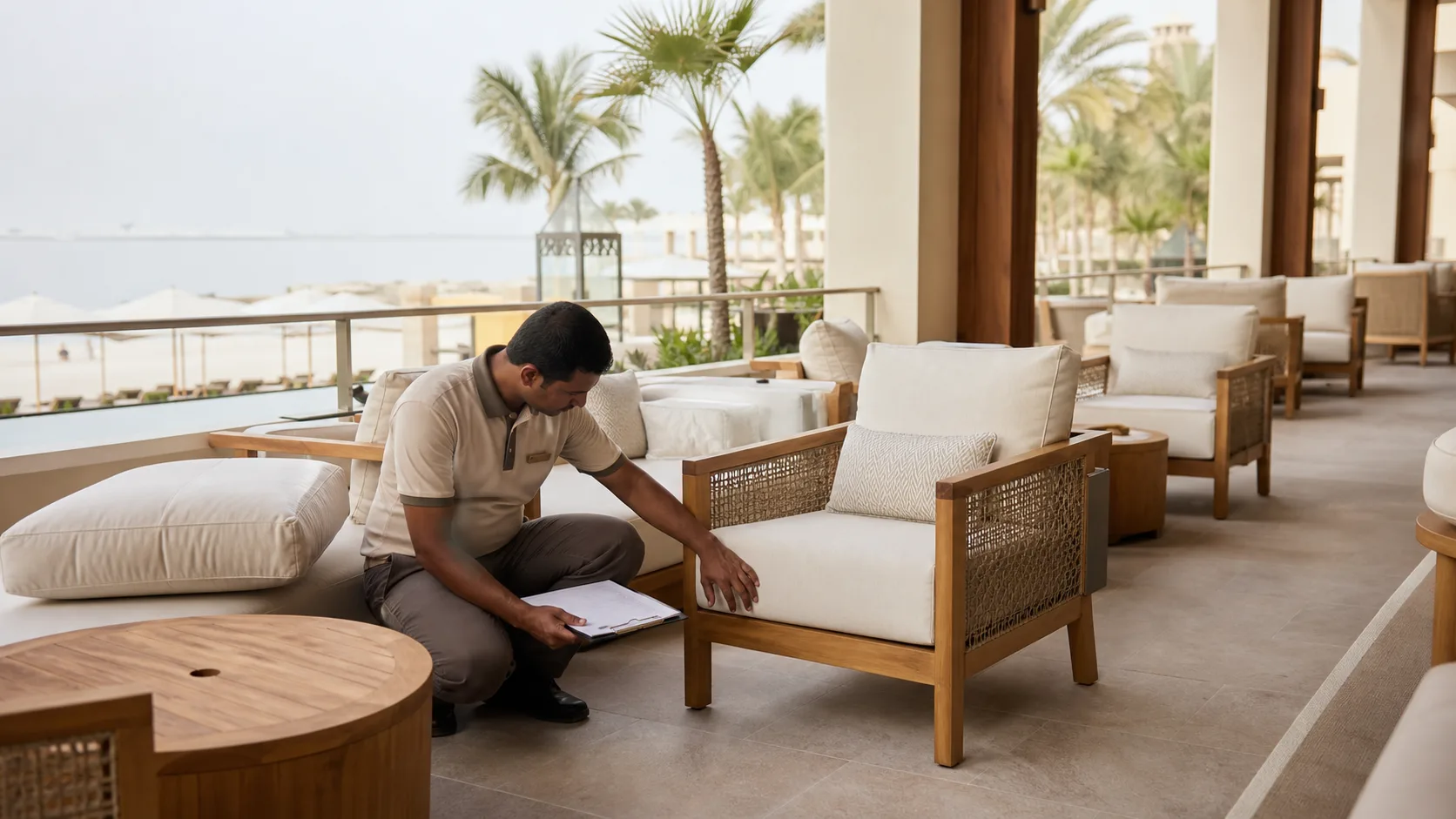
For hotels and beach clubs, give each furniture family an asset reference and keep spare glides, selected hardware, fabric, rope, and cushion covers where practical. Replacing a worn service component early is usually better than waiting for it to damage the frame or floor.
Covers and cushion storage
Covers are useful when they are correctly fitted, secured against wind, clean, and used on dry furniture. They are not a substitute for drainage or cleaning. The operating plan should explain when covers are installed, where they are stored during service, how they are cleaned, and who checks beneath them.
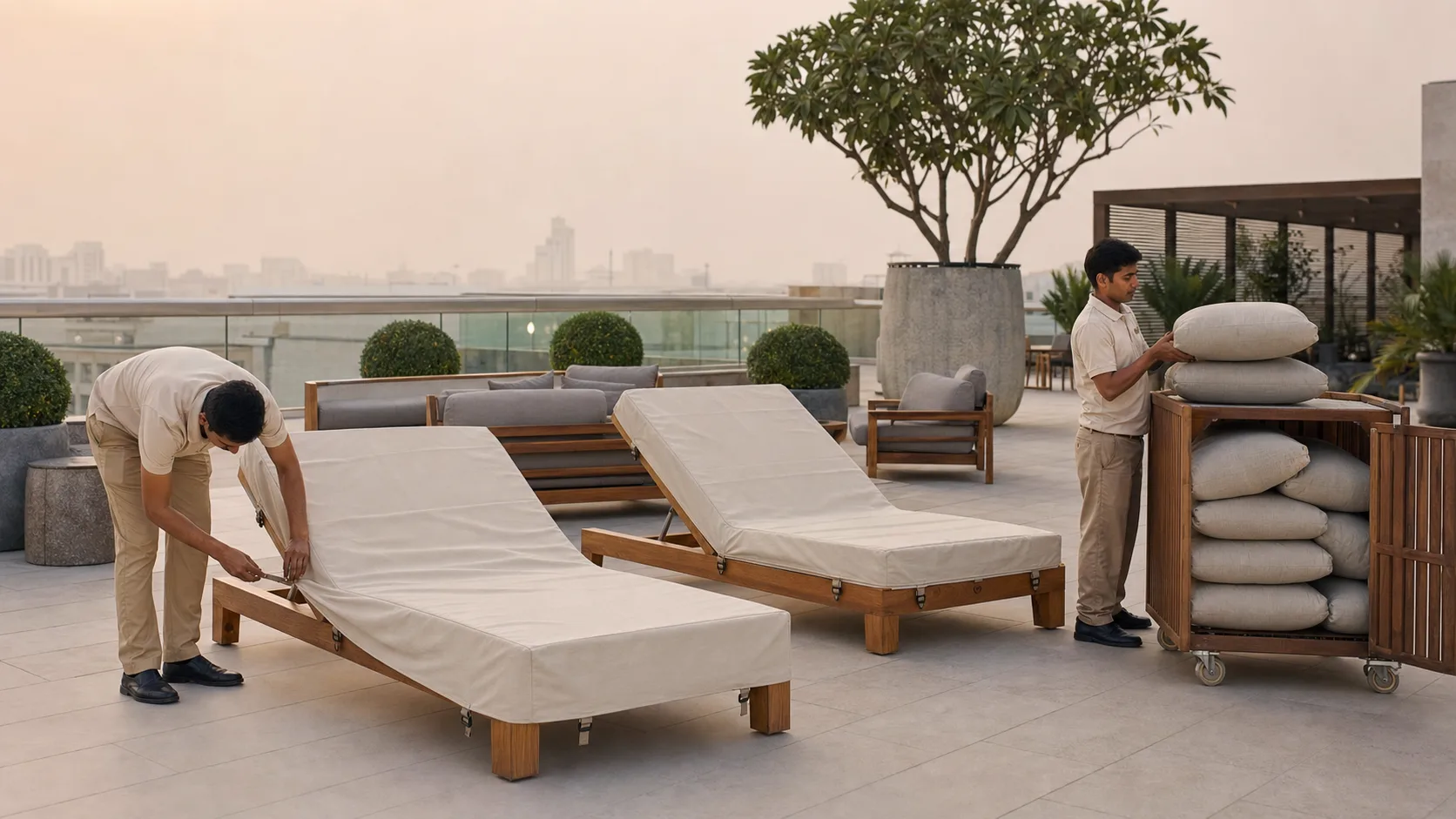
Cushion storage should be ventilated, accessible, and sized for the real quantity. If staff must stack cushions tightly in a distant or undersized room, the intended routine will not last. For a hotel project, solve storage access during space planning rather than after furniture arrives.
What to include in a UAE teak-furniture brief
Before requesting a quotation, provide:
- Project location and distance from the coast
- Exact furniture zones: beach, pool, exposed terrace, shaded terrace, garden, or interior
- Quantities, dimensions, reference images, and furniture schedule
- Expected operating intensity and how often pieces will be moved
- Desired teak appearance: natural weathering or retained warm colour
- Cushion, fabric, rope, and fire-performance requirements where applicable
- Hardware, floor, drainage, and stacking or knock-down requirements
- Storage, covers, spare-parts, and maintenance expectations
- Required samples, mock-ups, documentation, delivery sequence, and target date
Our broader UAE outdoor resort and pool furniture guide can help define the zones before the teak specification is prepared.
Design teak furniture around the UAE project
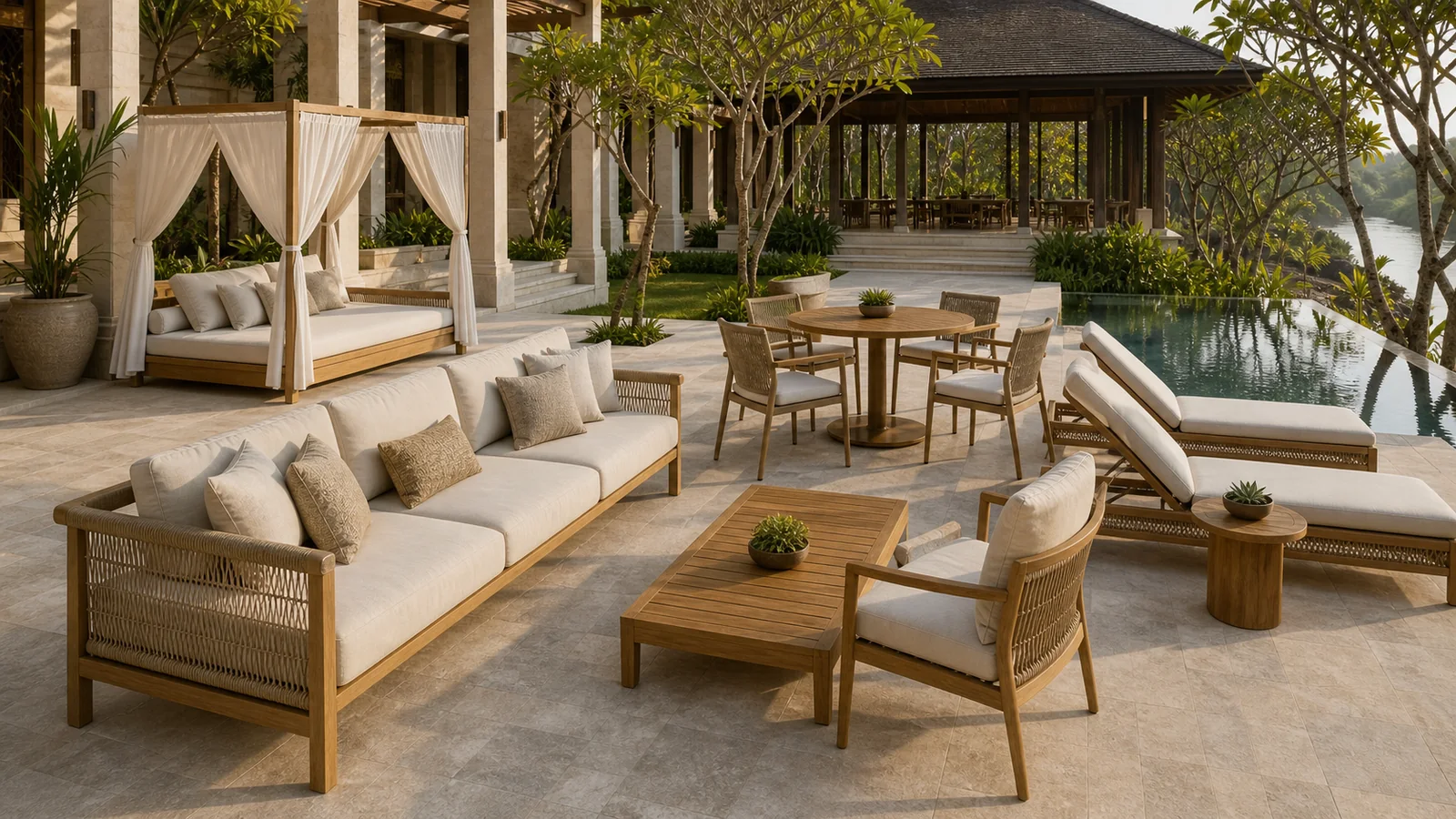
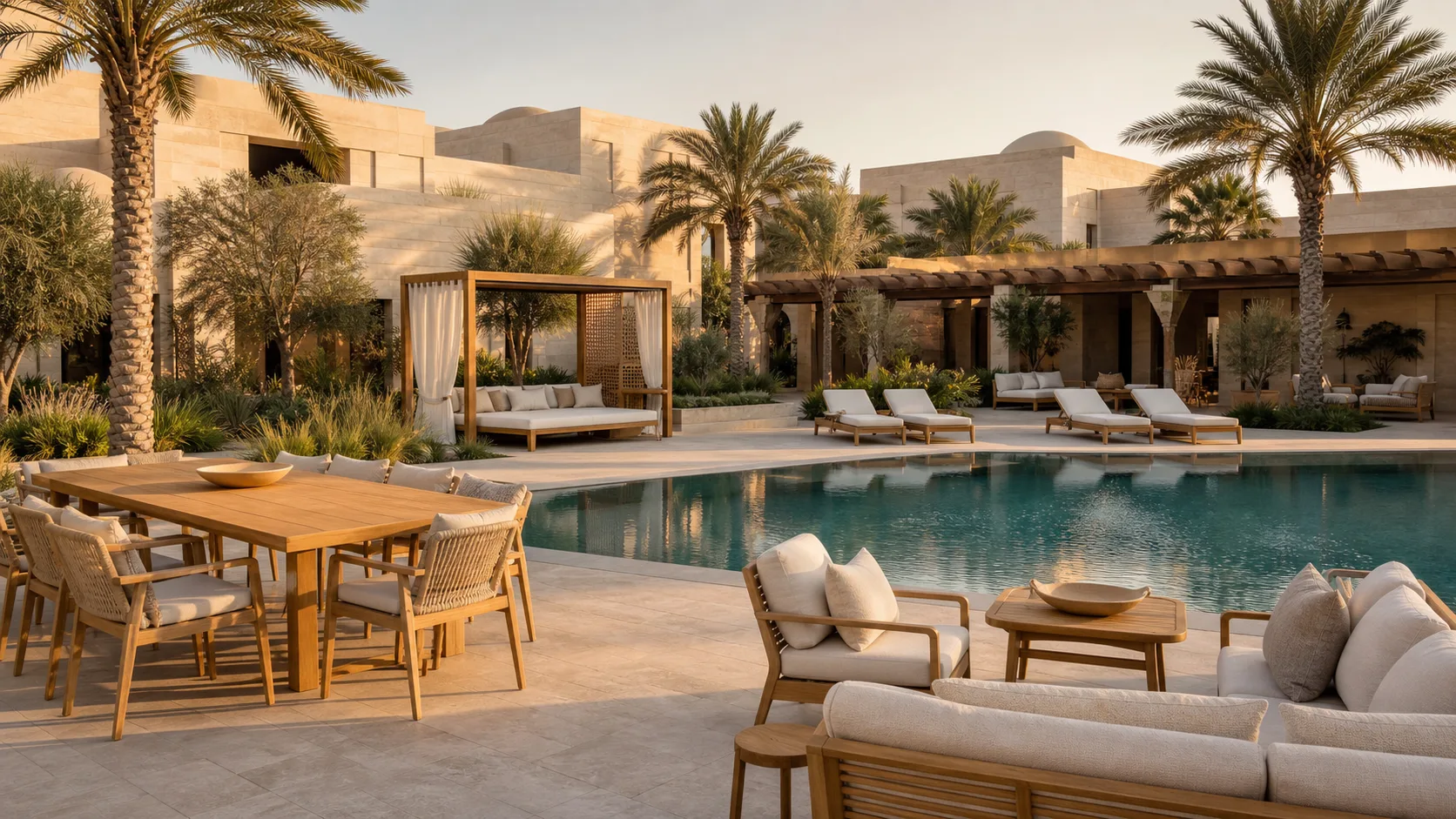
BSA’s Indonesia line can produce coordinated lounge seating, dining collections, chaises, benches, daybeds, cabanas, and project-specific pieces with the frame profile, woven detail, finish, cushions, and hardware developed around the approved brief. The objective is not to promise that one material defeats every climate condition; it is to make the material, construction, and operating plan agree from the start.
Explore BSA’s custom teak furniture production in Indonesia, browse our outdoor furniture range, or send the site plan, furniture schedule, quantities, finish direction, and delivery target for a project-specific review.