School Furniture Supplier UAE: Classrooms to Labs
A professional UAE education furniture guide for schools, nurseries, universities, and training centres, covering classroom desks, student chairs, libraries, labs, auditoriums, administration, durability, safety, and procurement checks.
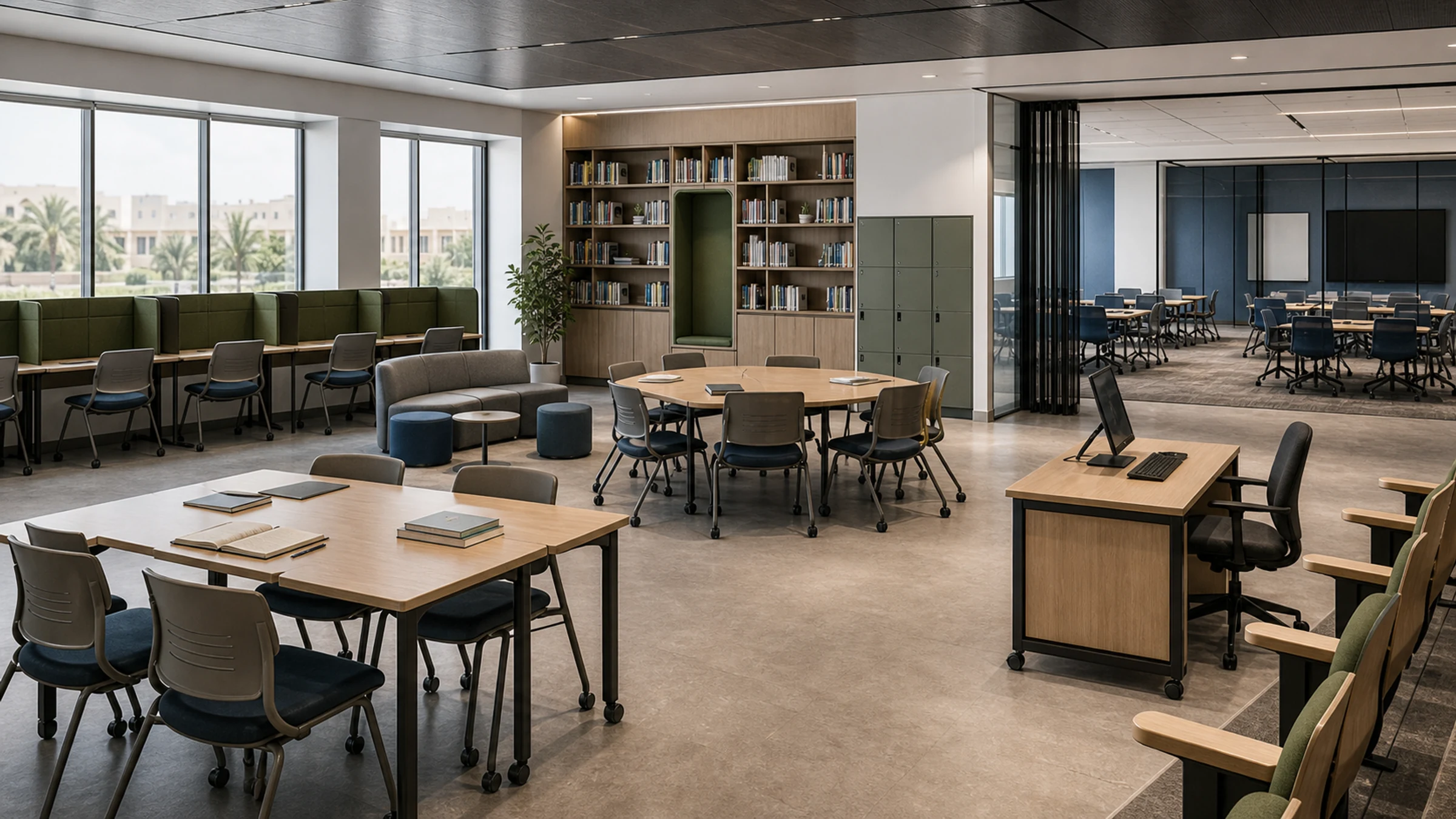
School furniture has a direct effect on learning, classroom control, safety, maintenance, and the way teachers use a space. A school can have new buildings and strong finishes, but if desks are the wrong size, chairs are uncomfortable, storage is weak, or furniture breaks under student use, the environment becomes difficult to operate.
Education furniture should be specified by age group, room function, teaching style, and durability requirement. A nursery, primary classroom, university lecture room, library, science lab, and staff office should not be bought from one generic furniture list.
Professional rule: school furniture must fit the learner first. Age, height, movement, supervision, and teaching method should control the specification before style.
Education furniture zones
A complete school or campus furniture package may include:
| Zone | Furniture | Key specification issue |
|---|---|---|
| Classrooms | Student desks, chairs, teacher desk, storage | Age-appropriate sizing and flexibility |
| Nurseries | Low tables, small chairs, soft seating, cubbies | Safety, rounded edges, cleanability |
| Libraries | Shelving, study tables, lounge seating, reading corners | Quiet use and mixed study modes |
| Laboratories | Benches, stools, storage, specialist worktops | Safety and consultant coordination |
| Auditoriums | Seating, desks, stage support, storage | Sightlines and circulation |
| Cafeteria | Dining tables, chairs, benches | Durability and cleaning |
| Administration | Workstations, meeting rooms, reception | Commercial office function |
| Staff areas | Lounge seating, lockers, tables | Comfort and practical maintenance |
BSA’s education furniture scope covers classrooms, libraries, labs, auditoriums, staff areas, and public education spaces.
Classroom furniture
Classroom furniture should support the way teaching happens. Traditional rows, group tables, flexible project work, testing, and digital learning all require different furniture logic.
Key classroom items:
- Student desks
- Student chairs
- Teacher desk and chair
- Mobile tables
- Storage cabinets
- Cubbies or bag storage
- Display shelving
- Reading corner furniture
- Whiteboard or smartboard support furniture
For younger students, weight and edge safety matter. For older students, writing space, laptop use, chair comfort, and reconfiguration matter more.
Age-appropriate sizing
Wrong furniture size affects posture, attention, and classroom management. Schools should specify furniture by age band rather than buying one size across all grades. The supplier should be asked for size options and should match furniture to the room’s year group.
Furniture should allow students to sit with feet supported, elbows at a suitable writing height, and enough desk depth for books or devices.
Flexible learning furniture
Modern schools often need rooms to change quickly. Furniture can support this if it is planned properly.
Good flexible options include:
- Lightweight but strong tables.
- Stackable or nesting chairs.
- Mobile storage.
- Modular seating.
- Foldable training tables.
- Collaborative table shapes.
- Teacher mobile stations.
Flexibility should not mean flimsy construction. School furniture is moved often; weak joints fail quickly.
Library furniture
Libraries need calmer furniture than classrooms. They support quiet reading, group study, browsing, digital work, and individual focus.
Typical library furniture:
- Book shelving
- Reading tables
- Lounge chairs
- Soft seating
- Individual study desks
- Computer stations
- Display units
- Low seating for younger students
Shelving should be stable and age-appropriate. Seating should encourage longer use without creating maintenance problems.
Laboratories and specialist rooms
Science labs, art rooms, maker spaces, design rooms, and technology labs need specialist planning. Some items may fall outside normal furniture scope and require specialist systems, but furniture coordination is still important.
Possible items:
- Lab benches
- Stools
- Demonstration tables
- Storage cabinets
- Chemical-resistant worktops where required
- Art tables
- Tool storage
- Display and drying racks
The supplier should coordinate with the education consultant, lab consultant, or project designer before production.
Auditoriums and multipurpose rooms
Auditoriums and multipurpose halls need furniture that supports visibility, movement, and events. This may include fixed or loose seating, lecture tables, stage furniture, storage, and stacking chairs.
Important checks:
- Sightlines
- Aisle spacing
- Fire routes
- Chair storage
- Stage access
- Acoustic behavior
- Cleaning and maintenance
Durability and safety
School furniture is used hard. Specify:
- Strong frames and joints.
- Rounded edges where needed.
- Stable chairs and tables.
- Easy-clean surfaces.
- Non-toxic finishes.
- Replaceable glides.
- Durable hardware.
- Storage that can tolerate daily use.
Cheap school furniture is expensive when it fails mid-year. Replacement, disruption, and safety concerns cost more than a properly specified package.
BSA education furniture supply
BSA Trading supplies furniture for schools, nurseries, universities, training centres, libraries, and education campuses. The scope includes classroom furniture, library furniture, staff office furniture, reception counters, storage, auditorium furniture, cafeteria furniture, and custom education furniture.
We help project teams specify furniture by room type, student age, durability, and teaching method rather than using a generic product list.