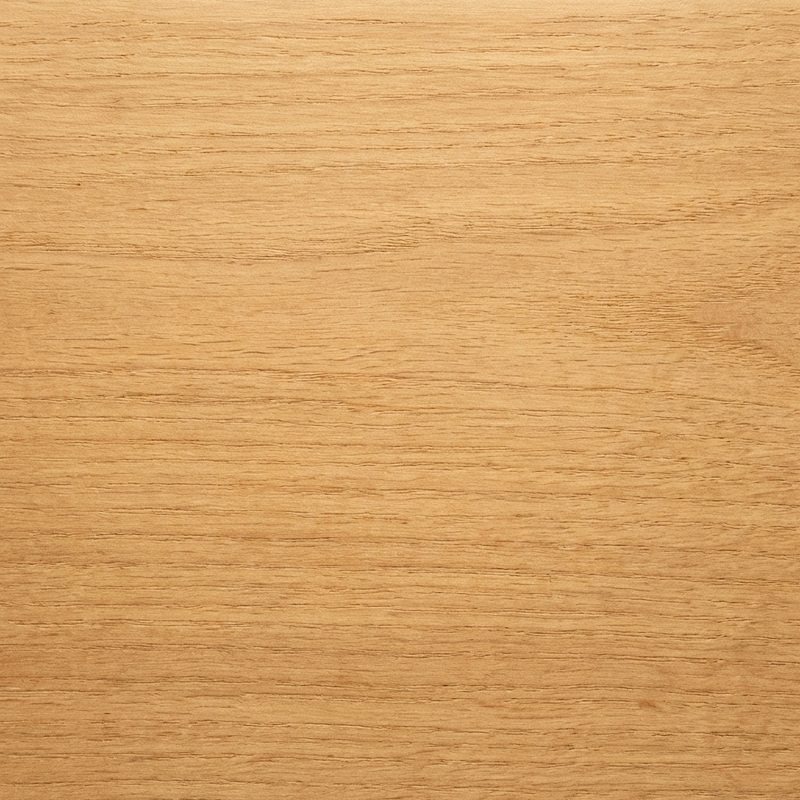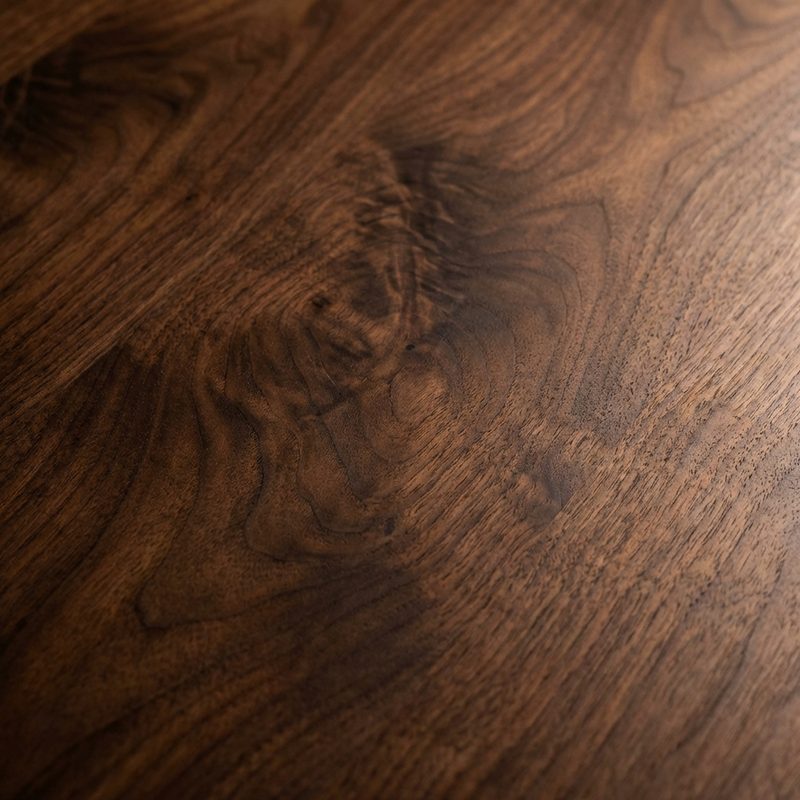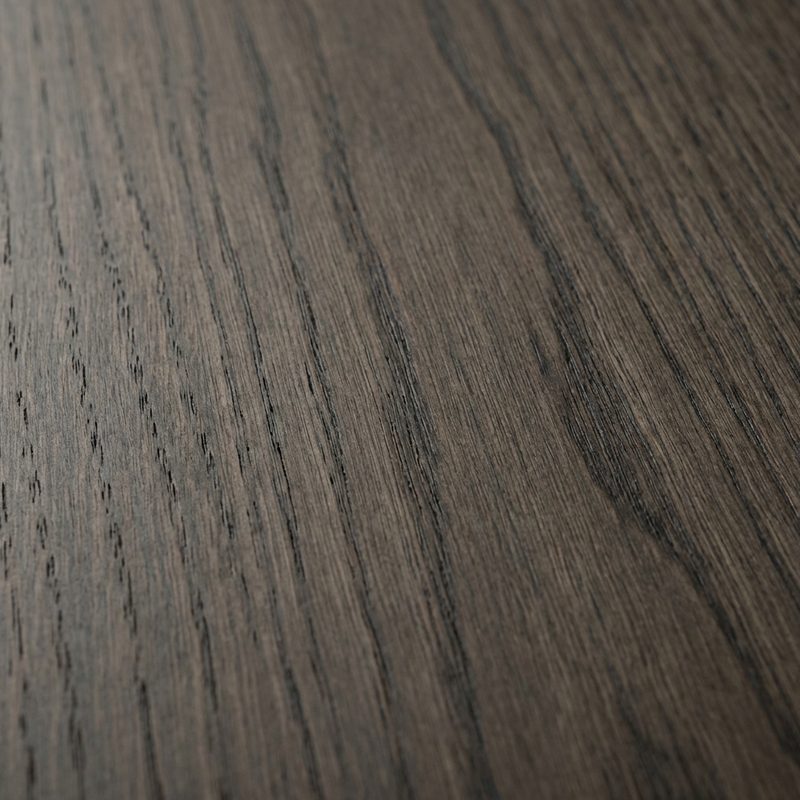
Wood Finishes · Furniture specification
Ebony-Stained Wood Veneer Furniture Specifications
A controlled dark timber finish for luxury casegoods and tables, offering visible grain or near-black lacquer depth according to the approved sample.
Current material reference
Black stained veneer; matte to piano-gloss systems available
Material guidance · supplier data required for approval
Material decision summary
Project suitability at a glance.
Specify species, solid-versus-veneer construction, substrate, moisture target, grain lay-up, stain and sheen as one system.
Best for
- +Tables, casegoods, chair frames and architectural joinery
- +Projects that value repairability and natural grain
Avoid when
- −Standing water, severe impact or exact batch-to-batch uniformity is expected
- Traffic level
- Medium
- Maintenance
- Medium
- Visual variation
- High
- Relative budget
- ●●●○
- Suitable environments
- Interior
Material overview
Most requested furniture applications
Define species, solid-versus-veneer construction, visual grade, moisture target, grain match, stain colour, sheen and substrate/emissions requirement. These terms prevent major tender substitutions.
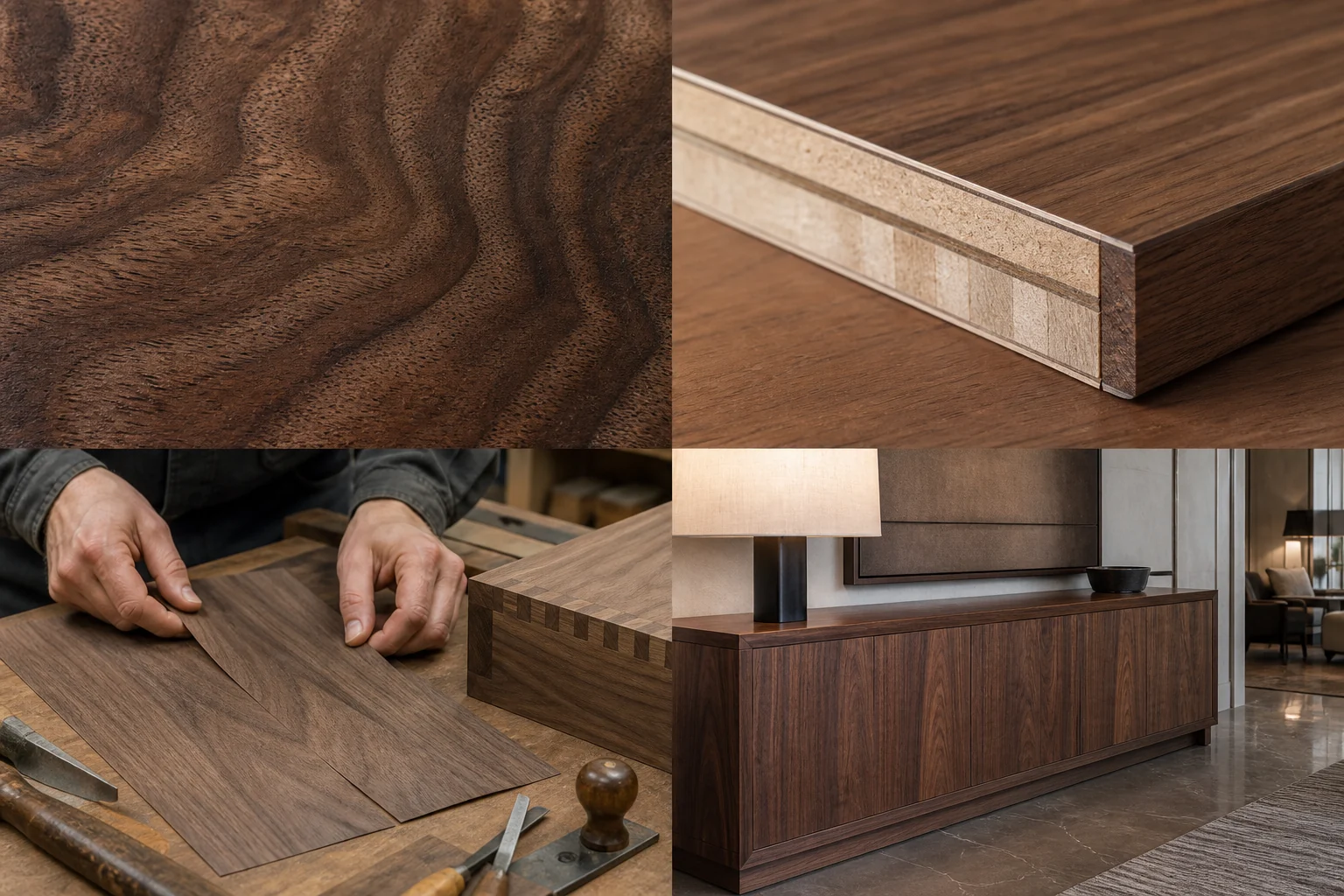
Material-specific authority schedule
Ten controls owned by this exact material—not inherited category rows. Final values are confirmed from supplier data, the project sample and shop drawings.
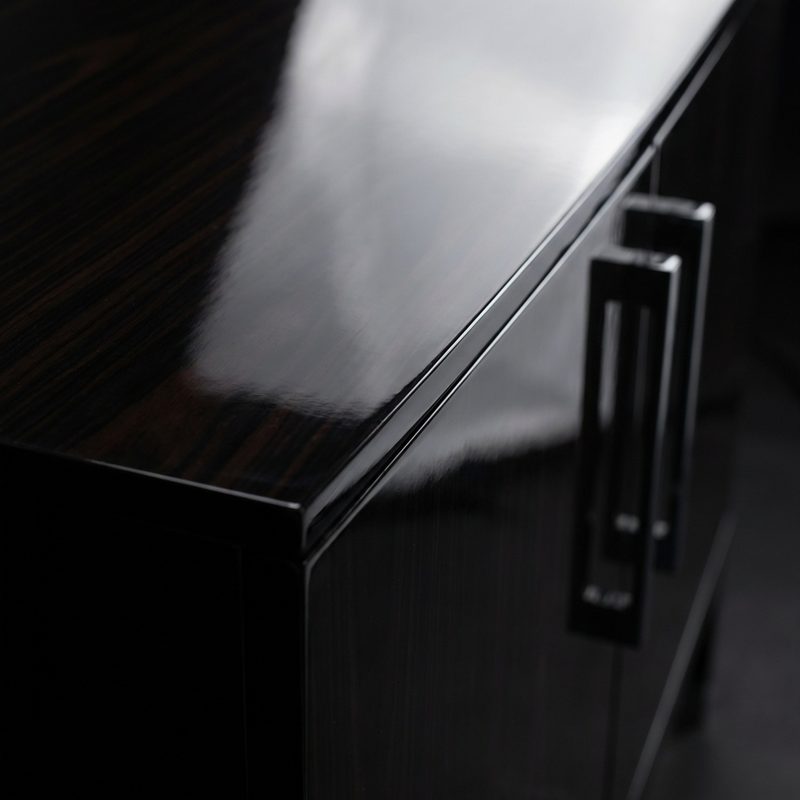

- Declared project reference
- Ebony-Stained Wood Veneer: Black stained veneer; matte to piano-gloss systems available
- Exact material identity
- Dark ebony-stained natural or engineered veneer over stable furniture core; face species, veneer thickness and stain build declared.
- Technical system definition
- A very dark stained veneer finish—typically on a declared species/substrate—designed to suggest ebony while preserving controlled grain. It must not be represented as solid natural ebony unless it is.
- Selection differentiator
- Near-black grain expression gives depth without using endangered ebony timber.
- Critical approval decision
- Specify the actual veneer species and opaque-versus-transparent stain intent; dark colour magnifies sanding, glue, dust and edge-repair defects.
- Non-equivalent substitute
- Black lacquer or printed laminate is not equivalent to stained veneer grain, edge anatomy or repair.
- Fabrication focus
- Prevent sand-through, expose no pale core at edges and sequence veneer before dark staining.
- GCC exposure limit
- Dark finish reveals dust, fingerprints, UV fade and heat whitening strongly.
- Material-specific care rule
- Use soft neutral cleaning and matched touch-up; avoid silicone that complicates refinishing.
- Reject the delivery when
- Reject pale edges, sand-through, blotchy stain, visible substrate joints or sheen mismatch.
Approval pack
Documents required before ordering.
Material guidance · supplier data required for approval
- Ebony-Stained Wood Veneer: Identity/source evidence: Dark ebony-stained natural or engineered veneer over stable furniture core; face species, veneer thickness and stain build declared.
- Ebony-Stained Wood Veneer: Signed selection evidence: Substitute cannot change grain character beneath the dark stain.
- Ebony-Stained Wood Veneer: Second technical gate: Large control is inspected under direct and raking light for patchiness and rub-through.
- Ebony-Stained Wood Veneer: Factory close-out: Prevent sand-through, expose no pale core at edges and sequence veneer before dark staining.
Lead time & availability
Confirmed after source, finish and quantity selection
Family inspection atlas
A shared visual reference for construction and fabrication.
This atlas is shared by the material family; it is not a microscopy record of this exact selection. The approved sample and current supplier documents govern final colour and construction.
Material identity
What is unique—and what is shared with the family.
The exact material fingerprint comes first. Shared family science is explicitly separated in a collapsible appendix instead of being presented as unique content.
50 material-specific points · 39 shared family references
01 · Material fingerprint
What makes this exact selection technically distinct?
Position in the material family
Stained / engineered veneer
- Reference that must be declared
- Dark ebony-stained natural or engineered veneer over stable furniture core; face species, veneer thickness and stain build declared.
- Selection differentiator
- Near-black grain expression gives depth without using endangered ebony timber.
- Not an equivalent substitute
- Black lacquer or printed laminate is not equivalent to stained veneer grain, edge anatomy or repair.
- Reject the delivery when
- Reject pale edges, sand-through, blotchy stain, visible substrate joints or sheen mismatch.
Shared family reference
Open the shared Wood Finishes engineering appendix
This appendix applies to the complete Wood Finishes family. It is retained as supporting reference and is not counted as unique content for this material.
Shared family reference
Open the shared Wood Finishes engineering appendix
This appendix applies to the complete Wood Finishes family. It is retained as supporting reference and is not counted as unique content for this material.
02 · System anatomy
The material is not a single surface.
A very dark stained veneer finish—typically on a declared species/substrate—designed to suggest ebony while preserving controlled grain. It must not be represented as solid natural ebony unless it is.
01Finish system
Layer function
Stain, pore fill, sealer and topcoat create colour, sheen, chemical resistance and repair behaviour.
How to verify
Approve the complete system on production species/veneer with measured sheen.
02Face material
Layer function
Solid timber, natural veneer, engineered veneer, cane or lacquer determines grain continuity and edge strategy.
How to verify
Draw every visible face, grain direction, veneer cut and solid lipping.
03Core / substrate
Layer function
Solid stock, plywood, MDF or particleboard controls stability, screw holding, weight and emissions.
How to verify
Declare board manufacturer/type, density where relevant, thickness and emissions class.
04Joinery / movement
Layer function
Joints, adhesives, fasteners and cross-grain allowance transfer loads while accommodating moisture movement.
How to verify
Prototype high-load joints and show movement allowances in shop drawings.
03 · Decision gates
Reference benchmarks and the project rule.
Moisture content
01- Reference band
- BSA furniture reference: 8–12% at fabrication, then verified against workshop and destination equilibrium conditions.
- Project rule
- Sample multiple components and hold production outside the agreed range.
- Evidence status
- Calibrated readings with location and date
Species / face identity
02- Reference band
- Botanical species or declared engineered face; solid and veneer locations identified.
- Project rule
- A stain colour name never substitutes for species and construction.
- Evidence status
- Supplier declaration, cut section and control panel
Veneer lay-up
03- Reference band
- Cut, leaf sequence, book/slip match, direction and balancing backer stated per elevation.
- Project rule
- Approve full-size elevations before pressing, including doors and drawer fronts.
- Evidence status
- Numbered veneer flitch/leaf plan
Sheen
04- Reference band
- BSA matte reference commonly 10–20% unless scheduled otherwise; measurement geometry and tolerance must be stated.
- Project rule
- Use one signed production panel as visual and instrumental control.
- Evidence status
- Gloss readings and approved panel
Panel emissions
05- Reference band
- Project/jurisdiction-specific formaldehyde and VOC route for MDF, particleboard, plywood, adhesive and finish.
- Project rule
- Certificates must trace to actual board products and current production.
- Evidence status
- Board and adhesive certificates
Coating adhesion / cure
06- Reference band
- Method depends on finish build; cure must resist project cleaners, heat and contact materials.
- Project rule
- Test on solid-to-veneer transitions and high-contact edges.
- Evidence status
- System data, adhesion check and exposure trial
04 · Family comparison
Four visually related systems that are not technically equivalent.
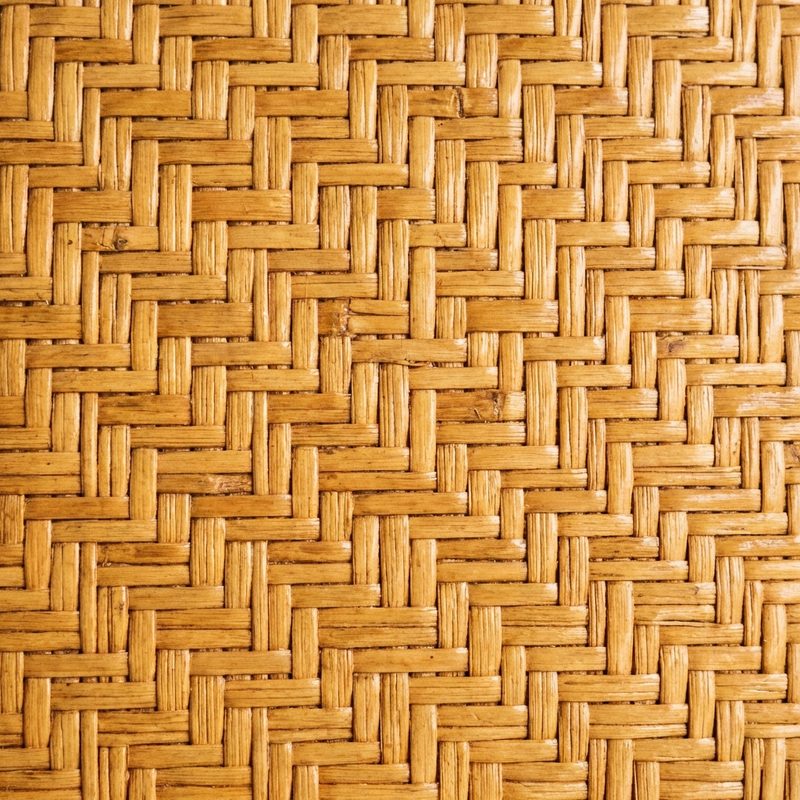
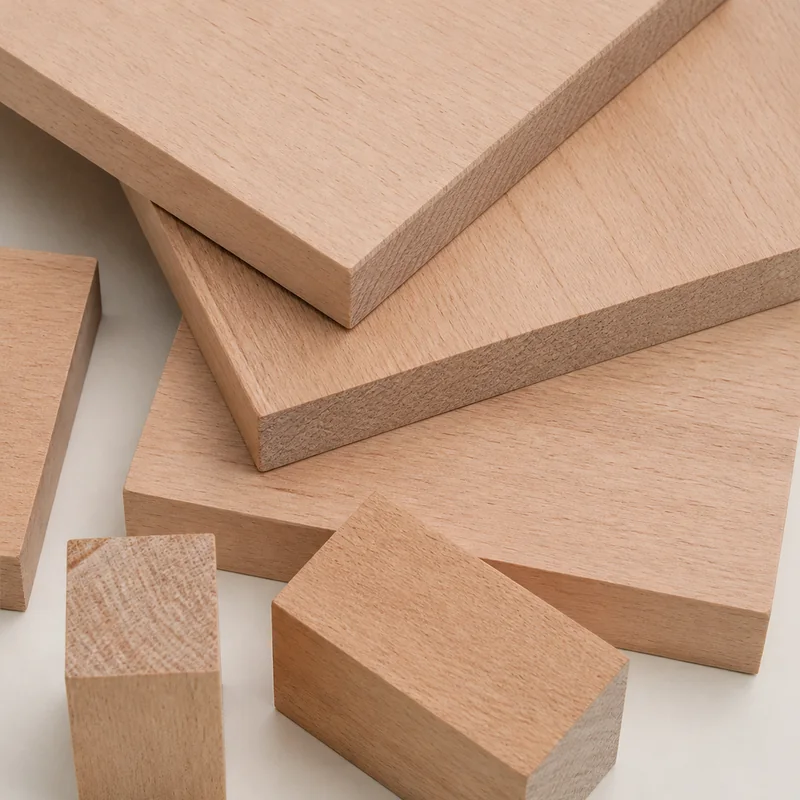
Solid hardwood
- Best use
- Load-bearing frames, edges, legs and repairable premium furniture.
- Trade-off / constraint
- Moisture movement, yield, colour variation and weight require engineering.
Natural veneer on stable core
- Best use
- Large casegood faces with controlled grain sequence and dimensional stability.
- Trade-off / constraint
- Edge anatomy, substrate, balancing and repair limits must be explicit.
Stained / engineered veneer
- Best use
- Consistent colour or dramatic figure across repeated hotel furniture.
- Trade-off / constraint
- Sand-through, batch colour and repair matching are more sensitive.
Lacquered panel / woven cane
- Best use
- Colour-blocked casegoods or breathable decorative inserts.
- Trade-off / constraint
- Performance depends on distinct substrate, edge, tension and finish systems.
05 · Factory handbook
Hold points from receiving through production release.
Fabrication focus for this exact material
Prevent sand-through, expose no pale core at edges and sequence veneer before dark staining.
-
01Timber / board receiving
Control instruction
Verify species, grade, moisture, board identity, thickness, damage and storage conditions.
Close-out evidence
Incoming inspection with moisture map and labels
-
02Veneer selection
Control instruction
Lay out leaves for colour, figure, defects, sequence and full elevation continuity.
Close-out evidence
Signed dry lay and numbered leaf photograph
-
03Machining / pressing
Control instruction
Control panel balance, adhesive spread, press cycle, grain direction and solid-edge allowance.
Close-out evidence
Press record and conditioned first panel
-
04Assembly
Control instruction
Use engineered joints, inserts and movement details; verify squareness, loads and hardware interfaces.
Close-out evidence
First-off carcass/frame load and dimensional check
-
05Finishing
Control instruction
Sequence sanding, stain, sealer and topcoat within controlled temperature, humidity and cure windows.
Close-out evidence
Batch panel, wet-film/cure records and final sheen
06 · Climate & operations
GCC exposure matrix and maintenance plan.
Material-specific climate warning
Dark finish reveals dust, fingerprints, UV fade and heat whitening strongly.
01Conditioned interior
Preferred- Material response
- Stable when moisture is equilibrated and direct heat/water are controlled.
- Design control
- Condition before fabrication and maintain consistent service humidity.
02Lobby / restaurant
Conditional- Material response
- Impact, wet glasses, hot serviceware and repeated cleaners attack edges and finish.
- Design control
- Use durable topcoat, coasters, sealed edges and repairable details.
03Window / solar gain
Conditional- Material response
- UV, heat and uneven drying shift colour and moisture across panels.
- Design control
- Use light/heat control and avoid trapping one panel face against glazing.
04Bathroom / vanity splash
Conditional- Material response
- Water enters joints, cut-outs and unsealed panel edges before face failure is visible.
- Design control
- Use suitable core, sealed cut-outs, raised details and ventilation.
05Covered exterior
Avoid- Material response
- Humidity cycling, condensation and wind-driven rain still move and weather timber.
- Design control
- Only durable species/system with exterior joinery and drainage qualifies.
06Exposed coastal
Avoid- Material response
- Salt, UV, rain and severe wet/dry cycling challenge timber, glue, coating and hardware together.
- Design control
- Use a purpose-designed exterior furniture system and maintenance plan.
Operational maintenance plan
Material-specific care rule
Use soft neutral cleaning and matched touch-up; avoid silicone that complicates refinishing.
-
01Daily / weekly
Action
Dust with a soft cloth; remove liquids promptly and keep surfaces dry.
Prohibited
No wet cloth left on joints or abrasive polish.
-
02After a spill
Action
Blot, clean with approved neutral solution and dry edges, joints and underside.
Prohibited
No bleach, ammonia, silicone polish or uncontrolled solvent.
-
03Quarterly
Action
Inspect finish wear, open joints, veneer edges, water marks, hardware and level/glides.
Prohibited
Do not ignore movement as a cosmetic-only issue.
-
04Periodic refurbishment
Action
Use the recorded finish system for touch-up, recoat or local repair after compatibility trial.
Prohibited
Do not over-sand thin veneer or mix unknown topcoats.
-
05Storage / relocation
Action
Acclimatise, protect from condensation and keep wrapped furniture ventilated.
Prohibited
No sealed plastic wrapping on damp or warm timber.
07 · Reference library
The language that governs the decision—and where it comes from.
Material glossary
- 01Solid timber
- A component made through its thickness from timber rather than a veneered panel.
- 02Veneer
- A thin wood face bonded to a substrate; cut and matching method control its appearance.
- 03Book match
- Adjacent veneer leaves opened like pages to mirror their figure.
- 04Balancing veneer
- A reverse-face layer used to balance stresses in a veneered panel.
- 05Equilibrium moisture content
- Moisture content toward which wood moves under a given temperature and relative humidity.
Professional and standards sources
- 01
USDA Forest Products Laboratory
Wood Handbook
Wood–moisture relations, physical behaviour, engineering and finishing reference.
Open primary source ↗ - 02
ASTM
Wood standards and ASTM D4442
Primary moisture-content determination and related wood test standards.
Open primary source ↗ - 03
ISO
ISO 2409 coating cross-cut
Classification of coating resistance to separation from a substrate.
Open primary source ↗ - 04
ISO
ISO 2813 gloss measurement
Instrumental gloss values at defined geometries.
Open primary source ↗
Material-specific technical dossier
Ebony-Stained Wood Veneer controls from decision to production.
Every row below is tied to this material’s identity, differentiator, fabrication, exposure or care route; no generic family rows are included in this dossier.
8 unique controls · 4 contextual test applications · 5 material-specific risks
System definition
A very dark stained veneer finish—typically on a declared species/substrate—designed to suggest ebony while preserving controlled grain. It must not be represented as solid natural ebony unless it is.
Critical decision
Specify the actual veneer species and opaque-versus-transparent stain intent; dark colour magnifies sanding, glue, dust and edge-repair defects.
01 · Selection variables
What the material schedule must lock.
01Ebony-Stained Wood Veneer: Underlying veneer
- What must be declared
- Declared species, cut, grain scale, substrate and edge material
- Approval basis
- Substitute cannot change grain character beneath the dark stain.
02Ebony-Stained Wood Veneer: Black-depth control
- What must be declared
- Transparent ebony stain, pigmented glaze or near-opaque system; undertone and pore read
- Approval basis
- Large control is inspected under direct and raking light for patchiness and rub-through.
03Ebony-Stained Wood Veneer: identity declaration
- What must be declared
- Dark ebony-stained natural or engineered veneer over stable furniture core; face species, veneer thickness and stain build declared.
- Approval basis
- Specify the actual veneer species and opaque-versus-transparent stain intent; dark colour magnifies sanding, glue, dust and edge-repair defects.
04Ebony-Stained Wood Veneer: equivalency boundary
- What must be declared
- Near-black grain expression gives depth without using endangered ebony timber.
- Approval basis
- Black lacquer or printed laminate is not equivalent to stained veneer grain, edge anatomy or repair.
05Ebony-Stained Wood Veneer: factory execution
- What must be declared
- Prevent sand-through, expose no pale core at edges and sequence veneer before dark staining.
- Approval basis
- Substitute cannot change grain character beneath the dark stain.
06Ebony-Stained Wood Veneer: GCC exposure control
- What must be declared
- Dark finish reveals dust, fingerprints, UV fade and heat whitening strongly.
- Approval basis
- Release only when the project detail and maintenance route close this exact exposure risk for Ebony-Stained Wood Veneer.
07Ebony-Stained Wood Veneer: operational care route
- What must be declared
- Use soft neutral cleaning and matched touch-up; avoid silicone that complicates refinishing.
- Approval basis
- Issue a named cleaning and repair method for Ebony-Stained Wood Veneer; generic family care is not approval.
08Ebony-Stained Wood Veneer: delivery rejection boundary
- What must be declared
- Reject pale edges, sand-through, blotchy stain, visible substrate joints or sheen mismatch.
- Approval basis
- The signed sample, first-off item and delivery inspection must all close this rejection condition for Ebony-Stained Wood Veneer.
| Variable | What must be declared | Approval basis |
|---|---|---|
| 01Ebony-Stained Wood Veneer: Underlying veneer | Declared species, cut, grain scale, substrate and edge material | Substitute cannot change grain character beneath the dark stain. |
| 02Ebony-Stained Wood Veneer: Black-depth control | Transparent ebony stain, pigmented glaze or near-opaque system; undertone and pore read | Large control is inspected under direct and raking light for patchiness and rub-through. |
| 03Ebony-Stained Wood Veneer: identity declaration | Dark ebony-stained natural or engineered veneer over stable furniture core; face species, veneer thickness and stain build declared. | Specify the actual veneer species and opaque-versus-transparent stain intent; dark colour magnifies sanding, glue, dust and edge-repair defects. |
| 04Ebony-Stained Wood Veneer: equivalency boundary | Near-black grain expression gives depth without using endangered ebony timber. | Black lacquer or printed laminate is not equivalent to stained veneer grain, edge anatomy or repair. |
| 05Ebony-Stained Wood Veneer: factory execution | Prevent sand-through, expose no pale core at edges and sequence veneer before dark staining. | Substitute cannot change grain character beneath the dark stain. |
| 06Ebony-Stained Wood Veneer: GCC exposure control | Dark finish reveals dust, fingerprints, UV fade and heat whitening strongly. | Release only when the project detail and maintenance route close this exact exposure risk for Ebony-Stained Wood Veneer. |
| 07Ebony-Stained Wood Veneer: operational care route | Use soft neutral cleaning and matched touch-up; avoid silicone that complicates refinishing. | Issue a named cleaning and repair method for Ebony-Stained Wood Veneer; generic family care is not approval. |
| 08Ebony-Stained Wood Veneer: delivery rejection boundary | Reject pale edges, sand-through, blotchy stain, visible substrate joints or sheen mismatch. | The signed sample, first-off item and delivery inspection must all close this rejection condition for Ebony-Stained Wood Veneer. |
02 · Verification
Test and evidence matrix.
Test methods are not compliance certificates or automatic pass values. The project must state the method, required result, tested construction and current report it will accept.
ASTM D4442-20(2025)
01- What it measures
- Direct moisture-content measurement for wood, veneer and wood-based materials.
- How to use it here
- Use the primary oven-dry method for referee values; calibrate secondary site/workshop measurements. Material-specific acceptance for Ebony-Stained Wood Veneer: Substitute cannot change grain character beneath the dark stain.
ISO 2409:2020
02- What it measures
- Cross-cut classification of coating resistance to separation from the substrate.
- How to use it here
- Apply only where suitable for the coating thickness/texture and record the tested substrate/system. Material-specific acceptance for Ebony-Stained Wood Veneer: Large control is inspected under direct and raking light for patchiness and rub-through.
ISO 2813:2014
03- What it measures
- Instrumental gloss measurement at 20°, 60° or 85°.
- How to use it here
- State geometry, target and tolerance on the control sample for repeatable batches. Material-specific acceptance for Ebony-Stained Wood Veneer: Approve sanding/glue process and provide a colour-matched repair system with protected edges.
Project board-emission requirement
04- What it measures
- Formaldehyde/VOC declaration for MDF, particleboard, plywood and adhesives.
- How to use it here
- Use the project/jurisdiction test route and require traceability to the actual board and adhesive. Material-specific acceptance for Ebony-Stained Wood Veneer: Prevent sand-through, expose no pale core at edges and sequence veneer before dark staining.
03 · Performance
Failure-mode and control register.
01Ebony-Stained Wood Veneer: Cloudy stain, glue ghosts and pale edge damage
- Likely cause
- Dark stain exposes preparation inconsistency and repairs reveal the pale base.
- Preventive control
- Approve sanding/glue process and provide a colour-matched repair system with protected edges.
02Ebony-Stained Wood Veneer: non-equivalent substitution accepted
- Likely cause
- Black lacquer or printed laminate is not equivalent to stained veneer grain, edge anatomy or repair.
- Preventive control
- Dark ebony-stained natural or engineered veneer over stable furniture core; face species, veneer thickness and stain build declared.
03Ebony-Stained Wood Veneer: material signature lost in fabrication
- Likely cause
- The workshop route does not implement the material-specific fabrication focus: Prevent sand-through, expose no pale core at edges and sequence veneer before dark staining.
- Preventive control
- Large control is inspected under direct and raking light for patchiness and rub-through.
04Ebony-Stained Wood Veneer: GCC exposure mismatch
- Likely cause
- Dark finish reveals dust, fingerprints, UV fade and heat whitening strongly.
- Preventive control
- Re-detail, relocate or reject Ebony-Stained Wood Veneer where the stated exposure cannot be controlled.
05Ebony-Stained Wood Veneer: cleaning or maintenance damage
- Likely cause
- Use soft neutral cleaning and matched touch-up; avoid silicone that complicates refinishing.
- Preventive control
- Train operations on the named care route and retain a signed repair reference for Ebony-Stained Wood Veneer.
| Failure mode | Likely cause | Preventive control |
|---|---|---|
| 01Ebony-Stained Wood Veneer: Cloudy stain, glue ghosts and pale edge damage | Dark stain exposes preparation inconsistency and repairs reveal the pale base. | Approve sanding/glue process and provide a colour-matched repair system with protected edges. |
| 02Ebony-Stained Wood Veneer: non-equivalent substitution accepted | Black lacquer or printed laminate is not equivalent to stained veneer grain, edge anatomy or repair. | Dark ebony-stained natural or engineered veneer over stable furniture core; face species, veneer thickness and stain build declared. |
| 03Ebony-Stained Wood Veneer: material signature lost in fabrication | The workshop route does not implement the material-specific fabrication focus: Prevent sand-through, expose no pale core at edges and sequence veneer before dark staining. | Large control is inspected under direct and raking light for patchiness and rub-through. |
| 04Ebony-Stained Wood Veneer: GCC exposure mismatch | Dark finish reveals dust, fingerprints, UV fade and heat whitening strongly. | Re-detail, relocate or reject Ebony-Stained Wood Veneer where the stated exposure cannot be controlled. |
| 05Ebony-Stained Wood Veneer: cleaning or maintenance damage | Use soft neutral cleaning and matched touch-up; avoid silicone that complicates refinishing. | Train operations on the named care route and retain a signed repair reference for Ebony-Stained Wood Veneer. |
04 · Tender-ready
Copy-ready specification clause.
Provide ebony-stained wood veneer finish on the declared approved veneer species and stable substrate; do not describe the material as natural ebony unless verified. Define veneer cut/lay-up, solid lipping species, substrate, stain transparency/undertone, pore visibility and measured sheen on a full-size assembled control. Submit moisture/emissions data, complete finish build, adhesion and cleaner/heat contact review. First-off approval shall include corners, edges, hardware cut-outs and a demonstrated repair to the pale substrate.
05 · Quality control
Inspection plan from submittal to handover.
01Ebony-Stained Wood Veneer: identity and source
- Inspection
- Dark ebony-stained natural or engineered veneer over stable furniture core; face species, veneer thickness and stain build declared.
- Acceptance / hold point
- Documents, labels and physical material all identify the same Ebony-Stained Wood Veneer construction and source.
02Ebony-Stained Wood Veneer: control sample
- Inspection
- Near-black grain expression gives depth without using endangered ebony timber.
- Acceptance / hold point
- Substitute cannot change grain character beneath the dark stain.
03Ebony-Stained Wood Veneer: first-off fabrication
- Inspection
- Prevent sand-through, expose no pale core at edges and sequence veneer before dark staining.
- Acceptance / hold point
- Large control is inspected under direct and raking light for patchiness and rub-through.
04Ebony-Stained Wood Veneer: exposure and care trial
- Inspection
- Dark finish reveals dust, fingerprints, UV fade and heat whitening strongly. Use soft neutral cleaning and matched touch-up; avoid silicone that complicates refinishing.
- Acceptance / hold point
- Approve sanding/glue process and provide a colour-matched repair system with protected edges.
05Ebony-Stained Wood Veneer: delivery release
- Inspection
- Reject pale edges, sand-through, blotchy stain, visible substrate joints or sheen mismatch.
- Acceptance / hold point
- Ebony-Stained Wood Veneer is released only when no stated rejection condition is present and the signed reference remains traceable.
| Stage | Inspection | Acceptance / hold point |
|---|---|---|
| 01Ebony-Stained Wood Veneer: identity and source | Dark ebony-stained natural or engineered veneer over stable furniture core; face species, veneer thickness and stain build declared. | Documents, labels and physical material all identify the same Ebony-Stained Wood Veneer construction and source. |
| 02Ebony-Stained Wood Veneer: control sample | Near-black grain expression gives depth without using endangered ebony timber. | Substitute cannot change grain character beneath the dark stain. |
| 03Ebony-Stained Wood Veneer: first-off fabrication | Prevent sand-through, expose no pale core at edges and sequence veneer before dark staining. | Large control is inspected under direct and raking light for patchiness and rub-through. |
| 04Ebony-Stained Wood Veneer: exposure and care trial | Dark finish reveals dust, fingerprints, UV fade and heat whitening strongly. Use soft neutral cleaning and matched touch-up; avoid silicone that complicates refinishing. | Approve sanding/glue process and provide a colour-matched repair system with protected edges. |
| 05Ebony-Stained Wood Veneer: delivery release | Reject pale edges, sand-through, blotchy stain, visible substrate joints or sheen mismatch. | Ebony-Stained Wood Veneer is released only when no stated rejection condition is present and the signed reference remains traceable. |
Required approval evidence
- +Ebony-Stained Wood Veneer: Identity/source evidence: Dark ebony-stained natural or engineered veneer over stable furniture core; face species, veneer thickness and stain build declared.
- +Ebony-Stained Wood Veneer: Signed selection evidence: Substitute cannot change grain character beneath the dark stain.
- +Ebony-Stained Wood Veneer: Second technical gate: Large control is inspected under direct and raking light for patchiness and rub-through.
- +Ebony-Stained Wood Veneer: Factory close-out: Prevent sand-through, expose no pale core at edges and sequence veneer before dark staining.
- +Ebony-Stained Wood Veneer: Exposure and care record: Dark finish reveals dust, fingerprints, UV fade and heat whitening strongly. Use soft neutral cleaning and matched touch-up; avoid silicone that complicates refinishing.
- +Ebony-Stained Wood Veneer: Delivery rejection record: Reject pale edges, sand-through, blotchy stain, visible substrate joints or sheen mismatch.
Questions to close before approval
- 01Ebony-Stained Wood Veneer: Has the exact identity been declared and evidenced: Dark ebony-stained natural or engineered veneer over stable furniture core; face species, veneer thickness and stain build declared?
- 02Ebony-Stained Wood Veneer: Which project requirement makes this differentiator necessary: Near-black grain expression gives depth without using endangered ebony timber?
- 03Ebony-Stained Wood Veneer: Has the team excluded the non-equivalent route: Black lacquer or printed laminate is not equivalent to stained veneer grain, edge anatomy or repair?
- 04Ebony-Stained Wood Veneer: How will the factory prove this execution control: Prevent sand-through, expose no pale core at edges and sequence veneer before dark staining?
- 05Ebony-Stained Wood Veneer: Can the project control this GCC exposure: Dark finish reveals dust, fingerprints, UV fade and heat whitening strongly?
- 06Ebony-Stained Wood Veneer: Who owns this operating rule after handover: Use soft neutral cleaning and matched touch-up; avoid silicone that complicates refinishing?
Exact material application
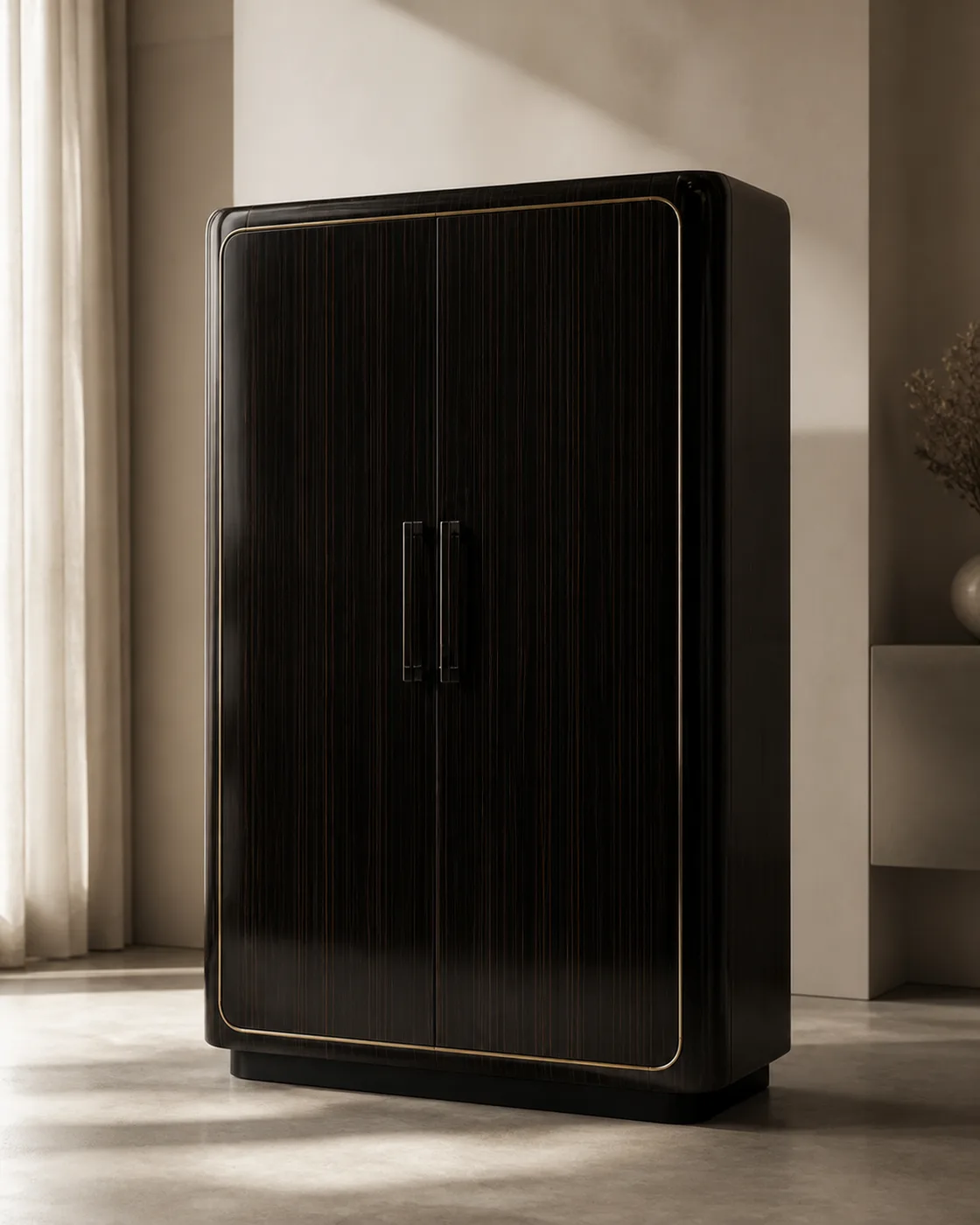
Ebony-Stained Wood Veneer on a dedicated furniture product.
This material-specific application image shows Ebony-Stained Wood Veneer on its own product and is not reused by any other material page. Final colour, pattern and finish remain subject to the approved physical sample.
Project notes
From sample to production.
01
What to specify
Define species, solid-versus-veneer construction, visual grade, moisture target, grain match, stain colour, sheen and substrate/emissions requirement. These terms prevent major tender substitutions.
02
Fabrication & detailing
Use kiln-dried components, balanced veneer construction and solid lipping to exposed edges. Coordinate movement allowances, grain direction, hardware clearances and concealed reinforcement in shop drawings.
03
Colour & finish approval
Timber and veneer are natural materials. Colour, figure and grain movement vary; a signed control sample and veneer lay-up establish the visual standard before production.
04
Care & maintenance
Wipe with a soft damp cloth and dry immediately. Use coasters and felt protection; avoid standing water, abrasive cleaners, hot objects and rapid humidity changes.
Specification note
This page is a preliminary specification guide. No value, brand reference or material name constitutes automatic compliance. Current product data, test reports, physical sample or slab and the furniture construction must be approved for each project before ordering or manufacture.
Related materials