Contract Fabrics Supplier UAE: Rub Counts & Fire Ratings
Martindale rub counts by application, project-specific fire-test routes, Gulf UV and cleaning demands, and how contract fabric supply works in the UAE.
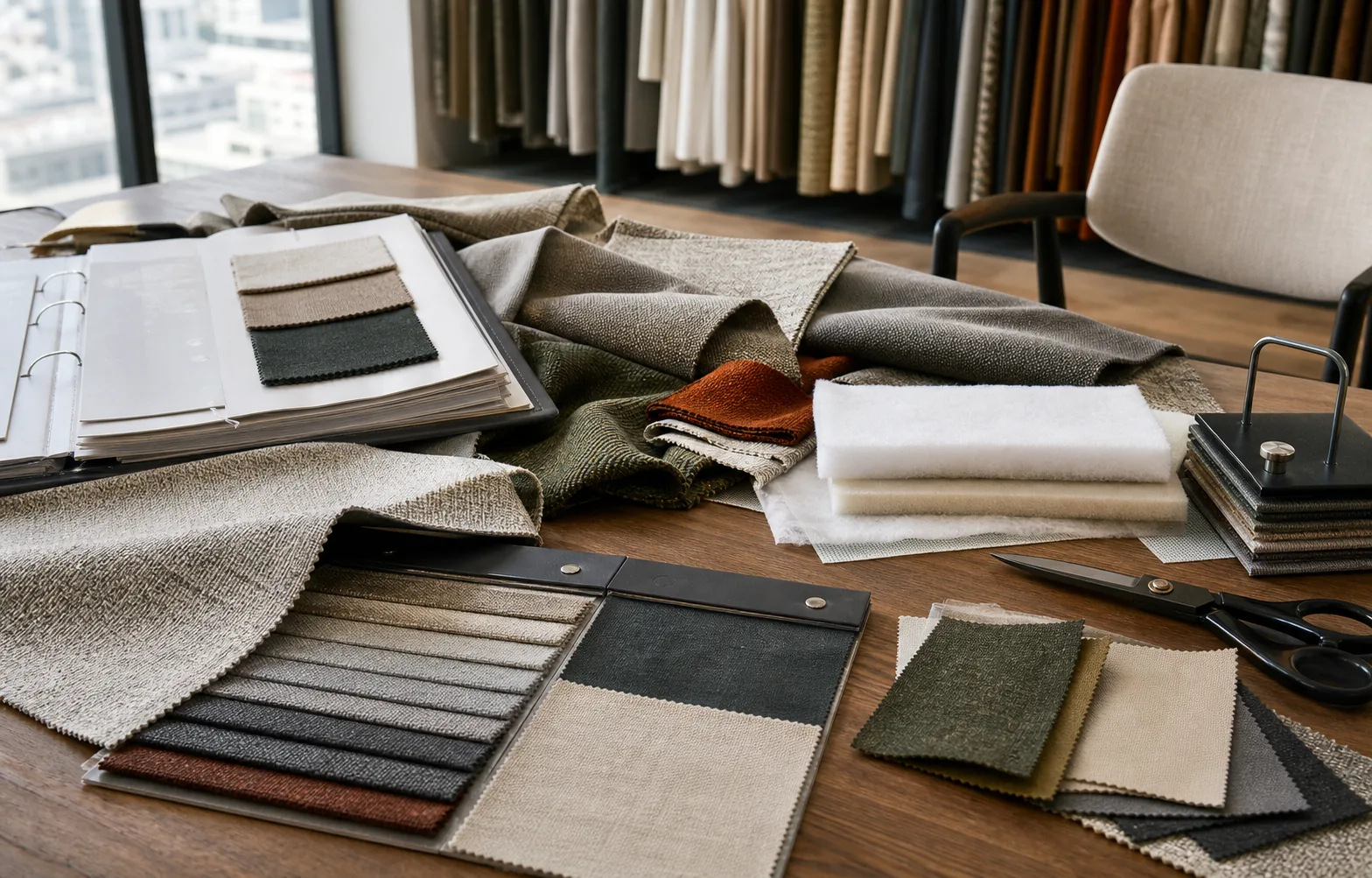
For a coordinated order, explore BSA’s hotel textiles and contract fabric supply. The fabric specification finder helps organise the intended use and material requirements before you request samples; final performance evidence should be checked against the selected product and project brief.
Contract fabric is the point where hospitality interiors most often fail quietly. The sofa frame lasts fifteen years; the wrong fabric on it looks tired in eighteen months and non-compliant fabric can hold up a Civil Defence approval entirely. This guide covers what separates contract fabric from residential fabric, the numbers to specify for UAE and GCC projects, the Gulf-specific requirements that catch imported specifications out, and how fabric supply works through BSA Trading.
Contract versus residential: the difference is the test report
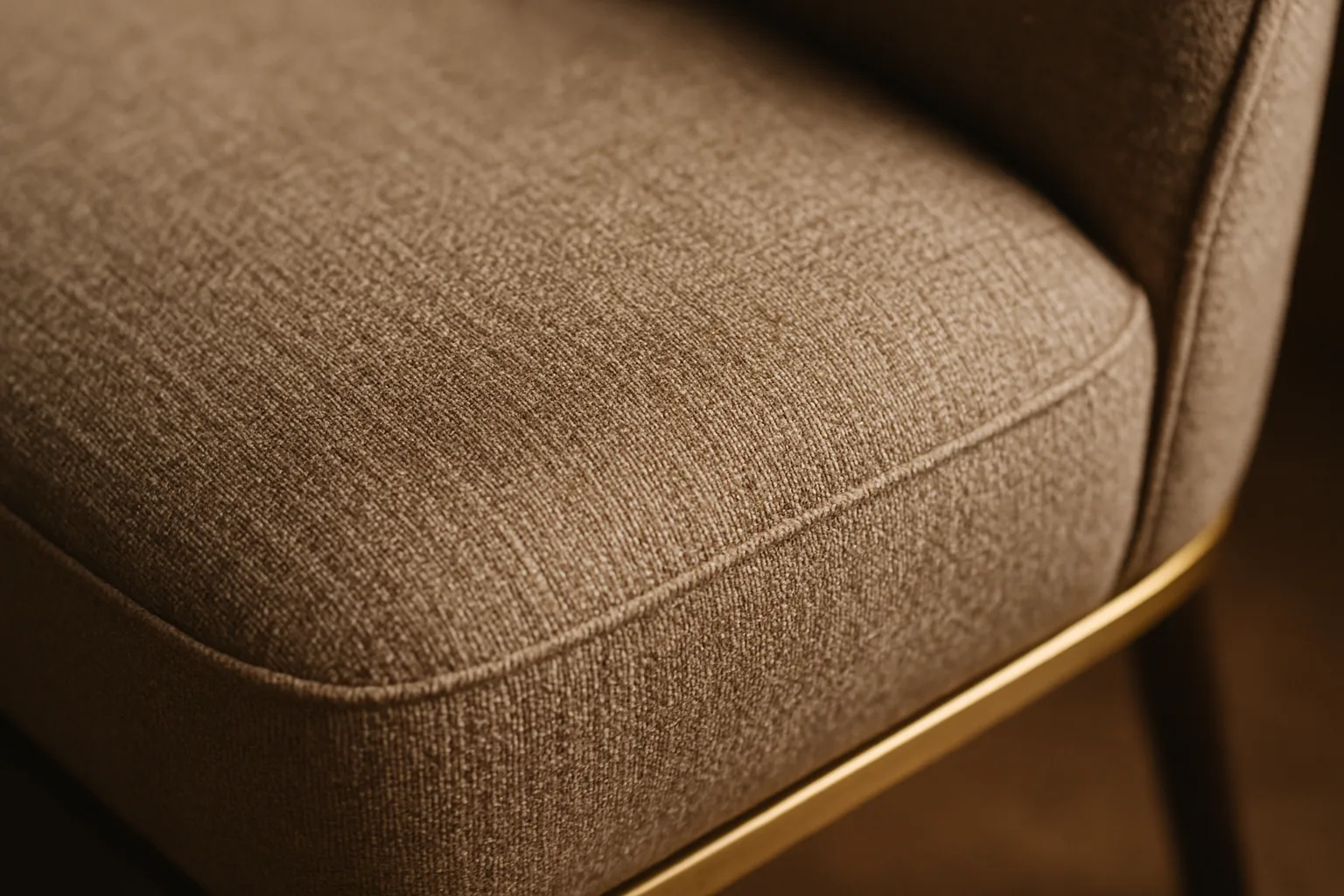
On a sample card, a residential and a contract velvet can be indistinguishable. The difference is documentation. A genuine contract fabric arrives with test results for abrasion (Martindale), fire performance, colour fastness to light and rubbing, and pilling resistance. A “hospitality look” fabric without those documents is residential fabric at contract prices — and in a licensed UAE venue, it is also an approval problem, because Civil Defence evidence requirements apply to the fabric actually installed, not to the design intent.
Professional rule: specify contract fabric by its test numbers, then choose the look within what passes. Choosing the look first and hunting for certificates afterwards is how projects end up re-upholstering approved furniture.
Abrasion: Martindale numbers by application
The Martindale method (BS EN ISO 12947-2) abrades a specimen under controlled conditions, but a quoted “rub count” is meaningful only when the supplier states the test method and end point. There is no universal legal threshold that turns a fabric into “contract” fabric, and the EU Ecolabel is not evidence for a blanket 40,000-cycle rule. Use the operator’s standard where one exists; otherwise the following ranges are practical procurement starting points, not approval limits:
| Application | Minimum Martindale | Notes |
|---|---|---|
| Scatter cushions, bed runners | 20,000–25,000 | Decorative duty; handled, not sat on |
| Guestroom occasional chairs | 35,000–40,000 | Moderate, single-user duty |
| Lobby and lounge seating | 70,000+ | Continuous public use |
| Restaurant and banquette seating | 70,000–100,000+ | Highest wear plus food and cleaning chemistry |
| Bar stools and counter seating | 100,000 | Constant rotation and abrasion |
A caution from the supply side: rub count measures the fabric alone. A 100,000-rub fabric on soft foam with an unbound seam still fails early, which is why we quote fabric and upholstery construction together on items like banquette seating. And above roughly 100,000 rubs the number stops predicting real-world life; at that point weave density, fibre, and cleanability decide the outcome.
Fire performance: specify the test route, not a slogan
The UAE Fire and Life Safety Code and the project’s authority, operator, and consultant requirements determine the fire-performance route. Dubai Civil Defence’s published 2018 code lists several acceptable standards for upholstered furniture, including BS 7176, BS 5852, EN 1021-1/-2, ASTM E1537, and other routes. That list is exactly why “Crib 5 compliant” should not be copied into every UAE specification: the required standard and performance level must be confirmed for the actual occupancy and approval path. Curtains and drapery likewise need the test route named in the project brief. Three things trip projects up repeatedly:
- Match the evidence to what was tested. Where the selected route evaluates a composite, the fabric, interliner, and foam in the certificate must match production. A fabric-only certificate cannot prove a complete seat passes a composite test.
- FR treatments are not all equal. Inherently flame-retardant fibres retain their chemistry through cleaning, while some topical treatments can lose performance. Neither replaces testing of the specified construction when the project requires a composite result.
- Documentation timing. Certificates are needed at specification and ordering stage — not discovered missing when the consultant requests the fire file. Our FF&E procurement checklist places this in stage 2 for exactly that reason.
Gulf-specific requirements imported specs miss
UV and light fastness. Gulf sunlight through floor-to-ceiling glazing degrades dyes faster than Northern European specifications assume. For any seating or drapery near glazing, specify colour fastness to light of 5 or better on the blue wool scale (tested to ISO 105-B02, graded 1–8); for outdoor and semi-outdoor, use solution-dyed acrylics — the colour is in the fibre, not on it.
Cleaning chemistry. UAE housekeeping regimes clean hard and frequently. Fabrics for F&B and lobby duty should tolerate water- and solvent-based cleaning (W/S code) and, increasingly, operators ask for bleach-cleanable performance fabrics on high-turnover seating.
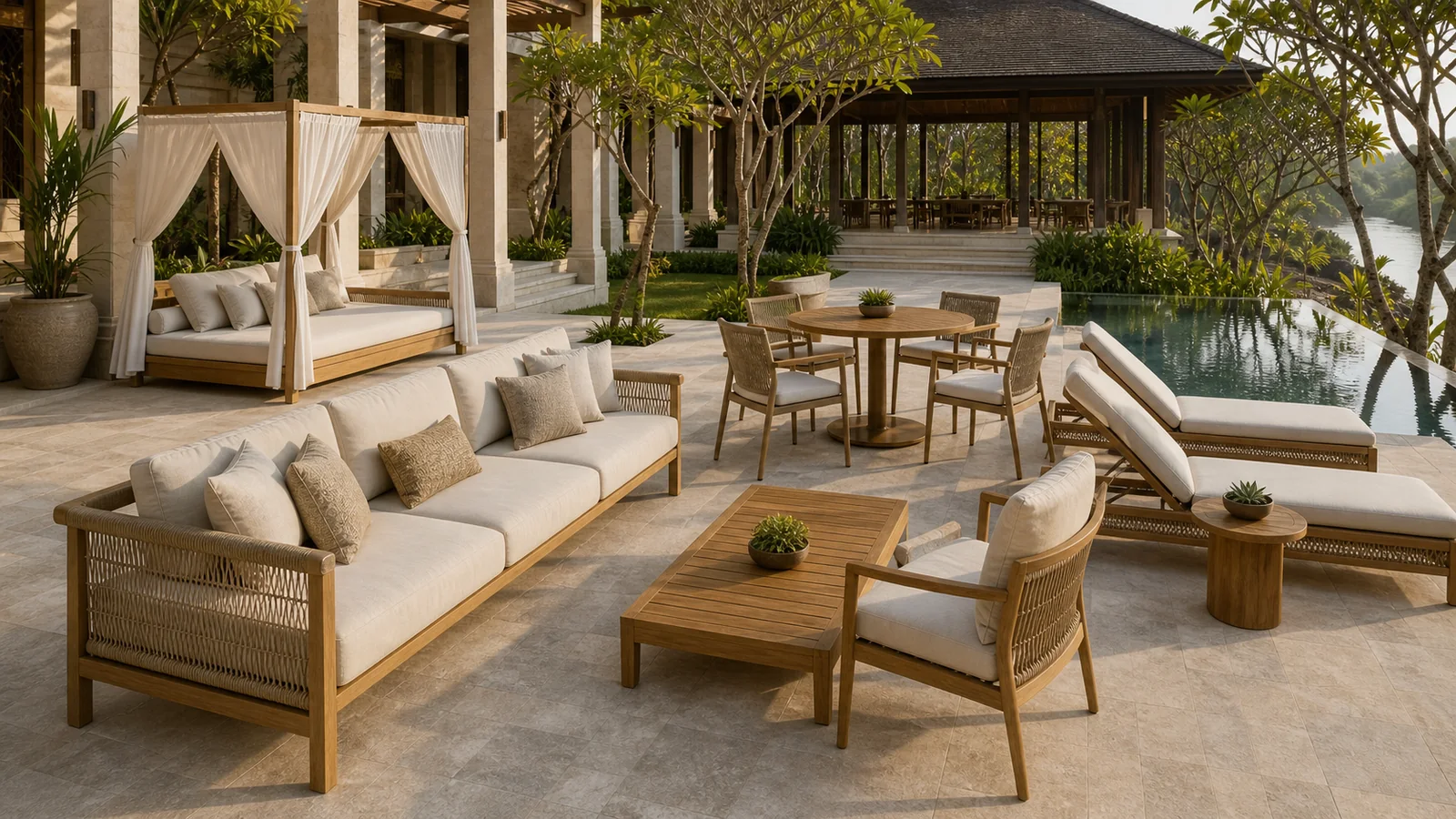
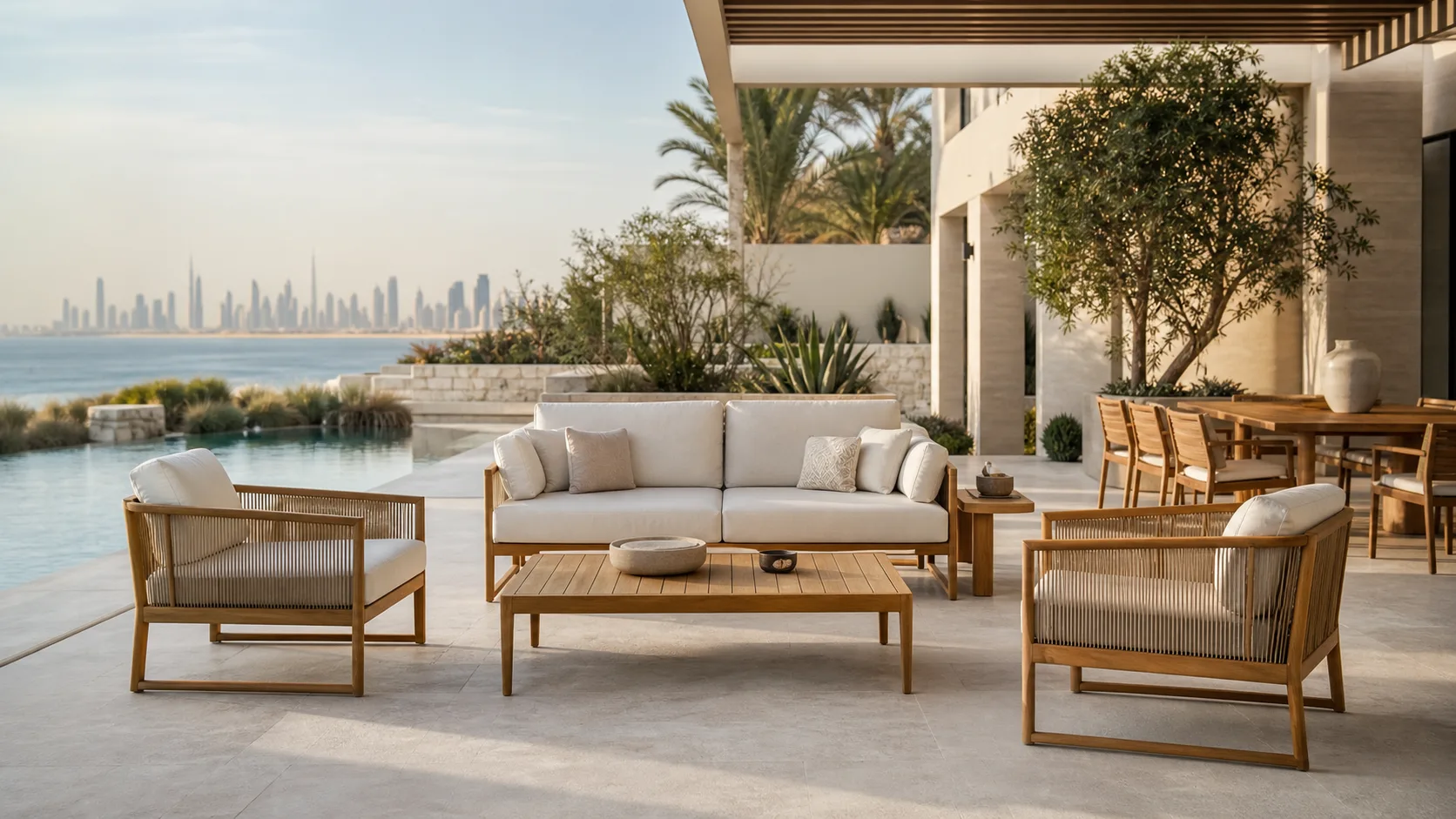
Humidity and mould. Semi-outdoor majlis terraces, pool lounges, and beach club furniture need mould- and moisture-resistant backings. Standard latex-backed chenilles delaminate in humid semi-outdoor duty — we have replaced enough of them to say so plainly. For fully outdoor duty, see our outdoor and pool furniture guide.
Sand abrasion. Fine sand works into pile fabrics near entrances and terraces and accelerates wear beyond what the Martindale number suggests. Flat weaves and high-density constructions outlast plush piles in these positions.
Quantity planning and the repeat trap
Contract fabric is ordered by the linear metre against a cutting plan, and two rules protect the budget. Order everything for one item from one dye batch — batch-to-batch colour variation is visible on adjacent seat pads even when both match the standard. And hold attic stock of 5–10% on every upholstery fabric, bought in the same batch; a re-order six months later will not match. Pattern repeats inflate consumption: a large repeat on banquette runs or curtains can add 15–25% to the metreage a plain fabric would need, which is why two quotations for “the same sofa” can carry different fabric quantities and both be correct.
How BSA supplies contract fabric
BSA Trading supplies contract fabrics from Dubai in three modes: fabric applied to furniture we manufacture (the majority case — one supplier owns fabric, foam, fire composite, and the finished item); fabric-only supply cut to your cutting plan for a local upholsterer; and re-upholstery programs for operating hotels, where fabric choice is driven by what survives the property’s actual cleaning regime. Sourcing runs through contract mills in Turkey and Europe — the same base as our hotel linen program — with certificates supplied per project for the approval file.
The fastest way to a usable quotation: send the application list (which items, which areas), any operator standard in force, and target hand-feel or reference images. We return fabric options with test documentation, metreage, and pricing — request a quotation or see the upholstery fabric range for the starting point.