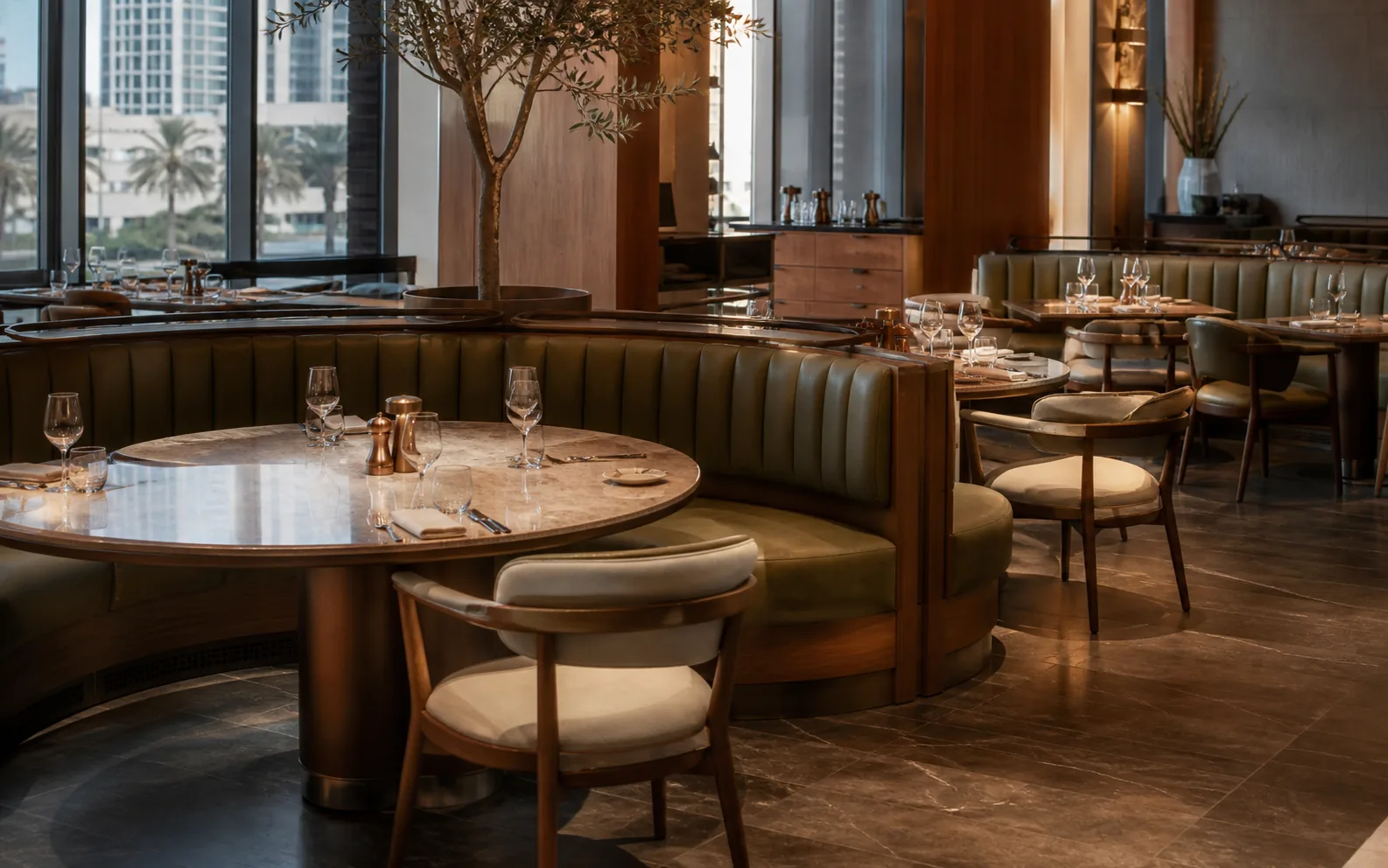
Hotel Soft Furnishings UAE: Cushions, Bedding & Curtains
A complete procurement guide to hospitality soft furnishings in the UAE and GCC — decorative cushions, throws, bedding, and curtains and blinds — covering fabric selection, fire compliance, made-to-measure specification, lead times, and how the layer that reads as luxury actually gets bought.
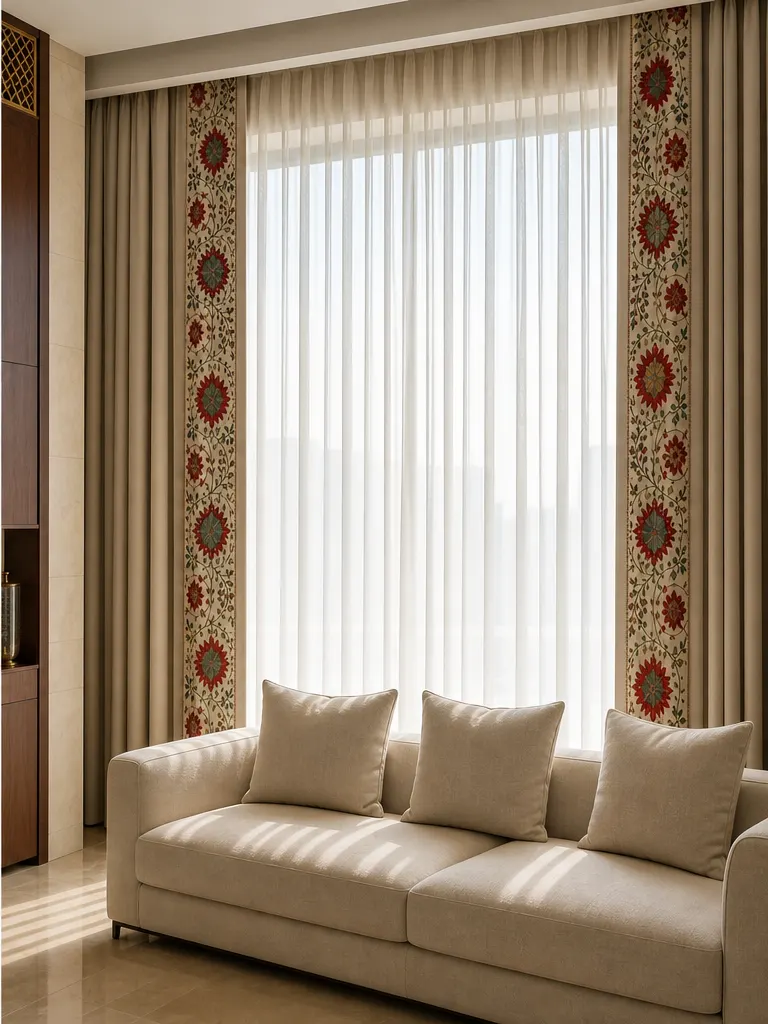
Soft furnishings are the last layer a guest sees and the first they touch. The cushions on the bed, the throw folded across the lounge chair, the coverlet that finishes the mattress, the drapery framing the view — this is the layer that reads as hospitality rather than furniture. It is also the layer most often under-planned, ordered late, and specified as an afterthought, which is why it is where good projects quietly lose polish and where great ones separate themselves.
For an owner, operator, or interior designer working in the UAE and the wider Gulf, soft furnishings deserve the same procurement discipline as case goods and seating. They carry real fabric-performance, fire-compliance, and lead-time consequences, and they are the elements a photographer, a brand inspector, and a paying guest all judge at close range. This guide covers the full soft furnishings collection the way it should actually be bought: family by family, with the specification, compliance, and sourcing logic that keeps the layer looking like opening day.
Professional rule: treat soft furnishings as specified product, not decoration. Every cushion, throw, coverlet, and curtain has a fabric, a fire rating, a size, and a lead time. Plan them on the FF&E schedule, not on the snag list.
The four families of hospitality soft furnishings
A complete soft furnishings scope for a hotel or residence divides cleanly into four product families. Each is developed, sampled, and sewn differently, and each finishes a different part of the room.
| Family | What it covers | Where it lands | Specification driver |
|---|---|---|---|
| Decorative Cushions | Square, lumbar, bolster, and round formats | Beds, lounge seating, banquettes, majlis | Face fabric, trim, insert, fire rating |
| Throws | Velvet, handloom, jacquard, quilted, reversible layers | Bed runners’ zone, lounge chairs, sofas | Weight, hand-feel, reverse construction |
| Bedding | Quilted coverlets, bedspreads, bed runners, coordinated sets | The bed, sized to the mattress | Actual mattress size, fill, wash-durability |
| Curtains & Blinds | Decorative drapery, sheers, blackout sets, Roman blinds, tie-backs | Every window and glazed opening | Survey dimensions, fullness, lining, track |
The families coordinate but they do not share a spec. A cushion is judged on its face and its edge; a curtain is judged on its drape, its blackout performance, and how cleanly it stacks back. Buying them from one source that develops all four keeps colour, motif, and quality consistent across a room — which is the whole point of a designed interior.
Decorative cushions: the most photographed, least planned item
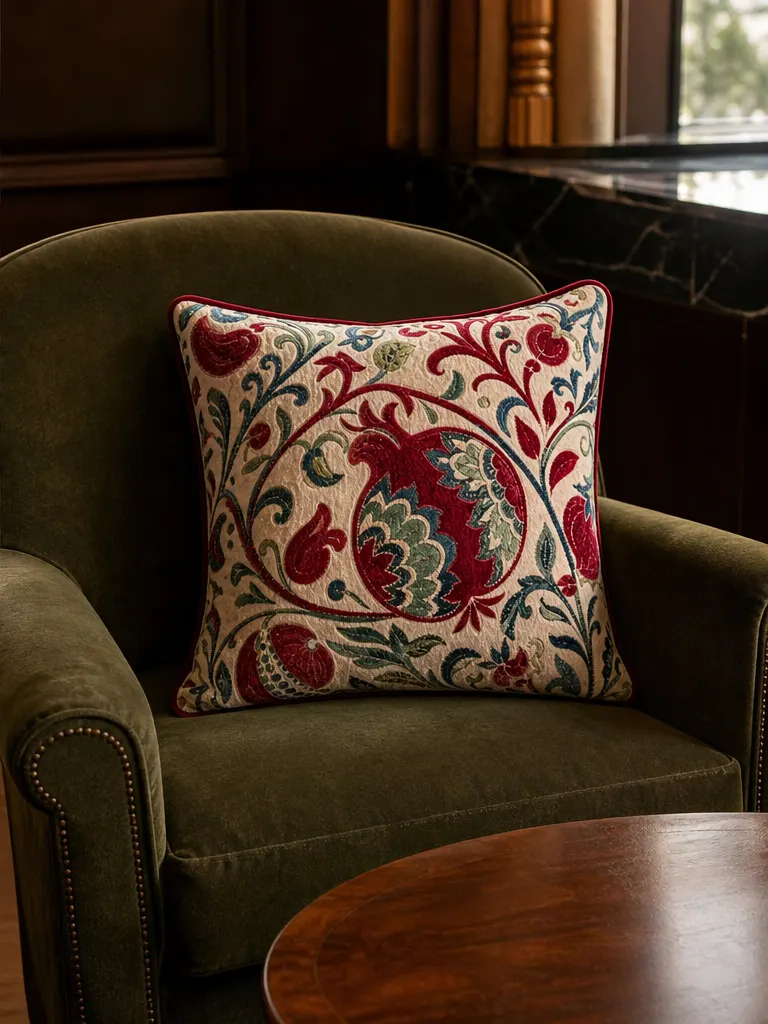
Cushions are the cheapest way to signal that a room was designed rather than assembled, and the fastest way to make it look tired if they are wrong. On a hotel bed they carry the colour story; on lounge seating and in a majlis they set the comfort and the palette.
Specification points that matter more than they look:
- Format mix. A bed usually wants a layered set — square, lumbar, and sometimes a bolster — not five identical squares. Bolster and lumbar formats such as the Azure Halo Bolster Set and the Olive Ember Lumbar do the framing work that a stack of squares cannot.
- Face and edge. Original woven motifs, embroidery, and piping read as bespoke; a plain printed square reads as stock. Structured jacquard pieces like the Celadon Crest Cushion or the Terracotta Compass Cushion hold their shape and detail through repeated housekeeping.
- Removable covers. Concealed-zip tailored covers with separately specified inserts let housekeeping launder and replace without buying a whole new cushion. Never fuse cover and fill on a commercial project.
- Fire rating. In licensed venues the face fabric and fill both need to meet Civil Defence requirements — covered below.
The full range runs to fourteen designs across square, lumbar, bolster, and round formats. Browse the decorative cushions family to build a coordinated set rather than picking singles.
Throws: the comfort cue on the bed runner and the lounge chair
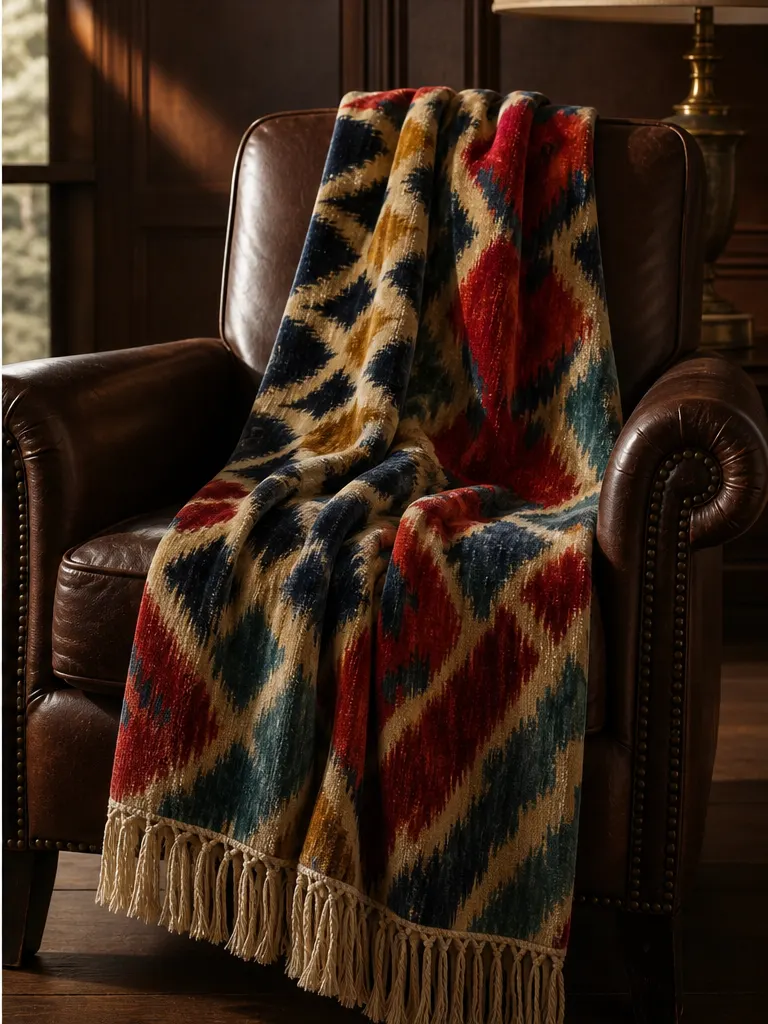
A throw does two jobs: it adds the tactile, layered warmth that photographs as luxury, and — folded at the foot of the bed or over an arm — it signals that the room is cared for. In the Gulf, where interiors run cool against the heat outside, the throw is a genuine comfort item, not just a styling prop.
- Weight and reverse. A reversible construction like the Emberfold Velvet Throw gives two looks from one piece and a more substantial hand-feel; a handloom design such as the Cedarline Handloom Throw reads as artisanal and travels well across contemporary and traditional rooms.
- Format. Bed-foot throws and lounge throws are proportioned differently. Specify the finished size against the actual bed and seating, not a generic default.
- Coordination. The throw should pull one colour from the cushions and the bedding, not match everything — that is what makes a scheme look composed rather than merchandised.
Explore the throws family — eight designs spanning velvet, handloom, jacquard, quilted, and reversible layers for beds, lounge seating, and residences.
Bedding: sized to the mattress, built for the laundry
Bedding is where soft furnishings meet operations. Coverlets, bedspreads, bed runners, and coordinated sets have to look designed and survive an industrial laundry cycle, and they must be built from the actual mattress dimensions, not a nominal “king,” because a coverlet that is 4 cm short is visible from the doorway.
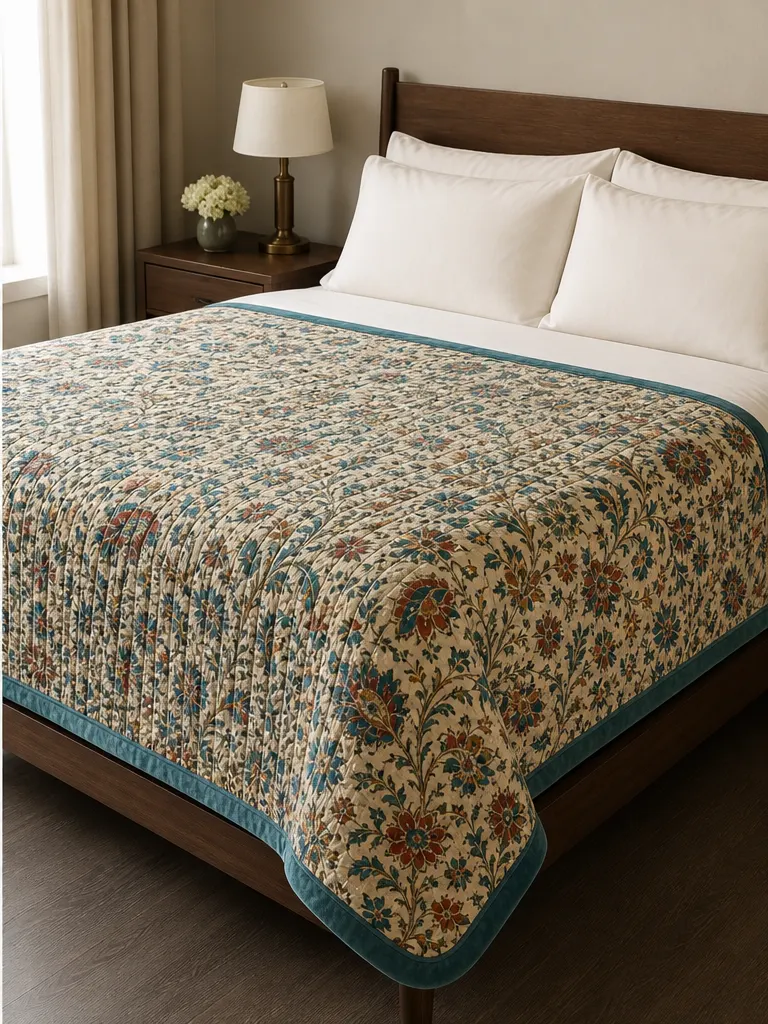
- Coverlet vs bedspread vs runner. A quilted coverlet such as the Tidal Garden Quilted Coverlet or the Garnet Arc Coverlet gives a tailored, top-of-bed finish; a bed runner like the Blue Orchard Bed Runner Set adds the accent band and protects the coverlet at the foot.
- Coordinated sets. A room prototype set — coverlet plus coordinated shams and runner, as in the Indigo Terrace Bed Set — is sized once, approved once, and rolled out across the floor for consistency.
- Wash durability. Specify fill and stitch construction for repeated laundering, and confirm colour-fastness before signing off a large run.
See the full bedding family — ten designs across quilts, coverlets, bedspreads, sets, and bed runners, developed from the room’s actual mattress sizes.
Curtains, sheers, blackout, and Roman blinds: the made-to-measure family
Curtains are the one soft furnishings family that cannot be bought off a size chart. Every panel is made to a surveyed opening, with heading, fullness, lining, and track chosen for the room, and they carry the heaviest performance load in the whole scope — blackout for sleep, light control for comfort, and acoustic softening for the space.
- Layering. Guestrooms almost always want a two-layer scheme: a light-filtering sheer such as the Celadon Sheer Pair for daytime privacy, plus a blackout-ready set like the Ivory Arc Blackout Set for true darkness. Skimping on blackout is the single most common guest complaint in Gulf hotels, where daylight is intense and early.
- Decorative drapery. Public areas, suites, and residences take decorative panels — the Crimson Vine Curtain Set, the Indigo Garden Curtain Set, or a single statement panel such as the Celadon Rhythm Drapery Panel — where drape and motif do the design work.
- Roman blinds. For recesses, restaurant alcoves, and meeting rooms, a made-to-measure Roman blind like the Aurelia Fold Roman Blind gives clean light control in a tighter footprint than full drapery.
- Tie-backs and holdbacks. Small hardware, disproportionate effect — the Garnet Loop Tie-Back Pair and Celadon Crest Holdback Set finish a panel and keep sightlines open.
Because every panel is cut to a survey, curtains need to be measured on site after the openings are built — which puts them near the end of the programme and makes them the family most at risk of arriving late. Order the fabric early even if the survey comes late. Browse the curtains and blinds family — twelve designs across sheers, blackout, decorative drapery, Roman blinds, and hardware.
Specification scope: what to nail down before you order
Regardless of family, a defensible soft furnishings specification records the same handful of decisions. Getting them on paper at design stage prevents the expensive re-runs that happen when a fabric fails a fire test or a coverlet arrives the wrong size.
- Fabric and performance — face fabric, weight, rub count for anything upholstered, and colour-fastness for anything laundered.
- Fire rating — the applicable Civil Defence standard for each item and area, confirmed before production.
- Size — surveyed for curtains and blinds; taken from the actual mattress and furniture for bedding, throws, and cushions.
- Construction — removable covers, concealed zips, lining type, heading and fullness, reverse and edge finish.
- Colourway — approved against a physical sample under the project’s real lighting, not a screen.
- Spares — a small overrun of covers and key pieces, in the same fabric batch, so early replacements match.
The trade-off between developing bespoke pieces and buying stock ranges is worth deciding deliberately; our guide to bespoke versus stock furniture for hotels applies directly to the soft furnishings layer, where original designs are often what separates a branded interior from a generic one.
Fire compliance is a soft furnishings problem, not just a furniture one
It is easy to remember fire ratings for upholstered seating and forget them for cushions, drapery, and sheers — which are, in fact, some of the most flammable items in a room. In licensed UAE venues, decorative cushions, curtains, blackout linings, sheers, and Roman blinds all fall under Civil Defence requirements, and certification has to be arranged at production stage rather than retrofitted. The applicable standards and test types are set out in our guide to UAE Civil Defence fire ratings for hotel furniture. Build the rating into the fabric selection from the first sample, not after the order.
Lead times: order soft furnishings early, not last
The recurring mistake is treating soft furnishings as the finishing touch you add once the room is otherwise complete. In reality the curtains need a survey, the bedding needs a prototype approval, and every fabric needs sampling and sign-off — all of which take weeks. Typical bespoke production runs around 6 to 12 weeks after fabric approval, on top of sampling and shipping, and curtains add a survey dependency at the end of the build. That timeline has to be worked backwards from the opening date the same way case goods and seating are; the full logic is in our guide to FF&E lead times from Turkey and China to Dubai, and the way soft furnishings sit within the wider budget is covered in FF&E versus OS&E: a hotel budget breakdown.
Coordinating with the rest of the FF&E scope
Soft furnishings are the layer that ties a scheme together, so they should be developed against the furniture, not after it. The cushions answer the seating collection, the coverlets and throws finish the bedroom collection, and the drapery frames the living and lounge pieces; base fabrics and upholstery textiles carry through from the textiles collection. Buying the whole textile and furniture story from one source is what keeps colour, motif, and quality consistent across a property — and it is the practical argument for a single FF&E partner set out in our hotel FF&E procurement guide.
BSA soft furnishings supply
BSA Trading develops and supplies the full soft furnishings scope for hotels, serviced apartments, residences, and hospitality projects across the UAE and the GCC: original decorative cushions, throws, project bedding, and made-to-measure curtains and blinds. We work in custom colourways and project sizing, specify fire-rated fabrics and removable covers as standard, survey openings on site, and coordinate the textile layer across a whole room or property so the cushions, bedding, throws, and drapery read as one designed scheme. Explore the complete soft furnishings collection or brief us on a project.