Sustainable Materials in Hospitality Design
A practical guide to sustainable hotel FF&E materials, including FSC wood, engineered substrates, low-VOC finishes, upholstery choices, outdoor materials, lifecycle durability, and procurement documentation.
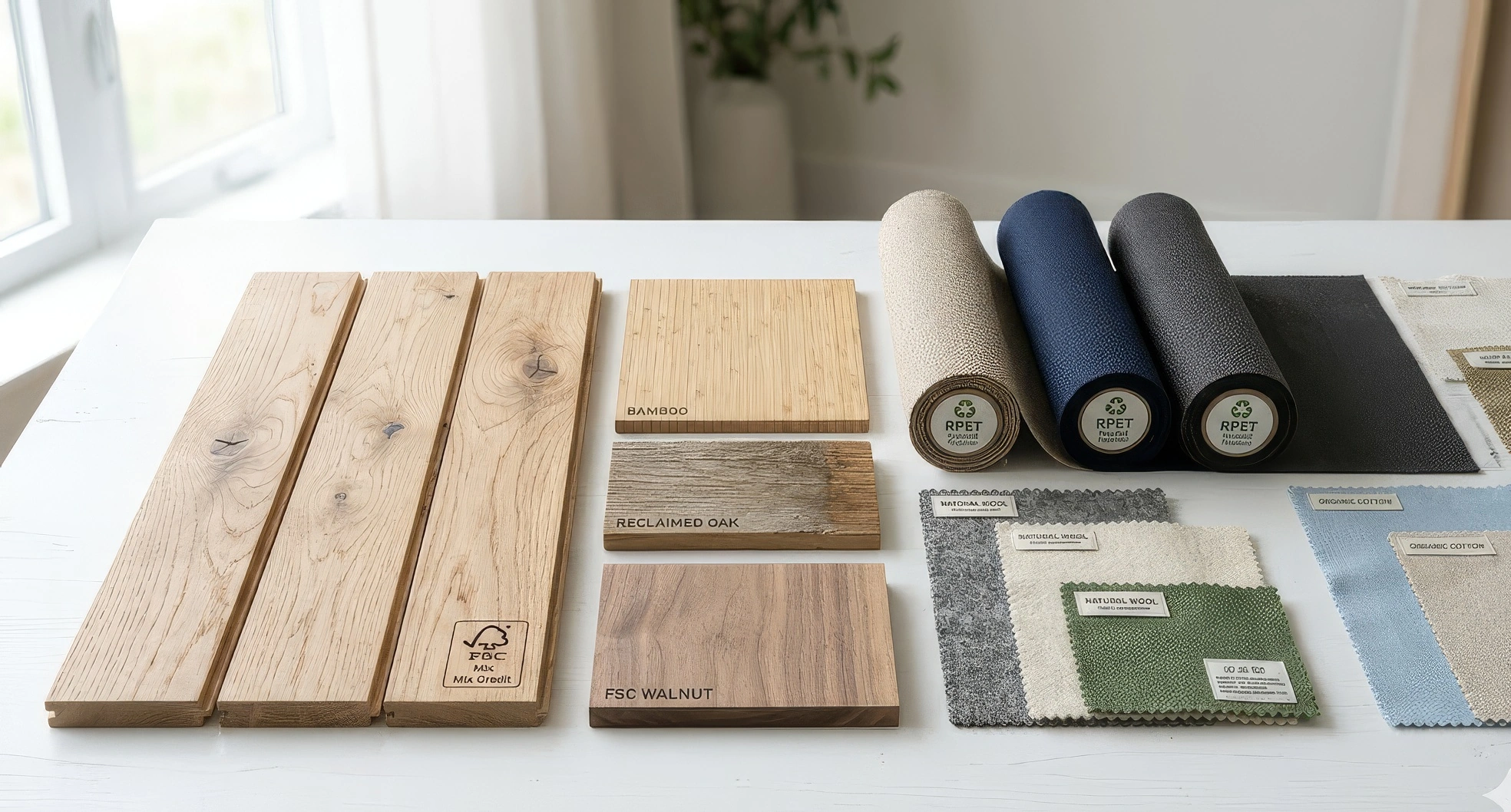
Sustainability in hotel FF&E has moved from marketing language to procurement evidence. Owners, operators, and designers increasingly need to show what materials were specified, why they were chosen, and how long the furniture is expected to last.
This matters in the Gulf because hospitality projects are large, climate conditions are demanding, and replacement cycles can become expensive quickly. A sustainable hotel furniture package is not simply “natural looking.” It is durable, repairable, documentable, and appropriate for the way the property will operate.
Professional rule: the most sustainable furniture is furniture that performs for its intended life, can be repaired, and does not need to be replaced early because the wrong material was specified.
Start with lifecycle, not labels
Many sustainability discussions begin with material names: bamboo, recycled fabric, FSC wood, vegan leather, reclaimed timber. These can be useful, but the better starting point is lifecycle:
- How many years should the item remain in service?
- Can it be repaired, refinished, or reupholstered?
- Are replacement parts available?
- Will the material survive hotel cleaning routines?
- Does it meet fire, durability, and indoor-air-quality requirements?
- Can the supplier provide documentation?
A low-impact material that fails in two years is not sustainable in a hotel. Hospitality furniture needs both responsible sourcing and operational endurance.
Wood and board materials
Wood remains central to hotel FF&E: headboards, casegoods, wardrobes, desks, dining tables, consoles, doors, and decorative panels.
FSC-certified timber
FSC-certified timber gives owners chain-of-custody assurance that the timber comes from responsibly managed forests. It is increasingly requested by international operators and sustainability-led brands.
Best uses:
- Solid wood dining chairs
- Table legs and frames
- Feature timber elements
- Premium suites and villas
- Public-area statement furniture
The cost premium is usually justified where the timber is visible and central to the design.
Engineered substrates
High-quality plywood, MDF, and particleboard are not inferior by default. In hotel casegoods they often perform better than solid timber because they are stable, consistent, and efficient in material use.
Specify:
- E0 or E1 emissions rating
- Moisture-resistant board where required
- Proper edge sealing
- Durable laminate, veneer, or lacquer finish
- Commercial-grade hinges and slides
- Replaceable high-wear panels where possible
Engineered boards with poor edge sealing fail quickly in humid conditions. Well-specified engineered boards can serve hotel rooms for many years.
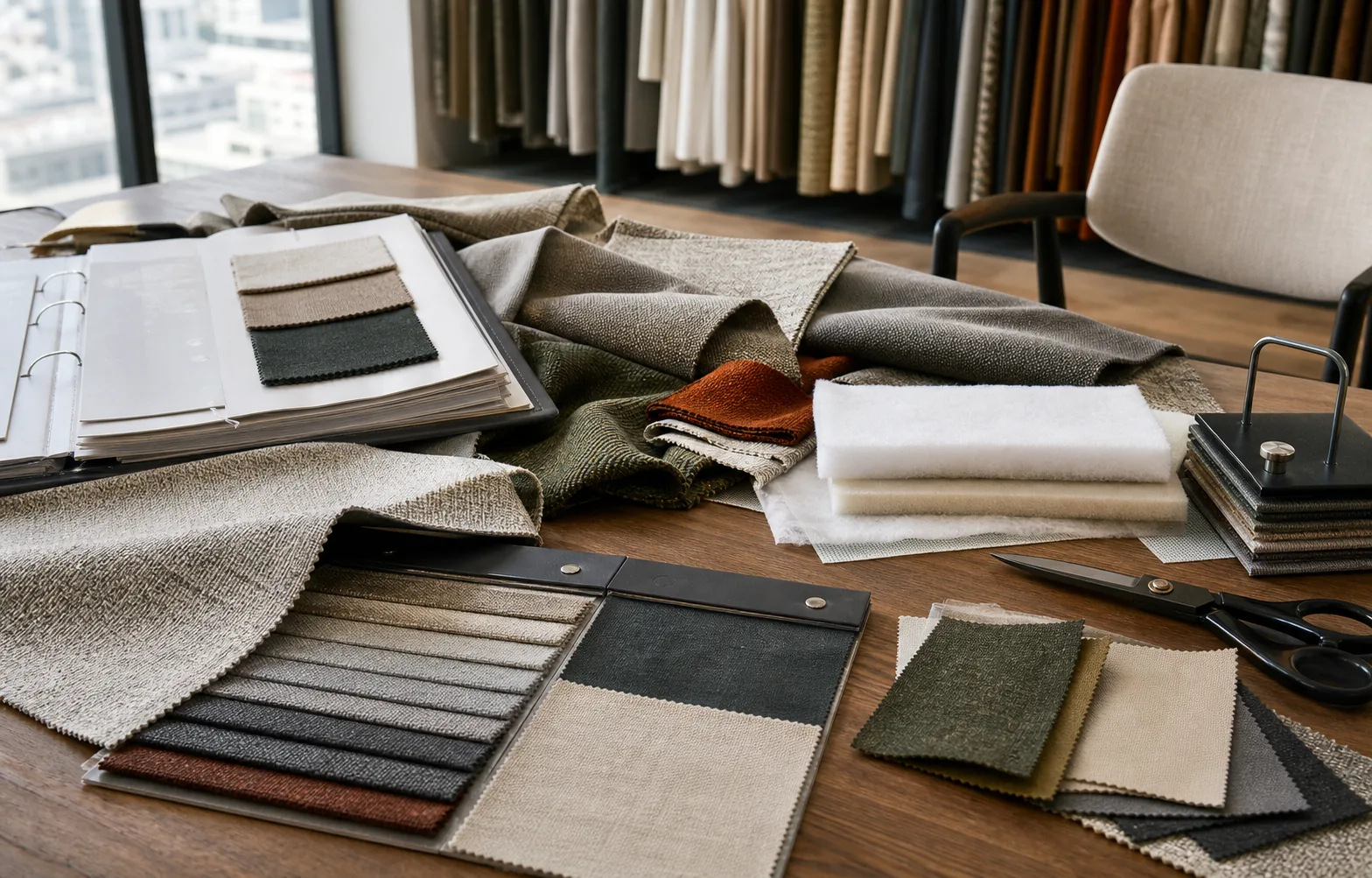
Upholstery and textiles
Upholstery is where sustainability and durability must be balanced carefully.
| Material | Strength | Caution |
|---|---|---|
| Wool blends | Naturally resilient and flame-resistant | Higher cost and limited colour ranges |
| Recycled polyester | Strong, cleanable, widely available | Must still meet rub count and fire requirements |
| Organic cotton / linen | Natural and tactile | Often needs treatment for stain and fire performance |
| Contract faux leather | Cleanable and durable when specified well | Low-quality grades crack quickly |
| Bio-based alternatives | Interesting for future use | Many are not yet proven for heavy hotel wear |
For public areas and restaurants, durability often creates the better sustainability outcome. A fabric that can survive 100,000+ Martindale rubs and be cleaned repeatedly may be more responsible than a fragile natural fabric that needs replacement after one season.
Finishes, adhesives, and indoor air quality
Guests do not see adhesives and finishes, but they affect indoor air quality and long-term performance.
Request:
- Low-VOC lacquers and coatings
- Water-based or UV-cured finishes where appropriate
- Formaldehyde-compliant board certifications
- Clear maintenance instructions for oiled, lacquered, and veneered surfaces
- Finish samples tested against cleaning chemicals
In guest rooms, poor finish selection causes both smell complaints and visible wear. In F&B, surfaces must survive heat, alcohol, citrus, cleaning agents, and abrasion.
Metals and hardware
Metals can be highly sustainable because they are durable and recyclable. The key is corrosion resistance and finish quality.
For Gulf hospitality:
- Powder-coated aluminium works well for outdoor furniture frames.
- Stainless steel should be specified carefully near pools and coastal sites.
- Brass and bronze can last for years but need finish expectations agreed.
- Cheap plated hardware fails quickly under cleaning and humidity.
Hardware is a sustainability issue because broken hinges, glides, drawer slides, and fixings often trigger premature furniture replacement.
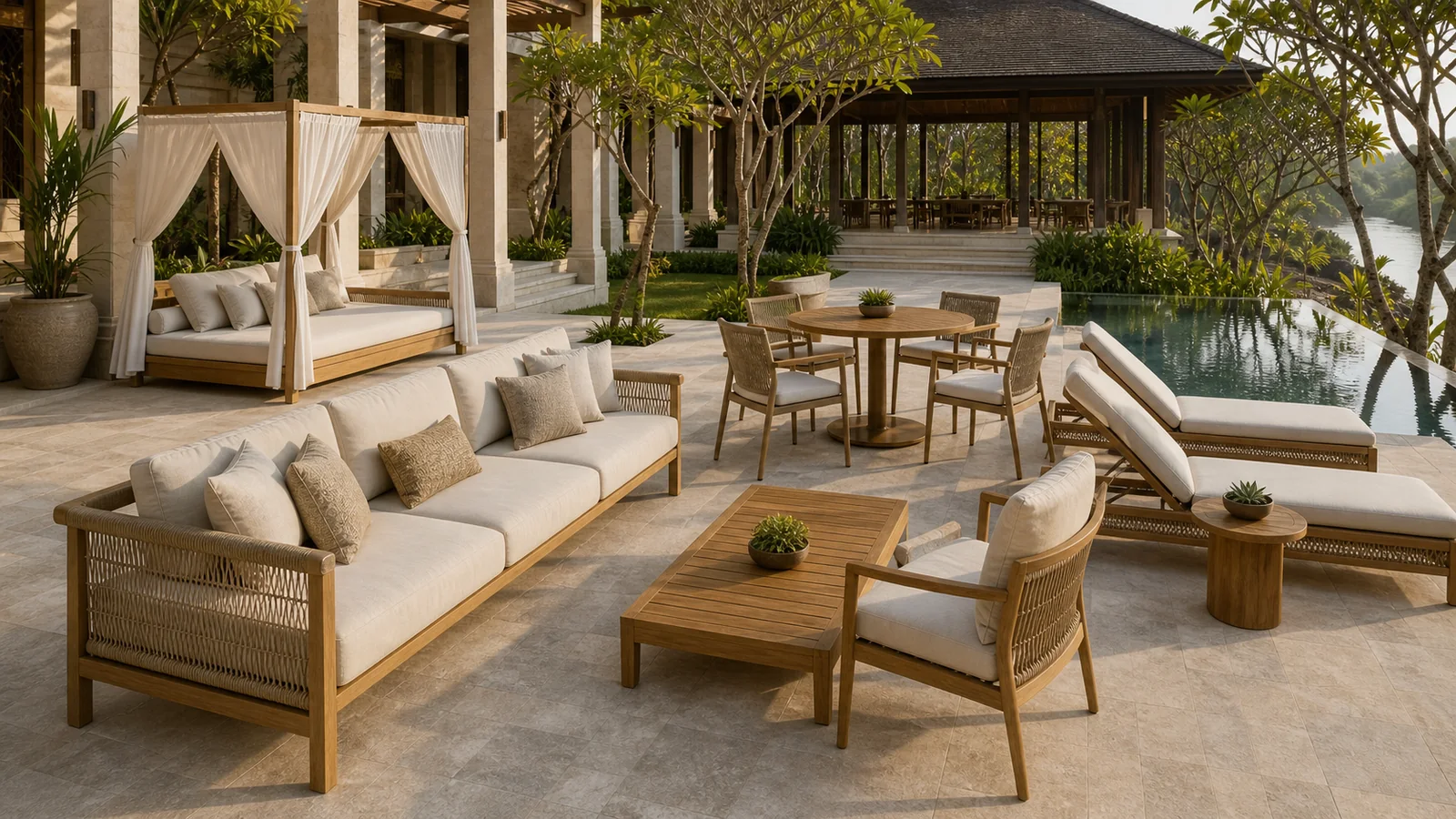
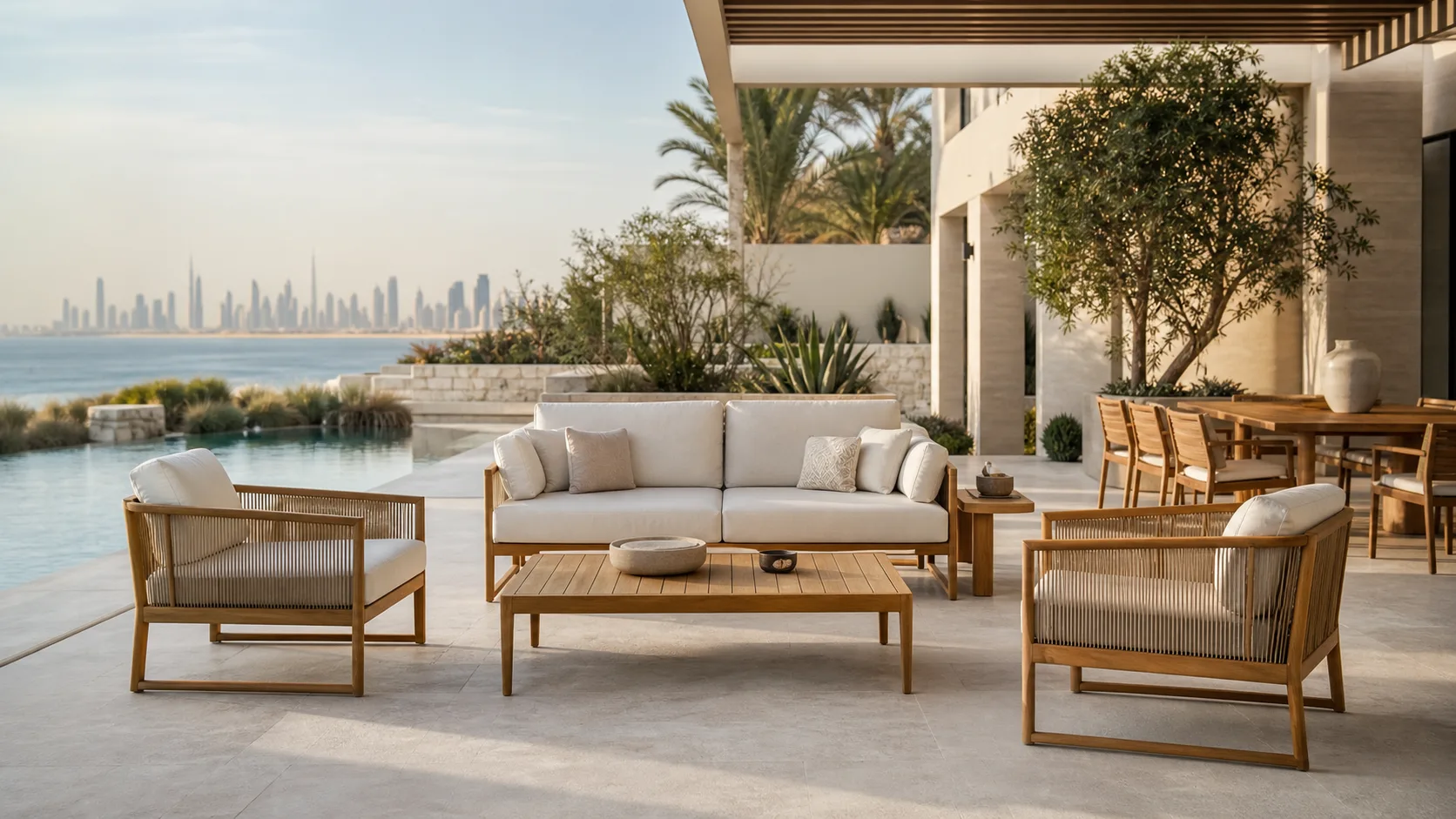
Outdoor material choices in the Gulf
Outdoor FF&E is where sustainable intent often fails. A natural material used in the wrong climate becomes waste.
Good outdoor specifications use:
- Teak or suitable treated timber with maintenance plan
- Powder-coated aluminium
- Outdoor rope designed for UV exposure
- HDPE weave from reputable suppliers
- Quick-dry foam
- Solution-dyed acrylic or equivalent outdoor fabric
- Replaceable cushion covers
- Protective covers and storage strategy
Outdoor furniture should be specified by climate performance, not only appearance.
Documentation: what to ask suppliers for
Sustainability claims need evidence. For hotel procurement, request:
- FSC or chain-of-custody certificates where wood claims are made
- Board emission certificates such as E0 or E1
- Low-VOC finish data
- Fabric composition and durability tests
- Fire-rating certificates
- Recycled-content declarations where applicable
- Warranty and maintenance manuals
- Spare-parts and reupholstery policy
Do this before award, not during handover.
Avoiding greenwash
Be cautious of vague claims:
- “Eco leather” without composition or performance data
- “Natural finish” without VOC information
- “Sustainable wood” without chain-of-custody proof
- “Recycled fabric” without durability and fire test documents
- Decorative use of plants marketed as sustainability while the furniture itself is disposable
A credible supplier can explain the material, the performance, the documentation, and the maintenance expectation.
The BSA view
BSA Trading approaches sustainable FF&E through practical material selection: durable substrates, responsible timber where appropriate, low-emission finishes, repairable construction, contract-grade upholstery, and documentation that supports operator and owner requirements. For Gulf hotels, sustainability must survive real use: housekeeping, F&B spills, UV exposure, humidity, and repeated guest turnover.