
Wall Coverings · Material specification
Type II Vinyl Wallcovering Material Specifications
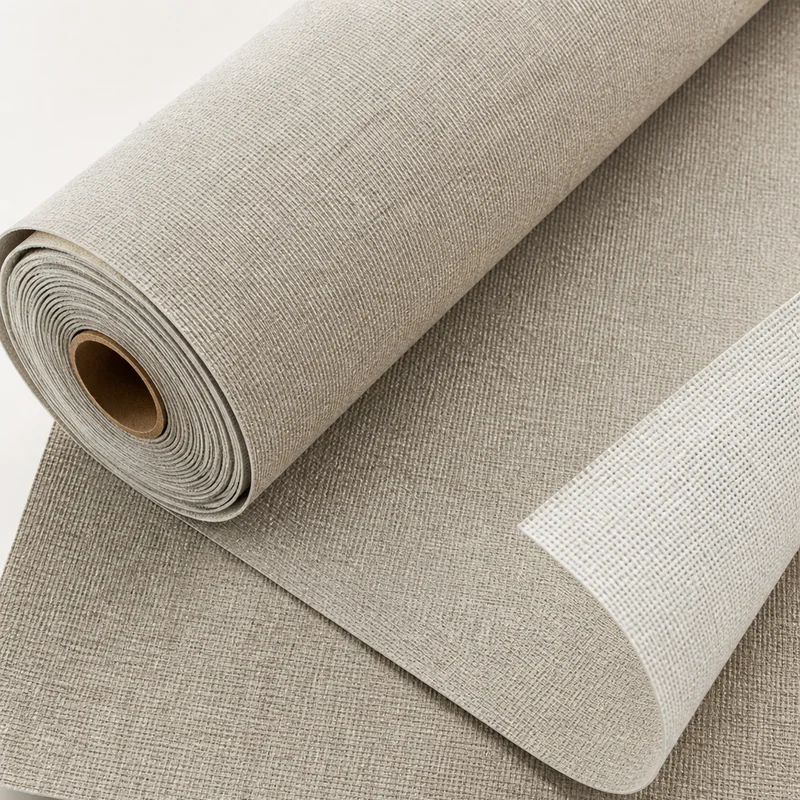
Type II Vinyl Wallcovering for hotel guestrooms, corridors, lobbies and feature joinery, selected as a complete installed system rather than by surface colour alone.
Current material reference
Type II performance route where specified; exact weight, backing, finish and fire data by product
Project-specific system · final build-up must be tested
Material decision summary
Project suitability at a glance.
Treat the finish, substrate, adhesive or subframe, joints and installation method as one tested system.
Best for
- +Hotel corridors, guestrooms and commercial walls requiring durable routine cleaning
Avoid when
- −The wall is damp, the substrate cannot breathe, or seams and adhesive chemistry are unresolved
- Traffic level
- High
- Maintenance
- Low
- Visual variation
- Low
- Relative budget
- ●●○○
- Suitable environments
- Interior · High traffic
Material overview
Common material applications
Select after confirming substrate, fire requirement, cleaning, acoustics, humidity and joint layout. A full installed mock-up is the most reliable approval reference.
Material-specific authority schedule
Ten controls owned by this exact material—not inherited category rows. Final values are confirmed from supplier data, the project sample and shop drawings.
- Declared project reference
- Type II Vinyl Wallcovering: Type II performance route where specified; exact weight, backing, finish and fire data by product
- Exact material identity
- Heavy-duty commercial vinyl wallcovering with exact face chemistry, backing, weight/type route, emboss, colour, lot, adhesive and fire data declared.
- Technical system definition
- A heavy-duty commercial vinyl face on a declared backing, installed with compatible primer/adhesive over a dry prepared wall. Face, backing, seams, vapour route and substrate form one wall system.
- Selection differentiator
- Durable washable surface and repeatable texture suit high-turnover guestrooms and corridors when the wall system can manage vapour.
- Critical approval decision
- Verify substrate moisture and vapour conditions before using an impermeable finish; Type II face performance cannot cure a damp exterior wall.
- Non-equivalent substitute
- Residential vinyl, printed paper, natural grasscloth or another backing/weight is not equivalent in impact, cleaning or vapour behaviour.
- Fabrication focus
- Test wall moisture, prime uniformly, sequence rolls, book seams accurately and use the manufacturer-approved adhesive and ventilation route.
- GCC exposure limit
- Air-conditioned Gulf interiors can create vapour drive at exterior walls; impermeable vinyl must not trap unresolved condensation.
- Material-specific care rule
- Use approved diluted cleaner, rinse residues and repair full drops or planned panels rather than visible spot patches.
- Reject the delivery when
- Reject blistering, seam curl, trapped moisture, adhesive stain, emboss crush, mixed lots, plasticiser migration or fire-data mismatch.
Approval pack
Documents required before ordering.
Project-specific system · final build-up must be tested
- Type II Vinyl Wallcovering: Identity/source evidence: Heavy-duty commercial vinyl wallcovering with exact face chemistry, backing, weight/type route, emboss, colour, lot, adhesive and fire data declared.
- Type II Vinyl Wallcovering: Signed selection evidence: Current data and roll labels identify the exact supplied product and batch sequence.
- Type II Vinyl Wallcovering: Second technical gate: Full-height three-drop mock-up on actual substrate shows stable seams and no blister/stain.
- Type II Vinyl Wallcovering: Factory close-out: Test wall moisture, prime uniformly, sequence rolls, book seams accurately and use the manufacturer-approved adhesive and ventilation route.
Lead time & availability
Confirmed after source, finish and quantity selection
Material specimen views
One physical material sample, shown in four detail views.
Every crop comes from this material specimen itself, with no furniture product shown. The approved sample and current supplier documents govern final colour and construction.
Material identity
What is unique—and what is shared with the family.
The exact material fingerprint comes first. Shared family science is explicitly separated in a collapsible appendix instead of being presented as unique content.
50 material-specific points · 40 shared family references
01 · Material fingerprint
What makes this exact selection technically distinct?
Position in the material family
Commercial vinyl wallcovering
- Reference that must be declared
- Heavy-duty commercial vinyl wallcovering with exact face chemistry, backing, weight/type route, emboss, colour, lot, adhesive and fire data declared.
- Selection differentiator
- Durable washable surface and repeatable texture suit high-turnover guestrooms and corridors when the wall system can manage vapour.
- Not an equivalent substitute
- Residential vinyl, printed paper, natural grasscloth or another backing/weight is not equivalent in impact, cleaning or vapour behaviour.
- Reject the delivery when
- Reject blistering, seam curl, trapped moisture, adhesive stain, emboss crush, mixed lots, plasticiser migration or fire-data mismatch.
Shared family reference
Open the shared Wall Coverings engineering appendix
This appendix applies to the complete Wall Coverings family. It is retained as supporting reference and is not counted as unique content for this material.
Shared family reference
Open the shared Wall Coverings engineering appendix
This appendix applies to the complete Wall Coverings family. It is retained as supporting reference and is not counted as unique content for this material.
02 · System anatomy
The material is not a single surface.
A heavy-duty commercial vinyl face on a declared backing, installed with compatible primer/adhesive over a dry prepared wall. Face, backing, seams, vapour route and substrate form one wall system.
01Visible finish
Layer function
Natural fibre, felt, timber flute or mineral topcoat determines appearance, touch and cleanability.
How to verify
Approve a full-height installed finish under final lighting.
02Carrier / panel
Layer function
Backing, acoustic panel, veneered core or reinforced base distributes the finish and controls stability.
How to verify
Declare composition, thickness, density and relevant emissions/fire route.
03Adhesive / subframe
Layer function
Paste, adhesive, clips, battens, rails or mesh connect the finish and can change fire/acoustic behaviour.
How to verify
Shop drawing and test evidence must show the same mounting assembly.
04Building substrate
Layer function
Moisture, flatness, cracks, movement, joints and contamination transfer through the finished system.
How to verify
Complete substrate moisture/flatness hold point before installation.
03 · Decision gates
Reference benchmarks and the project rule.
System identity
01- Reference band
- Face, backing/panel, adhesive/subframe, joints, edge and substrate preparation declared together.
- Project rule
- Face-material data alone is not a system submittal.
- Evidence status
- Complete build-up and installation method
Reaction to fire
02- Reference band
- Project/occupancy-specific and dependent on the complete tested build-up.
- Project rule
- Match face, backing, adhesive, substrate and mounting represented by evidence.
- Evidence status
- Current system test/classification
Acoustic absorption
03- Reference band
- ISO 354 measures reverberation-room absorption of an installed material/assembly.
- Project rule
- State thickness, density, coverage, air gap, backing and mounting; do not quote face felt alone.
- Evidence status
- Test report for matching assembly
Substrate readiness
04- Reference band
- Dry, stable, clean, level and compatible; quantitative moisture/flatness limits come from selected system.
- Project rule
- Record readings and repairs before covering evidence.
- Evidence status
- Substrate inspection sheet
Joint / layout
05- Reference band
- Seam, panel, flute, control-joint and perimeter strategy coordinated on full elevations.
- Project rule
- Never hide building movement joints without an approved system detail.
- Evidence status
- Setting-out drawings and mock-up
Cleaning / impact
06- Reference band
- Scrubbability, stain, edge impact, replaceability and patch visibility are finish specific.
- Project rule
- Trial actual cleaning and a deliberate repair on the mock-up.
- Evidence status
- Clean/impact/repair trial
04 · Family comparison
Visually related systems that are not technically equivalent.

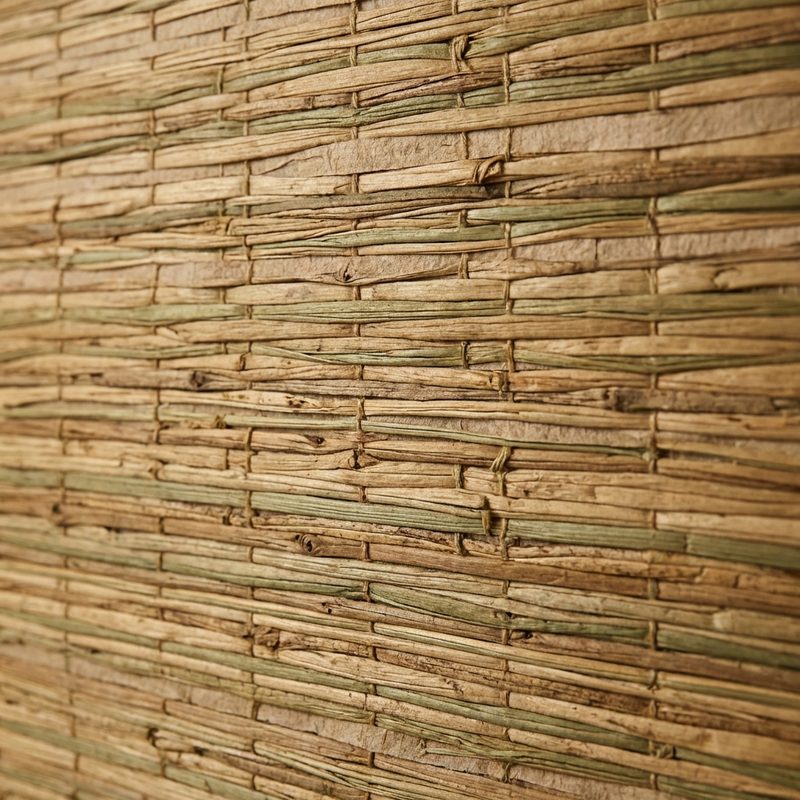
Natural roll wallcovering
- Best use
- Dry feature walls where fibre, visible seams and handmade variation are desired.
- Trade-off / constraint
- Moisture, paste staining, impact and wet cleaning are constrained.
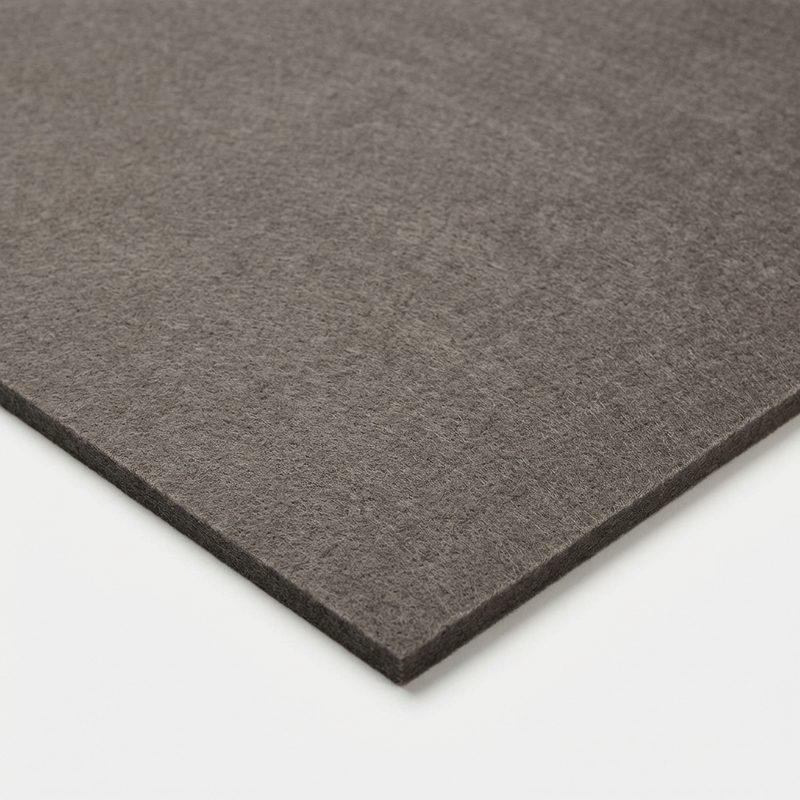
Acoustic felt panel
- Best use
- Rooms requiring controlled reverberation plus colour and modular replacement.
- Trade-off / constraint
- Performance belongs to tested thickness, air gap, coverage and mounting.
Fluted timber panel
- Best use
- Architectural feature walls integrating grain, rhythm, access and joinery.
- Trade-off / constraint
- Module set-out, substrate, emissions, fire route and movement require coordination.
Seamless mineral finish
- Best use
- Continuous hand-trowelled walls and furniture with controlled tonal movement.
- Trade-off / constraint
- Thin finish cannot bridge substrate cracks, failed waterproofing or movement joints.
Commercial vinyl wallcovering
- Best use
- Guestrooms and corridors requiring repeatable texture, impact resistance and routine cleaning.
- Trade-off / constraint
- Moisture migration, trapped vapour, seam quality, plasticiser and adhesive compatibility remain system risks.
05 · Factory handbook
Hold points from receiving through production release.
Fabrication focus for this exact material
Test wall moisture, prime uniformly, sequence rolls, book seams accurately and use the manufacturer-approved adhesive and ventilation route.
-
01Substrate survey
Control instruction
Record material, moisture, pH where relevant, flatness, cracks, joints, contaminants and repairs.
Close-out evidence
Signed hold-point sheet and photographs
-
02Set-out
Control instruction
Coordinate seams/panels/flutes from one datum around corners, doors, outlets and service panels.
Close-out evidence
Full elevations with numbered modules/drops
-
03Compatibility trial
Control instruction
Apply primer, adhesive/subframe, finish and edge on the actual prepared substrate.
Close-out evidence
Cured trial checked for bond, stain, read-through and removal/repair
-
04Full-height mock-up
Control instruction
Include corner, joint, termination, outlet, impact edge, lighting and deliberate cleaning/repair.
Close-out evidence
Signed minimum/maximum appearance controls
-
05Area release
Control instruction
Sequence batch/roll/panel, protect completed work and stop after first area for inspection.
Close-out evidence
First-area acceptance before repetitive installation
06 · Climate & operations
GCC exposure matrix and maintenance plan.
Material-specific climate warning
Air-conditioned Gulf interiors can create vapour drive at exterior walls; impermeable vinyl must not trap unresolved condensation.
01Guestroom feature wall
Preferred- Material response
- Controlled use suits most systems if luggage impact, cleaning and replacement are resolved.
- Design control
- Use protected edges and retain matching repair stock.
02Corridor / lobby
Conditional- Material response
- Trolley impact, hand contact, wall washing and fire requirements intensify.
- Design control
- Select contract surface/system and prove impact/cleaning at the mock-up.
03Restaurant
Conditional- Material response
- Food soils, grease aerosols, chair impact and frequent cleaning challenge porous/textural finishes.
- Design control
- Use washable, repairable zones or protective dados at high contact.
04Window / façade wall
Conditional- Material response
- Solar heat and façade condensation can drive movement, fading or concealed moisture.
- Design control
- Investigate envelope moisture and require suitable light/temperature performance.
05Wet area
Avoid- Material response
- Water and vapour attack backing, adhesive, timber core and unsealed joints.
- Design control
- Use only a complete wet-area-approved system over proven waterproofing.
06Exterior / semi-exterior
Avoid- Material response
- Interior wall systems generally lack UV, rain, thermal and wind-load design.
- Design control
- Require a purpose-designed exterior assembly and engineering.
Operational maintenance plan
Material-specific care rule
Use approved diluted cleaner, rinse residues and repair full drops or planned panels rather than visible spot patches.
-
01Daily / weekly
Action
Remove surface dust with the approved dry or low-moisture method.
Prohibited
No wet wiping on natural fibre or unapproved felt/wood.
-
02After a mark
Action
Identify finish and soil, then use the specific spot-clean or touch-up route.
Prohibited
No aggressive rubbing that polishes, frays or burnishes texture.
-
03Monthly
Action
Inspect seams, corners, edges, impact zones, bubbles, cracks, moisture and loose modules.
Prohibited
Do not close or paint over unexplained moisture.
-
04Periodic deep clean
Action
Use only the manufacturer-approved system and test on a retained/hidden sample.
Prohibited
No generic steam or extraction cleaning.
-
05Repair / replacement
Action
Replace complete drops/modules where practical or reproduce the recorded layered repair method.
Prohibited
Do not promise invisible patches on natural or hand-applied finishes.
07 · Reference library
The language that governs the decision—and where it comes from.
Material glossary
- 01Substrate
- The wall or supporting surface receiving the finish system.
- 02Drop
- One full-height length of roll wallcovering.
- 03NRC / αw
- Single-number acoustic absorption ratings derived under defined test and assembly conditions.
- 04Air gap
- Space behind an acoustic panel that can materially change absorption performance.
- 05Read-through
- Visible transfer of joints, defects, adhesive or substrate texture through the finish.
Professional and standards sources
- 01
ISO
ISO 354 acoustic absorption
Reverberation-room method for wall/ceiling materials and complete assemblies.
Open primary source ↗ - 02
BSI
BS EN 15102 decorative wallcoverings
Roll-wallcovering characteristics including fire and dangerous-substance declarations.
Open primary source ↗ - 03
Wallcoverings Association
Wallcovering quality standards
Industry attributes including strength, tear, fire, UV, stain and scrubbability.
Open primary source ↗ - 04
Wallcoverings Association
Standard installation guidance
Roll/lot control, panel sequence, adhesive, seams, lighting and stop-work checks.
Open primary source ↗
Material-specific technical dossier
Type II Vinyl Wallcovering controls from decision to production.
Every row below is tied to this material’s identity, differentiator, fabrication, exposure or care route; no generic family rows are included in this dossier.
8 unique controls · 4 contextual test applications · 5 material-specific risks
System definition
A heavy-duty commercial vinyl face on a declared backing, installed with compatible primer/adhesive over a dry prepared wall. Face, backing, seams, vapour route and substrate form one wall system.
Critical decision
Verify substrate moisture and vapour conditions before using an impermeable finish; Type II face performance cannot cure a damp exterior wall.
01 · Selection variables
What the material schedule must lock.
01Type II Vinyl Wallcovering: Vinyl product identity
- What must be declared
- Face chemistry, backing, weight/type classification, width, emboss, finish, colour/lot, fire and cleaner data
- Approval basis
- Current data and roll labels identify the exact supplied product and batch sequence.
02Type II Vinyl Wallcovering: Wall and seam system
- What must be declared
- Moisture/pH, vapour drive, primer, adhesive, booking/open time, seam method, corners, top/bottom termination and ventilation
- Approval basis
- Full-height three-drop mock-up on actual substrate shows stable seams and no blister/stain.
03Type II Vinyl Wallcovering: identity declaration
- What must be declared
- Heavy-duty commercial vinyl wallcovering with exact face chemistry, backing, weight/type route, emboss, colour, lot, adhesive and fire data declared.
- Approval basis
- Verify substrate moisture and vapour conditions before using an impermeable finish; Type II face performance cannot cure a damp exterior wall.
04Type II Vinyl Wallcovering: equivalency boundary
- What must be declared
- Durable washable surface and repeatable texture suit high-turnover guestrooms and corridors when the wall system can manage vapour.
- Approval basis
- Residential vinyl, printed paper, natural grasscloth or another backing/weight is not equivalent in impact, cleaning or vapour behaviour.
05Type II Vinyl Wallcovering: factory execution
- What must be declared
- Test wall moisture, prime uniformly, sequence rolls, book seams accurately and use the manufacturer-approved adhesive and ventilation route.
- Approval basis
- Current data and roll labels identify the exact supplied product and batch sequence.
06Type II Vinyl Wallcovering: GCC exposure control
- What must be declared
- Air-conditioned Gulf interiors can create vapour drive at exterior walls; impermeable vinyl must not trap unresolved condensation.
- Approval basis
- Release only when the project detail and maintenance route close this exact exposure risk for Type II Vinyl Wallcovering.
07Type II Vinyl Wallcovering: operational care route
- What must be declared
- Use approved diluted cleaner, rinse residues and repair full drops or planned panels rather than visible spot patches.
- Approval basis
- Issue a named cleaning and repair method for Type II Vinyl Wallcovering; generic family care is not approval.
08Type II Vinyl Wallcovering: delivery rejection boundary
- What must be declared
- Reject blistering, seam curl, trapped moisture, adhesive stain, emboss crush, mixed lots, plasticiser migration or fire-data mismatch.
- Approval basis
- The signed sample, first-off item and delivery inspection must all close this rejection condition for Type II Vinyl Wallcovering.
| Variable | What must be declared | Approval basis |
|---|---|---|
| 01Type II Vinyl Wallcovering: Vinyl product identity | Face chemistry, backing, weight/type classification, width, emboss, finish, colour/lot, fire and cleaner data | Current data and roll labels identify the exact supplied product and batch sequence. |
| 02Type II Vinyl Wallcovering: Wall and seam system | Moisture/pH, vapour drive, primer, adhesive, booking/open time, seam method, corners, top/bottom termination and ventilation | Full-height three-drop mock-up on actual substrate shows stable seams and no blister/stain. |
| 03Type II Vinyl Wallcovering: identity declaration | Heavy-duty commercial vinyl wallcovering with exact face chemistry, backing, weight/type route, emboss, colour, lot, adhesive and fire data declared. | Verify substrate moisture and vapour conditions before using an impermeable finish; Type II face performance cannot cure a damp exterior wall. |
| 04Type II Vinyl Wallcovering: equivalency boundary | Durable washable surface and repeatable texture suit high-turnover guestrooms and corridors when the wall system can manage vapour. | Residential vinyl, printed paper, natural grasscloth or another backing/weight is not equivalent in impact, cleaning or vapour behaviour. |
| 05Type II Vinyl Wallcovering: factory execution | Test wall moisture, prime uniformly, sequence rolls, book seams accurately and use the manufacturer-approved adhesive and ventilation route. | Current data and roll labels identify the exact supplied product and batch sequence. |
| 06Type II Vinyl Wallcovering: GCC exposure control | Air-conditioned Gulf interiors can create vapour drive at exterior walls; impermeable vinyl must not trap unresolved condensation. | Release only when the project detail and maintenance route close this exact exposure risk for Type II Vinyl Wallcovering. |
| 07Type II Vinyl Wallcovering: operational care route | Use approved diluted cleaner, rinse residues and repair full drops or planned panels rather than visible spot patches. | Issue a named cleaning and repair method for Type II Vinyl Wallcovering; generic family care is not approval. |
| 08Type II Vinyl Wallcovering: delivery rejection boundary | Reject blistering, seam curl, trapped moisture, adhesive stain, emboss crush, mixed lots, plasticiser migration or fire-data mismatch. | The signed sample, first-off item and delivery inspection must all close this rejection condition for Type II Vinyl Wallcovering. |
02 · Verification
Test and evidence matrix.
Test methods are not compliance certificates or automatic pass values. The project must state the method, required result, tested construction and current report it will accept.
BS EN 15102:2019
01- What it measures
- Product requirements for decorative wallcoverings in roll form.
- How to use it here
- Apply to relevant roll wallcoverings and review fire, substance, durability and declared characteristics for the actual product. Material-specific acceptance for Type II Vinyl Wallcovering: Current data and roll labels identify the exact supplied product and batch sequence.
ISO 354:2003
02- What it measures
- Reverberation-room measurement of sound absorption for wall/ceiling treatments.
- How to use it here
- Acoustic claim belongs to the tested assembly, area and mounting—not the face material alone. Material-specific acceptance for Type II Vinyl Wallcovering: Full-height three-drop mock-up on actual substrate shows stable seams and no blister/stain.
Project reaction-to-fire route
03- What it measures
- Classification/test evidence for the complete installed wall system.
- How to use it here
- Match product, substrate, adhesive, subframe/air gap and end-use orientation. Material-specific acceptance for Type II Vinyl Wallcovering: Record wall moisture, use the complete approved system and investigate exterior-wall vapour before release.
Installed project mock-up
04- What it measures
- Visual, dimensional, cleanability and repair verification in real substrate and lighting.
- How to use it here
- Include a corner, seam/joint, opening, termination and representative cleaning test. Material-specific acceptance for Type II Vinyl Wallcovering: Test wall moisture, prime uniformly, sequence rolls, book seams accurately and use the manufacturer-approved adhesive and ventilation route.
03 · Performance
Failure-mode and control register.
01Type II Vinyl Wallcovering: Blistering or seam curl traps moisture
- Likely cause
- Damp wall, incompatible adhesive, short open time or vapour pressure releases the backing.
- Preventive control
- Record wall moisture, use the complete approved system and investigate exterior-wall vapour before release.
02Type II Vinyl Wallcovering: non-equivalent substitution accepted
- Likely cause
- Residential vinyl, printed paper, natural grasscloth or another backing/weight is not equivalent in impact, cleaning or vapour behaviour.
- Preventive control
- Heavy-duty commercial vinyl wallcovering with exact face chemistry, backing, weight/type route, emboss, colour, lot, adhesive and fire data declared.
03Type II Vinyl Wallcovering: material signature lost in fabrication
- Likely cause
- The workshop route does not implement the material-specific fabrication focus: Test wall moisture, prime uniformly, sequence rolls, book seams accurately and use the manufacturer-approved adhesive and ventilation route.
- Preventive control
- Full-height three-drop mock-up on actual substrate shows stable seams and no blister/stain.
04Type II Vinyl Wallcovering: GCC exposure mismatch
- Likely cause
- Air-conditioned Gulf interiors can create vapour drive at exterior walls; impermeable vinyl must not trap unresolved condensation.
- Preventive control
- Re-detail, relocate or reject Type II Vinyl Wallcovering where the stated exposure cannot be controlled.
05Type II Vinyl Wallcovering: cleaning or maintenance damage
- Likely cause
- Use approved diluted cleaner, rinse residues and repair full drops or planned panels rather than visible spot patches.
- Preventive control
- Train operations on the named care route and retain a signed repair reference for Type II Vinyl Wallcovering.
| Failure mode | Likely cause | Preventive control |
|---|---|---|
| 01Type II Vinyl Wallcovering: Blistering or seam curl traps moisture | Damp wall, incompatible adhesive, short open time or vapour pressure releases the backing. | Record wall moisture, use the complete approved system and investigate exterior-wall vapour before release. |
| 02Type II Vinyl Wallcovering: non-equivalent substitution accepted | Residential vinyl, printed paper, natural grasscloth or another backing/weight is not equivalent in impact, cleaning or vapour behaviour. | Heavy-duty commercial vinyl wallcovering with exact face chemistry, backing, weight/type route, emboss, colour, lot, adhesive and fire data declared. |
| 03Type II Vinyl Wallcovering: material signature lost in fabrication | The workshop route does not implement the material-specific fabrication focus: Test wall moisture, prime uniformly, sequence rolls, book seams accurately and use the manufacturer-approved adhesive and ventilation route. | Full-height three-drop mock-up on actual substrate shows stable seams and no blister/stain. |
| 04Type II Vinyl Wallcovering: GCC exposure mismatch | Air-conditioned Gulf interiors can create vapour drive at exterior walls; impermeable vinyl must not trap unresolved condensation. | Re-detail, relocate or reject Type II Vinyl Wallcovering where the stated exposure cannot be controlled. |
| 05Type II Vinyl Wallcovering: cleaning or maintenance damage | Use approved diluted cleaner, rinse residues and repair full drops or planned panels rather than visible spot patches. | Train operations on the named care route and retain a signed repair reference for Type II Vinyl Wallcovering. |
04 · Tender-ready
Copy-ready specification clause.
Provide heavy-duty commercial Type II vinyl wallcovering where scheduled, with face chemistry, backing, weight/classification, width, emboss, colour/lot, cleaner limits and current fire evidence declared. Submit substrate moisture/pH limits, vapour assessment for exterior walls, primer/adhesive system, hanging/seam method and ventilation requirements. Approval requires a full-height minimum three-drop mock-up including corner, termination and cleaner trial; residential vinyl, paper and different backings are not equivalent.
05 · Quality control
Inspection plan from submittal to handover.
01Type II Vinyl Wallcovering: identity and source
- Inspection
- Heavy-duty commercial vinyl wallcovering with exact face chemistry, backing, weight/type route, emboss, colour, lot, adhesive and fire data declared.
- Acceptance / hold point
- Documents, labels and physical material all identify the same Type II Vinyl Wallcovering construction and source.
02Type II Vinyl Wallcovering: control sample
- Inspection
- Durable washable surface and repeatable texture suit high-turnover guestrooms and corridors when the wall system can manage vapour.
- Acceptance / hold point
- Current data and roll labels identify the exact supplied product and batch sequence.
03Type II Vinyl Wallcovering: first-off fabrication
- Inspection
- Test wall moisture, prime uniformly, sequence rolls, book seams accurately and use the manufacturer-approved adhesive and ventilation route.
- Acceptance / hold point
- Full-height three-drop mock-up on actual substrate shows stable seams and no blister/stain.
04Type II Vinyl Wallcovering: exposure and care trial
- Inspection
- Air-conditioned Gulf interiors can create vapour drive at exterior walls; impermeable vinyl must not trap unresolved condensation. Use approved diluted cleaner, rinse residues and repair full drops or planned panels rather than visible spot patches.
- Acceptance / hold point
- Record wall moisture, use the complete approved system and investigate exterior-wall vapour before release.
05Type II Vinyl Wallcovering: delivery release
- Inspection
- Reject blistering, seam curl, trapped moisture, adhesive stain, emboss crush, mixed lots, plasticiser migration or fire-data mismatch.
- Acceptance / hold point
- Type II Vinyl Wallcovering is released only when no stated rejection condition is present and the signed reference remains traceable.
| Stage | Inspection | Acceptance / hold point |
|---|---|---|
| 01Type II Vinyl Wallcovering: identity and source | Heavy-duty commercial vinyl wallcovering with exact face chemistry, backing, weight/type route, emboss, colour, lot, adhesive and fire data declared. | Documents, labels and physical material all identify the same Type II Vinyl Wallcovering construction and source. |
| 02Type II Vinyl Wallcovering: control sample | Durable washable surface and repeatable texture suit high-turnover guestrooms and corridors when the wall system can manage vapour. | Current data and roll labels identify the exact supplied product and batch sequence. |
| 03Type II Vinyl Wallcovering: first-off fabrication | Test wall moisture, prime uniformly, sequence rolls, book seams accurately and use the manufacturer-approved adhesive and ventilation route. | Full-height three-drop mock-up on actual substrate shows stable seams and no blister/stain. |
| 04Type II Vinyl Wallcovering: exposure and care trial | Air-conditioned Gulf interiors can create vapour drive at exterior walls; impermeable vinyl must not trap unresolved condensation. Use approved diluted cleaner, rinse residues and repair full drops or planned panels rather than visible spot patches. | Record wall moisture, use the complete approved system and investigate exterior-wall vapour before release. |
| 05Type II Vinyl Wallcovering: delivery release | Reject blistering, seam curl, trapped moisture, adhesive stain, emboss crush, mixed lots, plasticiser migration or fire-data mismatch. | Type II Vinyl Wallcovering is released only when no stated rejection condition is present and the signed reference remains traceable. |
Required approval evidence
- +Type II Vinyl Wallcovering: Identity/source evidence: Heavy-duty commercial vinyl wallcovering with exact face chemistry, backing, weight/type route, emboss, colour, lot, adhesive and fire data declared.
- +Type II Vinyl Wallcovering: Signed selection evidence: Current data and roll labels identify the exact supplied product and batch sequence.
- +Type II Vinyl Wallcovering: Second technical gate: Full-height three-drop mock-up on actual substrate shows stable seams and no blister/stain.
- +Type II Vinyl Wallcovering: Factory close-out: Test wall moisture, prime uniformly, sequence rolls, book seams accurately and use the manufacturer-approved adhesive and ventilation route.
- +Type II Vinyl Wallcovering: Exposure and care record: Air-conditioned Gulf interiors can create vapour drive at exterior walls; impermeable vinyl must not trap unresolved condensation. Use approved diluted cleaner, rinse residues and repair full drops or planned panels rather than visible spot patches.
- +Type II Vinyl Wallcovering: Delivery rejection record: Reject blistering, seam curl, trapped moisture, adhesive stain, emboss crush, mixed lots, plasticiser migration or fire-data mismatch.
Questions to close before approval
- 01Type II Vinyl Wallcovering: Has the exact identity been declared and evidenced: Heavy-duty commercial vinyl wallcovering with exact face chemistry, backing, weight/type route, emboss, colour, lot, adhesive and fire data declared?
- 02Type II Vinyl Wallcovering: Which project requirement makes this differentiator necessary: Durable washable surface and repeatable texture suit high-turnover guestrooms and corridors when the wall system can manage vapour?
- 03Type II Vinyl Wallcovering: Has the team excluded the non-equivalent route: Residential vinyl, printed paper, natural grasscloth or another backing/weight is not equivalent in impact, cleaning or vapour behaviour?
- 04Type II Vinyl Wallcovering: How will the factory prove this execution control: Test wall moisture, prime uniformly, sequence rolls, book seams accurately and use the manufacturer-approved adhesive and ventilation route?
- 05Type II Vinyl Wallcovering: Can the project control this GCC exposure: Air-conditioned Gulf interiors can create vapour drive at exterior walls; impermeable vinyl must not trap unresolved condensation?
- 06Type II Vinyl Wallcovering: Who owns this operating rule after handover: Use approved diluted cleaner, rinse residues and repair full drops or planned panels rather than visible spot patches?
Material specimen detail
Type II Vinyl Wallcovering as a physical material sample.
This specimen view focuses on the surface, edge and construction of Type II Vinyl Wallcovering. No furniture product is presented here; the approved physical sample remains the reference for final colour, texture and finish.
Project notes
From sample to production.
01
What to specify
Select after confirming substrate, fire requirement, cleaning, acoustics, humidity and joint layout. A full installed mock-up is the most reliable approval reference.
02
Fabrication & detailing
Survey substrates and coordinate setting-out with doors, outlets, lighting and joinery. Complete a mock-up before bulk installation and protect finished work from following trades.
03
Colour & finish approval
Wall finishes are approved as installed mock-ups because lighting, substrate, panel joints and hand application materially change the final appearance.
04
Care & maintenance
Follow the approved maintenance guide for the selected system. Dust or spot-clean gently; repair test areas first so colour, sheen and texture remain consistent.
Specification note
This page is a preliminary material-specification guide. Current product data, test reports, the physical material sample and the intended application system must be approved for each project before ordering or manufacture.
Related materials